How the Royal Navy Is Building the Surface Fleet of the Future
Add bookmark
Ahead of Surface Warships 2026, Defence iQ Editor Joanne Swann sat down with Commodore
Ian Feasey, Commander of Surface Flotilla, Royal Navy, to discuss how the Royal Navy is preparing its surface fleet for the future of maritime warfare.
Captain Feasey will be speaking at Surface Warships 2026, taking place on 13–14 October in Tróia, Portugal, as part of Defence iQ's wider Unified Maritime experience in association with REPMUS26.
1. Having moved from commanding HMS Queen Elizabeth to leading the Royal Navy Surface Flotilla, how has your perspective on the challenges facing the surface fleet evolved?
In terms of what the Royal Navy is looking to deliver, the capabilities we are required to provide in support of our offer to NATO remain fundamentally unchanged. They are still the building blocks of what the Royal Navy is all about: NATO first, but not necessarily NATO only.
What has changed is the pace at which those capabilities must evolve. We need to match the speed of technological advancement, and that requires a wholesale review of equipment, workforce, training and sustainability if we are to deliver a surface fleet capable of continually changing an adversary's calculus in any operational or combat environment.
Compared to my time commanding HMS Queen Elizabeth between 2021 and 2023, the pace of technological integration has accelerated significantly, and I believe it will only continue to get faster.
2. Your recent MOD roles focused on crisis management, readiness and future commitments. Looking at today's security environment, where do you see the greatest pressures on maintaining a credible and responsive surface force?
The strategic operating environment is increasingly complex, uncertain and volatile. The layers of complexity facing maritime forces are greater than ever.
We are seeing high-end warfighting in the Black Sea, ongoing crises in the Middle East, adversary-facing operations in the North Atlantic, alongside routine missions such as countering illegal migration, counter-narcotics operations, freedom of navigation and tackling illegal activity at sea. The breadth of activity maritime forces are expected to undertake has never been wider.
For the past three or four decades, NATO navies have largely been focused on routine operational activity rather than preparing for high-end warfighting. I think all our allies would recognise that.
Today, however, the maritime domain has never been more relevant. We are being challenged globally by multiple adversaries across the maritime flank. As a result, after decades of aligning investment and capability decisions around routine operations, we now need to recapitalise our warfighting capabilities and prepare for combat operations once again.
That is a significant challenge. It requires a whole-of-Navy effort, but equally a whole-of-industry, whole-of-government and whole-of-nation approach to build the resilience needed - not just for individual nations, but for the Alliance as a whole.
3. Ongoing operations in the Black Sea and Red Sea have highlighted the growing importance of drones, long-range strike weapons and hybrid threats. What operational lessons should navies be incorporating into the design and employment of future surface warships?
The pace of technological change is never going to be as slow as it is today. Over the last three or four years we've seen technological advancement in conflict accelerate exponentially.
Within the Royal Navy, we're actively learning lessons from Ukraine - particularly from the maritime domain in the Black Sea - but also from operations in the Red Sea, the Strait of Hormuz and other recent conflicts.
One conclusion is absolutely clear. As outlined in the First Sea Lord's warfighting vision, the traditional pace at which we've adopted capability enhancements is no longer sufficient to keep us operationally relevant.
We cannot continue relying solely on traditional programmes to build highly complex warships that cost enormous sums of money and take many years to deliver. That approach doesn't allow us to change an adversary's calculus quickly enough in a tactical or operational environment.
Instead, we need to move at pace in both capability enhancement and tactical development. That requires much closer collaboration between industry and the military, while removing unnecessary process barriers that slow progress. Only then can we field technologically relevant forces that keep pace with the threats we face.
4. A major theme of this year's conference is the development of hybrid fleets that combine crewed and uncrewed platforms. How do you envisage these capabilities changing the way surface commanders operate over the next decade?
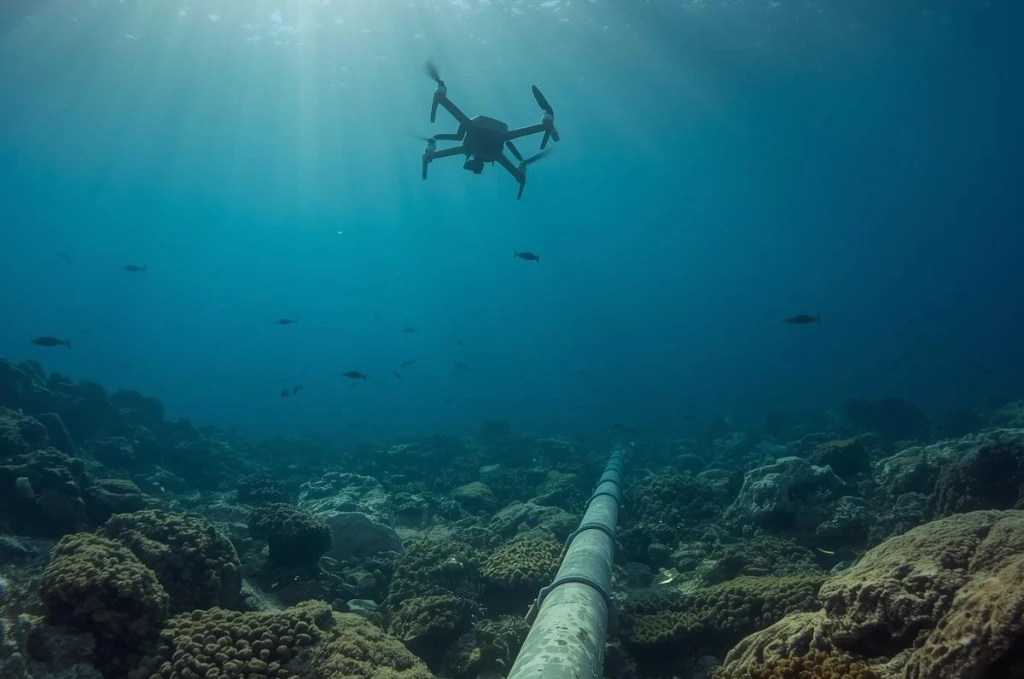
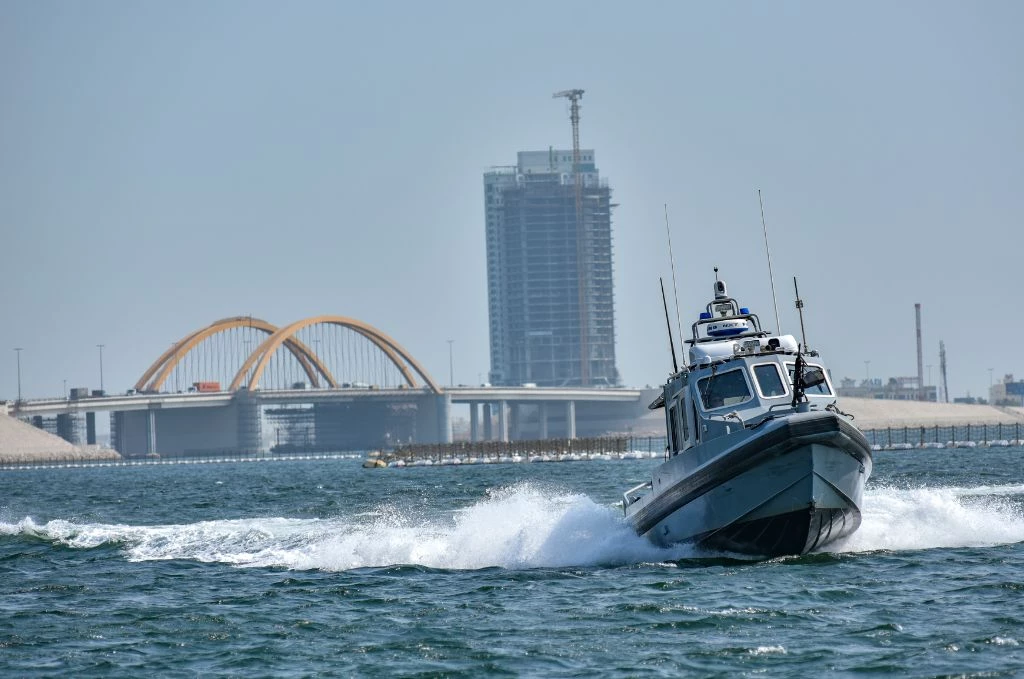
The Royal Navy is adopting the Hybrid Navy concept: crewed where necessary, uncrewed where possible.
That reflects the need to move at a speed of relevance - not only in technology, but in turning equipment into capability.
We've spoken about learning lessons from current conflicts, but it's equally important that we learn the right lessons. Ukraine, for example, has demonstrated the value of maritime autonomy, although much of that has focused on one-way effectors delivering kinetic effects.
Our ambition is to take autonomy much further by applying it to more traditional naval capabilities such as integrated air and missile defence and anti-submarine warfare. Those are core warfare functions that I've spent my career operating, and we now need to explore how autonomous systems, supported by AI and machine learning, can deliver them more effectively.
The key is how we move rapidly across the sense, decide and effect continuum. There is a great deal of attention today on the latest autonomous platforms being developed by industry, which is hugely positive. The real challenge for navies is deciding how to transform those technologies into operational capability rather than simply introducing new equipment.
That means working collaboratively with international partners, sharing technology, intelligence, data fusion and operational understanding, while breaking down traditional barriers - even within NATO. I believe that will fundamentally change the way navies operate.
5. Modernisation often competes with the need to maintain operational availability. From your experience balancing strategic commitments and finite resources, how can that tension be successfully managed?
That question is particularly relevant because it's my day job. As the Royal Navy's force generator for surface ships, balancing readiness and modernisation is something we deal with every day.
Traditionally, readiness has been built around three pillars: availability, capability and sustainability. Those remain fundamental, but as we move towards the Hybrid Navy we have to rethink how all three are delivered.
At the same time, we're working within long-established defence procurement, commercial and contracting processes that are often difficult to accelerate. We're using technologies such as agentic AI to help move through those processes more quickly - not by bypassing them, but by making them more efficient - so we can deliver equipment to the front line at a speed of relevance.
Industry is fundamental to achieving that. We need industry to help us field equipment more quickly, contract more effectively, absorb operational lessons rapidly, adapt technology accordingly, and deliver updated software, munitions or capability enhancements back to the front line as quickly as possible.
The challenge extends beyond equipment. We also need to develop new skills across our workforce. I have very junior sailors already operating uncrewed surface vessels, demonstrating how quickly people can be trained for operational roles.
However, moving to a Hybrid Navy means sustaining traditional capabilities such as Carrier Strike while simultaneously introducing autonomous systems. Developing training and career pathways that support both models is one of the major challenges that NATO navies - and navies globally - will increasingly face.
6. HMS Queen Elizabeth demonstrated the value of operating as part of an integrated multinational force. How important will interoperability with NATO allies and partners be as surface fleets evolve?
Interoperability is one of NATO's greatest strengths across its 32 nations.
Our ambition should go beyond interoperability to true interchangeability - where ships from different nations can seamlessly replace one another within a task group without any loss of capability. That's the ideal outcome.
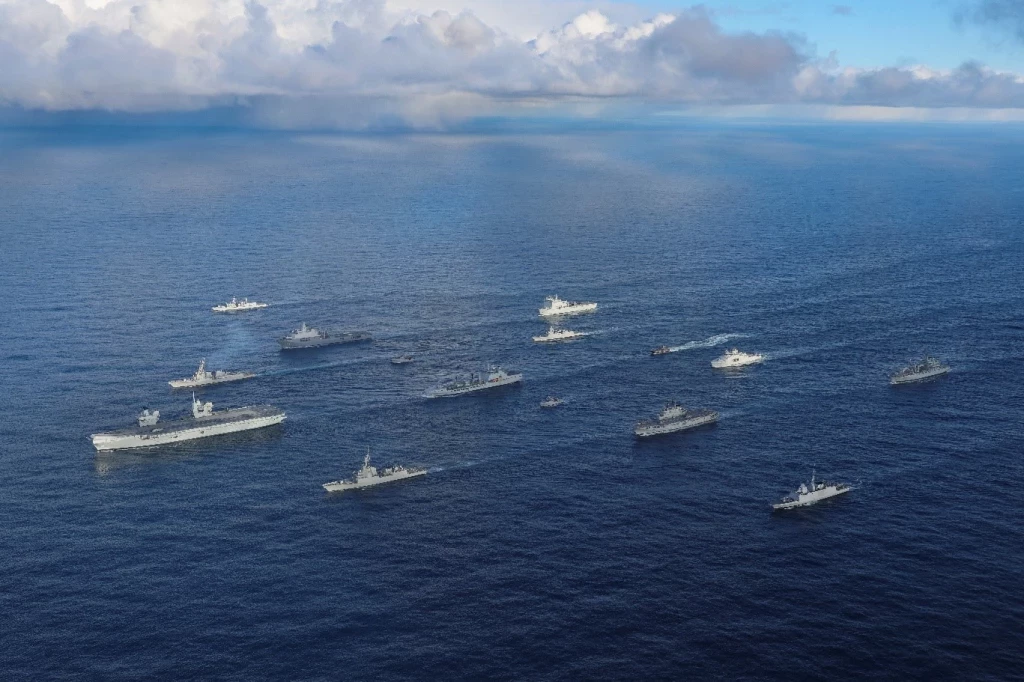
I'm pleased to say we're already very close to achieving that with several NATO allies. Our Carrier Strike Group, for example, is international by design. Recently, HMS Prince of Wales has operated in the High North alongside French and Danish warships and Norwegian F-35s, delivering Carrier Strike capability in support of NATO Enhanced Vigilance Activities and NATO air defence missions.
Technology also plays a critical role.
HMS Queen Elizabeth was designed from the keel up to operate the F-35B and has significant reserves of electrical power and fibre optic capacity. That gives us the flexibility to integrate new systems, whether sovereign or allied, through a genuine plug-and-play approach. Our Type 26 frigates will offer similar advantages.
Ultimately, interoperability is about much more than common procedures or NATO standards. It's about integrating technology seamlessly, embarking allied systems without hesitation, and operating together as a single force capable of delivering effect against an adversary.
7. As technologies such as AI-enabled decision support, autonomous systems and digital combat management mature, what changes will be needed in the way we train and prepare sailors for future operations?
As technology evolves, every aspect of how we train and prepare our people must evolve alongside it.
Whether it's learning lessons from Ukraine, operating with a smaller physical footprint, employing autonomous systems or moving more agile command-and-control nodes, our training has to reflect those realities.
We also need to embrace AI within our training systems and make synthetic training and simulation the norm. That allows us to preserve operational readiness by reducing the reliance on deploying ships purely for training, while still preparing crews for everything from combat operations in a frigate's operations room through to damage control and survivability.
Just as importantly, we need to integrate operational lessons at a speed of relevance. Lessons learned must be rapidly incorporated into equipment updates, synthetic training environments and simulation, so that sailors can rehearse new tactics immediately before applying them in operations if necessary.
I think we still have some way to go. Across the UK and many Western navies, we're probably behind where we should be in our use of simulation and synthetic training - not only individually, but across the Alliance. Training together using the same skills and drills will be fundamental, and we need to move much faster in that direction.
8. Looking ahead, what do you believe will define a successful surface fleet in 2035, and what role must collaboration between navies and industry play in achieving that vision?
I think this gets to the heart of the challenge we face.
As individual NATO nations, our navies can sustain operations for a limited period in conflict. Beyond that, success depends on two things.
The first is our ability to mobilise not only our own national industrial bases, but to collaborate across the Alliance so that industry delivers capability collectively.
The second is our ability to integrate technology as quickly as possible. While nations may procure autonomous systems from different suppliers, we ultimately need to generate capabilities that NATO's Supreme Allied Commander Europe requires in support of the NATO Regional Plans, and we must rehearse those capabilities at a speed of relevance that matches the threat.
Looking ahead to 2035, that could mean a UK Carrier Strike Group operating with a screen of uncrewed surface vessels providing layered air defence, sensors, and both kinetic and non-kinetic effects. It could mean the UK Commando Force using autonomous systems for reconnaissance and intelligence collection in the High North, employing AI to improve decision-making and outthink an adversary.
If those are the outcomes we want, we cannot simply operate together as an Alliance - we must integrate together, develop together and collaborate commercially across the Alliance.
I'm encouraged by the progress already being made. Just recently, we hosted the NATO Industrial Advisory Group in Portsmouth Dockyard, bringing together 120 delegates from 30 nations to examine exactly this challenge: how NATO's industrial base can work more closely together to deliver capability - not simply equipment - to Allied navies in support of SACEUR's vision for the future threat environment.
Whether through a whole-of-force, whole-of-nation or, most importantly, a whole-of-Alliance approach, that level of collaboration across military, industry and government will be fundamental if we are to be ready for future warfighting operations.