Is Maritime ISR Transforming Naval Warfare?
Add bookmark
When the British naval commander, Admiral Horatio Nelson, famously put his telescope to his blind eye at the Battle of Copenhagen in 1801 and declared, "I see no ships", he was using a supposed lack of intelligence on enemy warships as an excuse to disobey orders he disagreed with.
Nelson's ships continued to battle the Danish fleet and soon won a famous victory, despite his orders to disengage by his superior commander.
The incident has entered naval folklore, but it also said something profound about the state of Intelligence Surveillance and Reconnaissance, or ISR, in the age of sail. Then, ships' captains had little more than a telescope to try to spy out the position of the enemy fleets. Fast forward 115 years to the Battle of Jutland: the British and German battlefleets boasted airships to look for warships, signals intelligence to triangulate the position of opponents' radio transmissions, and scout submarines to lurk outside enemy harbours. In less than 25 years, maritime ISR had developed at an even more rapid pace.
The Long Evolution of Maritime ISR
During the Battle of Atlantic, Allied commanders hunted German U-boats with maritime patrol aircraft equipped with radar to spot their conning towers, frigates used sonar to track submarines underwater, and the first computers cracked coded German radio messages from the Nazi fleet command. By the 1960s, more turns of technology had led to the fielding of underwater sonar arrays to track submarine movements at thousands of kilometres range, maritime patrol aircraft dropped sonobuoy fields to identify deep diving submarines and satellites in space alerted commanders to when enemy vessels put to sea from their home ports.
These rapid technological advances were nearly all the result of huge investment in research and development by governments. At the height of the Cold War, billions of dollars a year was being spent by the Pentagon to field new 'tech' to track Soviet submarines.
In the 21st century, a new revolution in maritime ISR is underway, but it is not being led by governments or navies. The private sector is in the vanguard and is throwing out new solutions to ISR challenges at an unprecedented pace. This has resulted in the current and next generation of maritime ISR 'tech' being significantly cheaper and far more capable than the previous generations of systems.
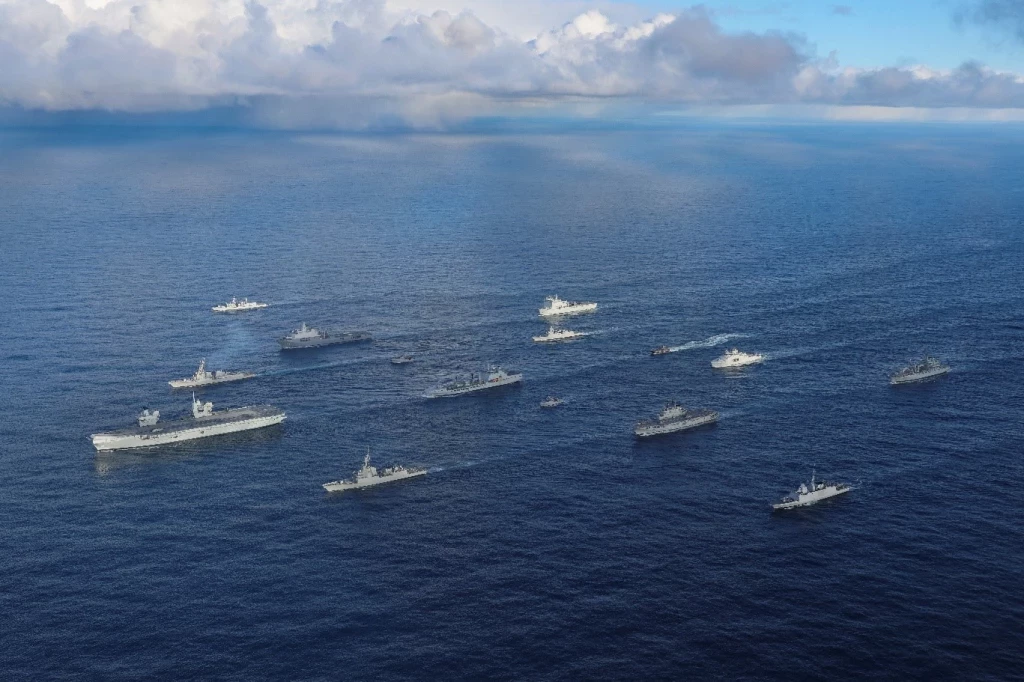
For NATO navies, the challenge remains essentially the same. Keeping track of potentially hostile ships and submarines across the length, breadth and depth of the North Atlantic, Baltic, Black and Mediterranean Seas. Some of the old Cold War-era tools remain – maritime patrol aircraft with sonobuoys, helicopters with dipping sonar and sonar arrays towed behind frigates – but a whole new suite of sensors and systems are available to supplement, and in some cases replace, them.
The biggest maritime ISR revolution is taking place in the arena of wide-area surveillance, both above and below water. In the Cold War era, this was a game that only the two superpowers could really play, due to the astronomical cost of underwater sonar arrays and space-based solutions. Not anymore.
The Private Sector Takes the Lead
Commercial earth observation satellites are now able to track all types of surface vessels, down to small speed boats, in real time using a combination of wide-area radar and computer analysis of imagery. The proliferation of live transponder tracking, thanks to the automatic identification system (AIS), has also transformed the ability of naval commanders to rapidly understand what is happening in real-time across a theatre of operations. These technologies are being used today to monitor the activities of Russia's so-called 'Shadow Fleet' of oil tankers and allow NATO nations to craft responses.
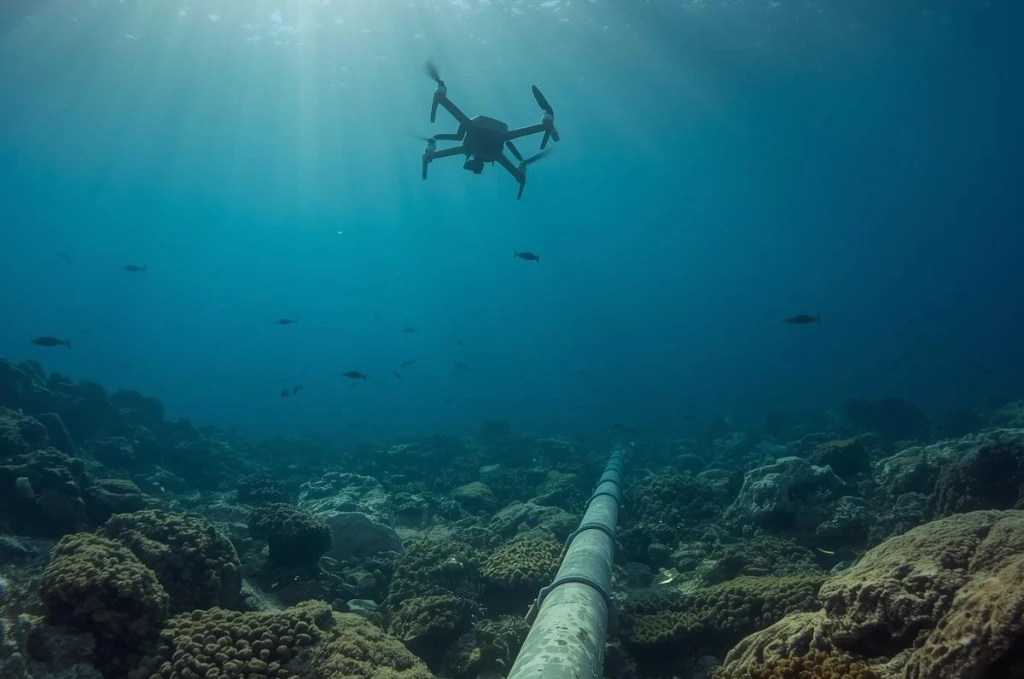
Underwater surveillance is on the cusp of a major revolution. Low-cost robots, or autonomous underwater drones, now make it possible for swarms of these to be used to monitor the depths of the oceans in real-time. Tracking data can be reported over low-orbit commercial satellite constellations and analysed by artificial intelligence to create a theatre-wide underwater battle picture, showing the location of enemy submarines at several thousand kilometres ranges. All for a fraction of the cost that the US Navy spent on its SOSUS underwater surveillance system during the Cold War.
Surface surveillance is also set to benefit from this type of technology, with fleets of robot boats being used to monitor enemy ports, coasts or key maritime choke points.
Robotic Warfare - Opportunity and Risk
While this new tech offers many answers to wide-area surveillance requirements, navies have still retained many of their traditional platforms – maritime patrol aircraft, anti-submarine helicopters and frigates – to conduct close surveillance of submarines and, if necessary, attack them. Even these roles are beginning to be seen as areas of robot vessels or aerial drones.
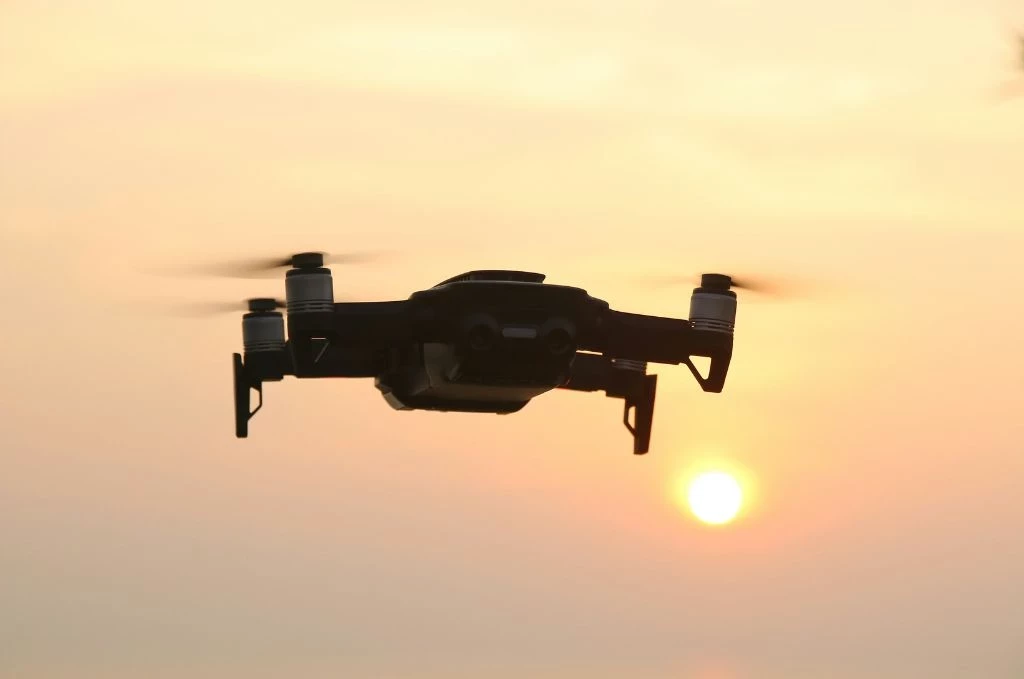
Unmanned aerial vehicle manufacturers are offering up drones equipped to drop sonobuoys and anti-submarine torpedoes as replacements for crewed maritime patrol aircraft or anti-submarine helicopters. They envisage them transmitting tracking data to warships or shore bases, where decisions on weapon employment will be made.
As the world has seen in the Black Sea and the Straits of Hormuz in recent months, it is relatively straightforward to fit robot vessels with weapons to allow them to take the offensive. Already, navies are fielding robot mine counter-measures flotillas, so it can not be far off from these vessels being outfitted to hunt submarines.
Although the latest generation of technology offers navies many answers to real-world operational challenges it is still immature in several crucial areas.
The Black Sea and the Straits of Hormuz are not the harsh North Atlantic, with its high sea states and furious storm systems, so they are not seen as true tests of robot vessels.
So, there is a degree of understandable caution about throwing out all the 'old tech' until the 'new tech' is fully proven. Even the most cautious admirals are starting to recognise that the new revolution in maritime ISR comes with such massive cost savings that it can no longer be ignored.