Seabed Security: An Interview with Julien de Saint-Quentin
Add bookmark
Global reliance on subsea cables, pipelines and offshore energy networks is growing. As a result, the seabed has become a significant strategic domain. Protecting this critical infrastructure is now a key concern for governments, navies and industry.
Ahead of the Seabed Security Conference (13th - 14th October 2026, Troia, Portugal), I spoke with Julien de Saint-Quentin, who has worked as a senior officer in the French Navy for 27 years. Julien was a strategy advisor to the First Sea Lord (2012-2015) and the Head of the French Navy (2016-2020), as well as a naval attaché in London (2020-2023). Together, we spoke about the evolving threat landscape and the capabilities needed to secure critical undersea infrastructure.
How has the strategic importance of the seabed evolved in recent years, and what do you see as the most significant threats to critical underwater infrastructure today?
The seabed has shifted from being primarily a technical or commercial layer to becoming a strategic one.
Twenty years ago, when I was in the Navy, most people associated seabed activity with offshore energy or niche military missions handled by specialists. Today, however, the seabed carries digital traffic, energy networks, military sensing systems, and much of the physical infrastructure that supports the global financial system. In other words, modern economies depend far less on what floats and far more on what runs underwater – and unfortunately, much of it remains out of sight.
The threat landscape has also evolved. It is no longer limited to classic sabotage scenarios. While deliberate sabotage by states or proxies remains possible, the more likely challenge lies in the broader “grey zone”.
This includes activities such as anchor dragging, which is highly deniable, cyber intrusion into control systems, and intelligence preparation of the environment. In many cases the objective is not total destruction - although that remains possible in certain locations – but rather persistent ambiguity.
Such actions create disruption without clearly crossing the threshold of aggression or attribution that would justify a military response.
To what extent is seabed activity becoming a domain of strategic competition between states, and how should European navies adapt their posture in response?
Seabed activity is already a domain of strategic competition, but it has not yet been treated doctrinally in the same way as air, surface, or even cyber operations. Cyber, for example, receives far greater strategic attention than underwater threats.
States recognise that seabed infrastructure has three important characteristics. First, it offers significant leverage - damaging a single submarine cable can have enormous consequences. Second, it provides deniability. And third, it creates asymmetry, because the cost of interference can be relatively low.
This is particularly relevant for Europe. The continent’s infrastructure is geographically concentrated, largely commercially owned, and embedded in economies that rely heavily on digital flows rather than physical goods.
European navies, therefore, need to shift from episodic protection to persistent awareness.
There is often discussion about deep-sea robots operating at 6,000 metres, which is impressive technology. But that is not the core issue. The real challenge is more comparable to medicine: prevention before surgery. We may be good at responding to crises, but we are far less effective at preventing them.
That means placing greater emphasis on routine monitoring, pattern analysis, and rapid attribution.
Four elements are particularly important:
- Presence - you must be there.
- Understanding normal behaviour - recognising what looks normal and what does not.
- Civil-military cooperation - commercial actors hold a great deal of useful data and equipment.
- Deterrence by visibility - simply being present can have strategic effects.
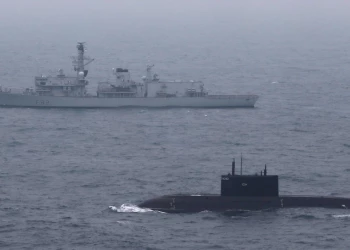
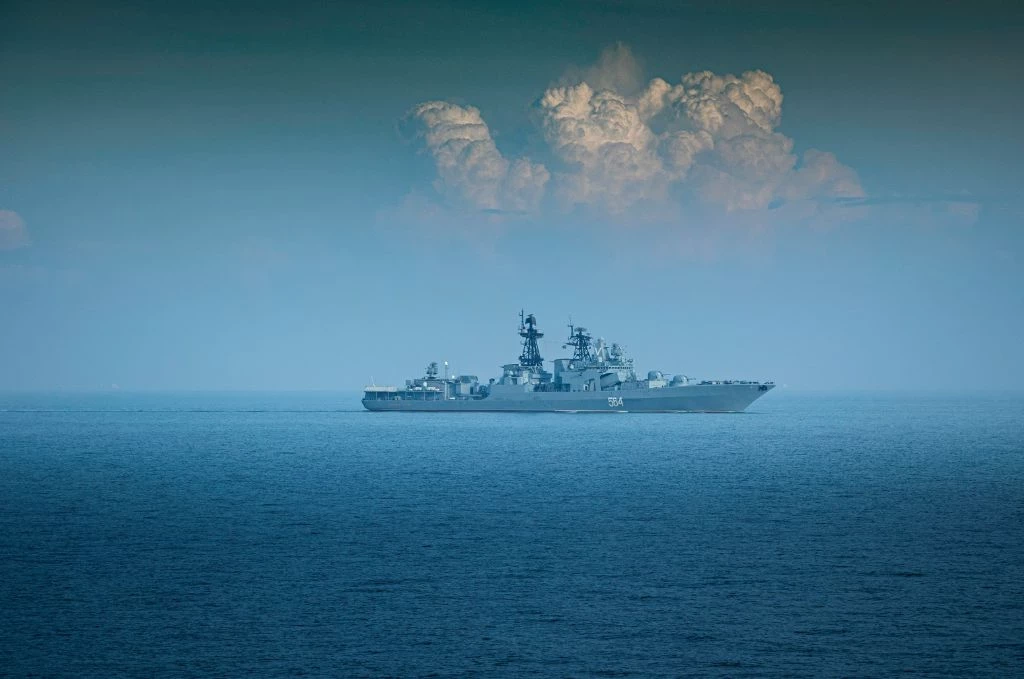
We often talk about the Russian vessel Yantar operating around the Irish Sea. Its presence alone has strategic significance. Responding visibly would also carry strategic value.
Finally, there must be stronger cooperation with commercial operators, including pre-agreed response frameworks.
In essence, the right approach is a combination of infrastructure resilience and air-policing style monitoring, rather than traditional sea control.
What operational capabilities do navies need to monitor and protect critical undersea infrastructure across such vast maritime areas?
The first requirement is recognising that no navy can physically guard every cable or pipeline.
Even within policymaking circles, the scale of the problem is often underestimated. I have recently heard people ask whether unmanned vehicles could simply patrol cables continuously. That is unrealistic - the scale is enormous.
The key capability is prioritised, risk-based persistence.
First, navies need wide-area maritime surveillance combined with seabed risk mapping. You must know where to focus your attention and when. If a vessel such as Yantar is operating in a particular area, that becomes a tripwire indicating where monitoring should be intensified.
Second, persistent unmanned presence is essential. It is not economically viable to use manned platforms for routine monitoring across such large areas. High-value assets should be reserved for high-value missions rather than simply patrolling the ocean.
Third, navies require deployable inspection and intervention capabilities. Much of this expertise already exists in the commercial sector and should be accessed through leasing arrangements or cooperation frameworks.
Following an incident, rapid technical assessment is also critical. Sometimes sensors built into cables can provide this information, but in other cases, specialist diving or inspection systems are required.
In simple terms, the required capability can be summarised in four steps:
- Detect - understand what is happening.
- Attribute - determine who or what caused it.
- Intervene - inspect, protect, and repair infrastructure.
- Recover - restore services and reassure governments and markets.
In many respects, this resembles forensic work rather than warfare. In 2007, during a UN mission, we counted aircraft violations during an active conflict to provide evidence for international policy. Undersea security now requires a similar approach.
We need forensic capabilities such as seabed imagery, anchor-track analysis, vessel behaviour reconstruction, and clear chains of evidence to support legal or political action.
In short: fewer assumptions and more sensing. Fewer heroic responses and more routine resilience.
How will autonomous and unmanned maritime systems change the way underwater infrastructure is monitored and secured?
Autonomous and unmanned systems are essential because the problem is fundamentally one of scale, persistence, and cost.
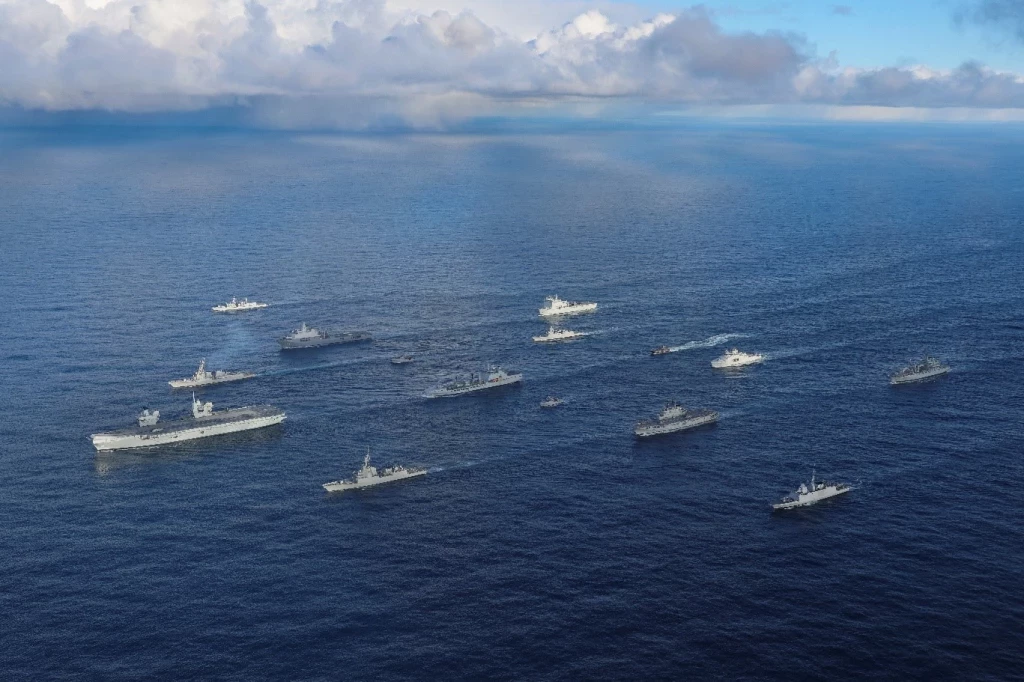
You cannot monitor large maritime areas using only frigates, mine countermeasure vessels, or submarines. These platforms are simply too expensive for routine monitoring tasks. Based on my own experience, performing the same activity with a traditional naval platform can cost roughly forty times more than using unmanned systems.
However, drones also have limitations. They perform specific tasks well but lack the versatility of major naval platforms. The correct model is therefore complementary: use drones for routine tasks and reserve high-end platforms for complex missions.
Unmanned systems change the model in three important ways:
- Persistence becomes affordable
- Sensing becomes distributed
- Routine presence becomes politically easier
Deploying a submarine sends a strong strategic signal. Deploying a network of drones to monitor the same area is far less politically escalatory.
The overall approach should therefore be a system of systems:
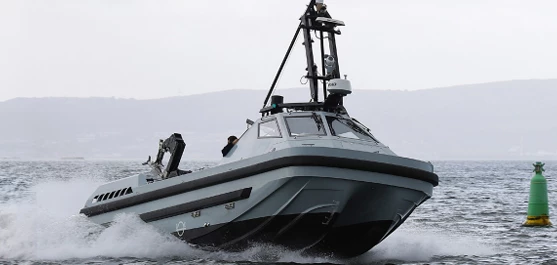
- Unmanned surface vessels (USVs) for patrol and cueing
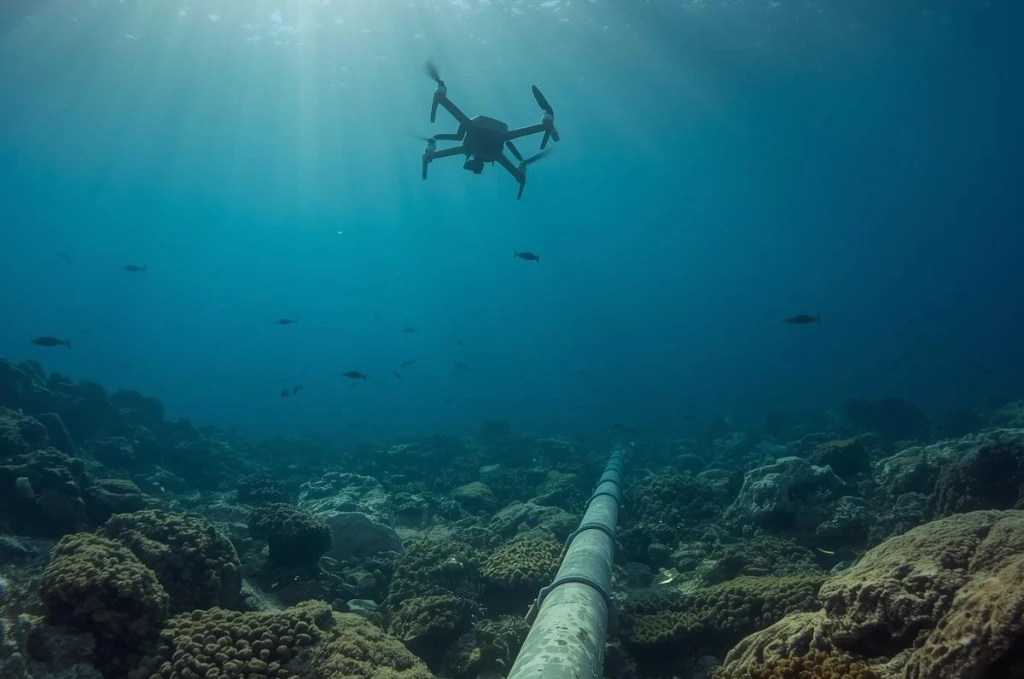
- Unmanned underwater vehicles (UUVs) for close inspection
- Fixed or semi-fixed sensors for baseline awareness
High-value naval platforms can then be deployed when escalation or complex intervention is required.
Another important effect is that unmanned systems blur the traditional boundary between military and civilian actors. Infrastructure operators, coast guards, regulators, and commercial providers can all operate similar UUVs, even though they cannot operate frigates or submarines.
So the real shift is not autonomy itself, but the creation of repeatable, industrial-scale presence.
What capabilities will be most critical in achieving reliable seabed situational awareness?
The most important capability may not be a platform at all - it is data fusion.
Seabed situational awareness will come from combining multiple sources of information, including:
- seabed mapping
- cable and pipeline route data
- AIS and vessel behaviour patterns
- sonar and acoustic sensing
- subsea inspection data
- telemetry from infrastructure operators
The most fundamental requirement is establishing a baseline understanding of what “normal” activity looks like. Without that baseline, it is impossible to detect anomalies.
I spent months operating in the northern Indian Ocean, and the key lesson is that understanding normal patterns allows you to set the right thresholds and focus attention effectively.
The second layer is sophisticated multi-source sensor fusion that can detect anomalies – the tripwires I mentioned earlier.
The third layer is sharing the operating picture. This is where things become complicated because of classification, national sensitivities, and commercial interests. For example, a military command may hesitate to share submarine data with a private company or another nation.
There is, therefore, always a trade-off between operational efficiency and operational security.
In summary, three elements are essential:
- Baseline mapping and understanding normal behaviour
- Automated anomaly detection through data fusion]
- Human analytical judgement at the end of the chain
Human judgment remains crucial in distinguishing intent. For example, analysing an anchor track alone cannot tell you whether an anchor was accidentally dropped or deliberately dragged. Context and analysis are required.
What models of cooperation will be most effective in strengthening resilience across the seabed security ecosystem?
The worst possible model is fragmentation - where companies, governments, and nations operate in separate stovepipes.
The most effective approach is a hybrid model combining military and commercial actors under shared governance structures.
Commercial ownership is already a reality for much of this infrastructure. Governments tend to provide legal authority and strategic coordination, while companies provide technical expertise and funding.
At the national level, security coordination should establish priorities and determine what information can be shared with allies. Beyond that, regional cooperation will also be essential.
Because cables and pipelines cross maritime boundaries, basin-level coordination – in areas such as the North Atlantic or the Mediterranean – will be necessary. This could involve coordination cells similar to those used in fisheries protection, with joint exercises, shared incident reporting, and pre-authorised information-sharing mechanisms.
Each actor brings different strengths:
- Telecom and energy companies possess the most detailed technical data.
- Navies provide intelligence, escalation management, and deterrent presence.
The main obstacles are not goodwill but practical constraints: classification rules, liability concerns, and different operating rhythms. Navies operate on long time horizons, whereas commercial actors follow financial cycles.
Ultimately, the right model will be routine, coordinated, and pre-negotiated. It cannot be improvised during a crisis.
What role can new funding approaches or institutional investment play in supporting long-term seabed security capabilities?
Seabed security is exactly the kind of mission that is strategically urgent but bureaucratically underfunded.
Militaries tend to favour visible and sophisticated projects such as aircraft carriers or advanced weapon systems. Politicians also prefer highly visible programmes. Underwater infrastructure protection, by contrast, is less visible and therefore less politically attractive.
However, from an investment perspective, the case is strong.
These capabilities are defensive, non-aggressive, and largely dual-use. They support infrastructure resilience rather than combat operations, which makes them more compatible with ESG investment criteria than traditional defence systems.
They also offer the characteristics that institutional investors typically seek: stable counterparties, long-term cash flows, and predictable revenue streams.
The main barrier is often on the government side. Many governments have an ownership bias - they prefer to own assets outright rather than contract for services over long periods. Yet in this area, long-term service contracts may be more effective than state ownership.
Currently, there is also a “valley of death” between early-stage innovation and large-scale deployment. Venture capital can fund innovative technologies, but scaling those technologies requires long-term contracts.
Private finance can bridge that gap if governments provide predictable, long-duration frameworks.
Ultimately, the challenge is not whether capital exists – it does. The real question is whether governments can create credible frameworks that allow that capital to be deployed.
Looking ahead to the next decade, what developments will most significantly reshape seabed security?
First, dependence on seabed infrastructure will continue to increase. There will be more submarine cables, more offshore energy systems, more grid interconnectors, more data centres, and far greater data flows driven by AI.
Second, commercial infrastructure will become increasingly strategic. Recent developments in areas such as the Strait of Hormuz highlight how vulnerable critical transport routes can be.
Third, advances in autonomy and low-cost sensing will make persistent monitoring far more feasible.
Fourth, forensic and attribution capabilities will improve. This is crucial because deterrence only works when hostile acts can be attributed. Without attribution, deterrence is extremely difficult – as we see in the cyber domain.
Strategically, states must stop viewing the seabed purely as an engineering environment and begin treating it as a contested strategic domain, similar to cyberspace.
The nations best positioned to respond will combine four elements:
- naval capability
- industrial depth
- strong data and integration capabilities
- effective public–private cooperation
Few countries currently possess all four at scale.