FLRAA vs NGRC – How the US and NATO Are Shaping the Future of Military Helicopters
Add bookmark
Militaries are accelerating the modernisation of their rotary fleets for a number of reasons, including technological change and increasingly contested airspaces. Forces require aircraft that can travel further, faster and survive sophisticated aviation environments (i.e. operate seamlessly alongside autonomous systems).
Two major programmes are set to define the next generation of Western vertical lift: The US Army’s Future Long-Range Assault Aircraft (FLRAA) and NATO’s multinational Next Generation Rotorcraft Capability (NGRC) project.
While both intend to replace ageing fleets and deliver advances in performance, they have taken different approaches in doing so. This article offers a comparison of the programmes and clarifies their intentions and timelines to help us better understand what each programme means for the future of military aviation.
What Is FLRAA?
Developed under the U.S. Department of Defense’s Future Vertical Lift (FVL) initiative (a programme to create a family of next-generation vertical lift aircraft) FLRAA is the United States’ vertical-lift modernisation effort - designed to replace ageing rotorcraft and deliver next-generation capability. In December 2022, following a competitive evaluation, the Army selected Bell’s V-280 Valor tiltrotor as the winning design.[1]
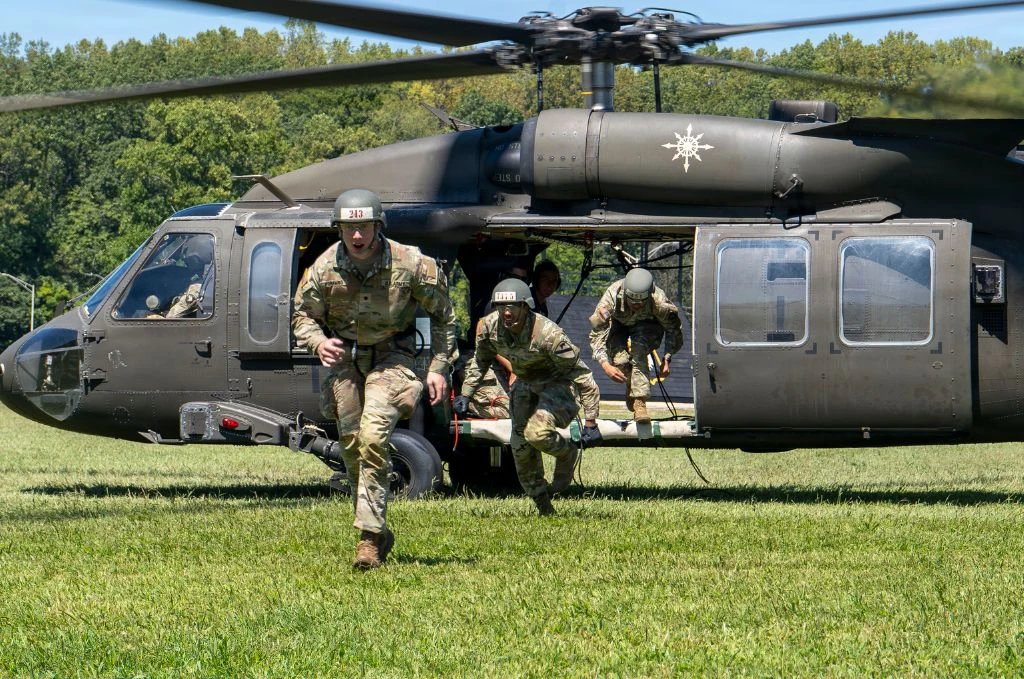
As part of the long-term aviation transformation plan, the programme intends to replace elements of the UH-60 Black Hawk fleet from the 2030s onwards.
FLRAA intends to provide a major improvement in performance via:
- higher speed
- extended range
- greater survivability
- full digital interoperability
This will be achieved through its tiltrotor configuration, which enables a cruise speed significantly above that of the Black Hawk. Meanwhile, the aircraft’s open-systems architecture is designed to support autonomy, modular mission sets, and seamless integration into the US Army’s wider Future Vertical Lift ecosystem.[2]
What Is NGRC?
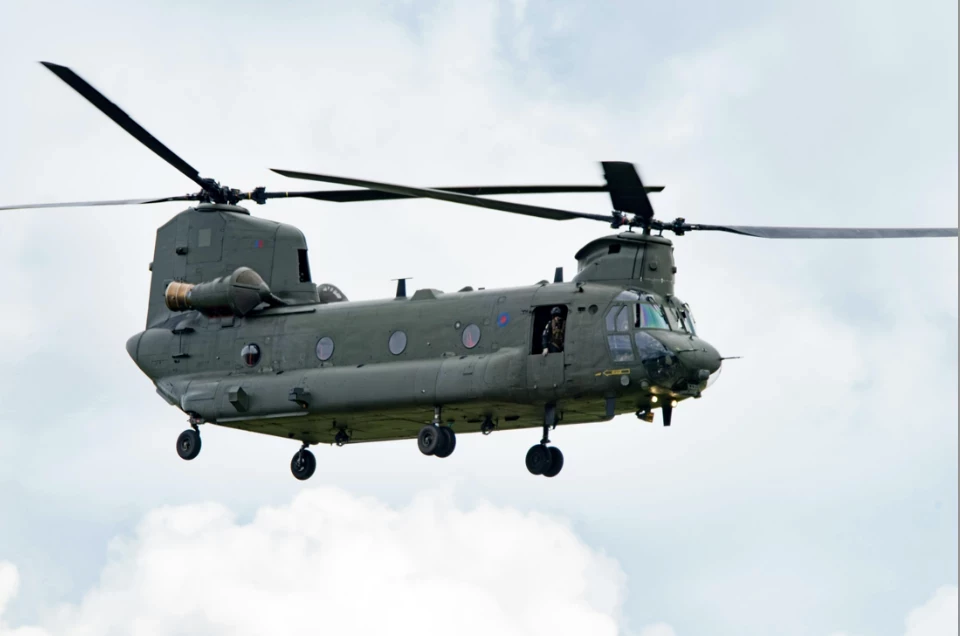
The Next Generation Rotorcraft Capability (NGRC) is a NATO multinational development programme intended to deliver a next-generation medium, multi-role rotorcraft capability for allied forces. This initiative brings together participating nations (Canada, France, Germany, the United Kingdom, Italy, Greece and the Netherlands) with the aim of replacing a significant share of ageing medium multi-role helicopter fleets as they reach the end of their life cycle in the 2035–2040 period.[3]
The core objective of NGRC is to deliver an aircraft which is:
- Cost-effective
- Collaboratively developed
- Has improved range
- Improved speed
- And improved survivability
Additionally, the programme places a strong emphasis on modularity as it wants to ensure the future rotorcraft can support a wide spectrum of NATO missions such as the transportation of troops, airborne medical evacuations, maritime operations and search and rescue.
Alongside these core requirements, NGRC is exploring advanced technologies such as more efficient propulsion systems, flexible digital architecture and new lightweight materials - all of which are intended to future-proof the aircraft and improve interoperability across allied forces.[4]

FLRAA vs NGRC: Strategic Drivers
On the one hand, the FLRAA programme is driven by how the US Army expects to operate between 2030-2040, particularly across the vast distances of the Indo-Pacific region. These future concepts prioritise moving forces quickly over long ranges and operating effectively in contested environments against peer adversaries.
The NGRC programme is driven by NATO’s collective requirement to manage the replacement of ageing medium-lift fleets in a coordinated way. It is well known that many allied nations face similar capability gaps and budgetary pressures – in turn, this creates a strong incentive to strive for a shared development programme that improves interoperability while reducing long-term sustainment and procurement costs.
As a result, we have a strategic distinction. FLRAA is a nationally driven programme optimised for US operational demands, while NGRC reflects a multinational approach designed to balance capability, affordability and alliance cohesion.
Technical Differences
FLRAA and NGRC have many technical differences, including their maturity, design approach and intended performance.
As mentioned previously, FLRAA is based upon Bell’s V-280 Valor tiltrotor. This aircraft uses proprotors that rotate forward, allowing a high-speed flight and a straight-wing configuration. This design simplifies transmission compared to earlier tiltrotor systems. Additionally, this configuration enables a cruise speed of around 280 knots and long-range performance intended to exceed current medium-lift helicopters.¹
The V-280 Valor tiltrotor aircraft incorporates a government-mandated modular open-systems architecture and a digital backbone intended to enable faster software upgrades, integration with new sensors and weapons, and greater interoperability across Future Vertical Lift platforms.[5]
In direct contrast, NGRC remains in the concept and exploratory phase as of 2025. NATO has not committed to a single airframe and continues to evaluate multiple architectures submitted by industry, including:
- Compound rotorcraft
- Tiltrotor
- Coaxial
- Conventional helicopter concepts.
Rather than selecting a platform at this stage, the programme is focused on testing assumptions and refining requirements, with Next Generation Rotorcraft Capability (NGRC) programme manager Cyril Heckel noting:
‘it was not the objective to select a solution but to challenge our initial assumptions and conopos.’
In this early phase, priorities are centred on interoperability, affordability and the ability to support a broad set of NATO mission sets across future operations.[6]
Due to the fact that FLRAA has already completed competitive prototyping and has a selected design, this means it sits much further along in the development stage. Meanwhile, NGRC has a focus on collaboratively shaping requirements before committing to a platform architecture. Timelines also diverge: FLRAA is now progressing through engineering and manufacturing development, whereas NGRC aims for fielding closer to 2040.
Operational Roles & Mission Sets
The purpose of FLRAA is to support the full spectrum of U.S Army air assault and air mobility missions. This includes a range of factors such as long-range air assault, tactical resupply, aeromedical evacuation, combat search and rescue, humanitarian assistance and special operations support. Its design enables rapid insertion and extraction of forces across extended theatres, supporting dispersed operations and high-tempo manoeuvre.[7]
Meanwhile, NGRC is anticipated as a highly flexible medium-lift platform for NATO members. The programme will be capable of performing troop transport, medical evacuation, search and rescue and, potentially, naval or amphibious variants depending on national requirements. Its mission set reflects NATO’s diverse operational needs - from regional defence and humanitarian response to alliance-wide interoperability.[8]
In operational terms, FLRAA prioritises speed and reach for expeditionary assault missions, while NGRC is focused on delivering versatile, multi-role utility across a diverse alliance operating environment.
What This Means for the Future of Military Helicopters
FLRAA and NGRC represent an exciting shift to way in which future military helicopters will be designed and deployed. Both programmes underline:
- higher speed
- greater range
- stronger survivability
- enhanced digital integration
These are all essential components for operating in contested and multi-domain environments. Both programmes also signify a move toward crewed–uncrewed teaming and modular, upgradeable architectures that can evolve with emerging technologies.
These programmes will be discussed in more detail at the International Military Helicopter Conference taking place from the 24 - 26 February 2026 at Novotel London West, London, United Kingdom.
References
[1] Bell Textron Inc. “Textron’s Bell V-280 Valor Chosen as New U.S. Army Long-Range Assault Aircraft.” Bell Newsroom, December 5, 2022. Accessed December 8, 2025. https://news.bellflight.com/en-US/220998-textron-s-bell-v-280-valor-chosen-as-new-u-s-army-long-range-assault-aircraft/.
[2] Congressional Research Service. “The U.S. Army’s Future Long-Range Assault Aircraft (FLRAA).” Congressional Research Service In Focus, IF12771. Accessed December 9, 2025. https://www.congress.gov/crs-product/IF12771.
[3] Peter Felsted. “Studies Proceed in Earnest to Develop a Next-Generation NATO Rotorcraft.” European Security & Defence, February 2025. Accessed December 9, 2025. https://euro-sd.com/2025/02/articles/42830/studies-proceed-in-earnest-to-develop-a-next-generation-nato-rotorcraft.
[4] NATO. “Multinational Capability Cooperation.” North Atlantic Treaty Organization. Accessed December 10, 2025. https://www.nato.int/en/what-we-do/deterrence-and-defence/multinational-capability-cooperation.
[5] Congressional Research Service. “The U.S. Army’s Future Long-Range Assault Aircraft (FLRAA).” Congressional Research Service In Focus, IF12771. Accessed December 10, 2025. https://www.congress.gov/crs-product/IF12771.
[6] Dominic Perry. “NGRC Project Reveals Concept Studies Including High-Speed Compound Rotorcraft and 17t Tiltrotor.” FlightGlobal, January 15, 2025. Accessed December 11, 2025. https://www.flightglobal.com/helicopters/ngrc-project-reveals-concept-studies-including-high-speed-compound-rotorcraft-and-17t-tiltrotor/165439.article.
[7] Congressional Research Service. “The U.S. Army’s Future Long-Range Assault Aircraft (FLRAA).” Congressional Research Service In Focus, IF12771. Accessed December 11, 2025. https://www.congress.gov/crs-product/IF12771.
[8]Vivienne Machi. “Five European Allies Sign On to Build NATO’s Next Medium-Lift Helicopter.” Defense News, November 20, 2020. Accessed December 12, 2025. https://www.defensenews.com/global/europe/2020/11/20/five-european-allies-sign-on-to-build-natos-next-medium-lift-helicopter.