Redefining Readiness for Modern Military Flight Training
Add bookmark
Ahead of Defence iQ’s Military Flight Training conference taking place in Switzerland from the 31st March – 2nd April 2026, I sat down with Brigadier General Chris Amrhein to discuss how the United States Air Force is redefining operational readiness for a rapidly evolving security environment.
Military flight training is under real pressure. The pace of operational change is accelerating, platform complexity is increasing, and the margin for error in contested environments is shrinking. Recent conflicts have reinforced a simple truth: air dominance is not only about aircraft capability, it is about how well we prepare the people who operate them.
For Brigadier General Christopher Amrhein, that preparation starts with clarity of purpose. As Director of Operations and Communications at Air Education and Training Command, he oversees the world’s largest military training enterprise. His perspective is grounded in both strategic oversight and lived operational experience. Readiness, as he makes clear, is not theoretical. It is the ability to respond without notice, to perform under pressure, and to integrate seamlessly across domains and coalitions.
In this interview, he outlines how the United States Air Force is reshaping pilot training to meet modern demands: embedding competency-based progression, integrating advanced simulation, preparing for human-machine teaming, and aligning acquisition with operational reality. The implications extend well beyond one service or nation. As allied air forces confront similar challenges - pilot shortages, multi-domain complexity, and generational technology shifts - the need for shared insight and collaboration has never been greater.
The full, extended interview can be downloaded via the Military Flight Training event website.
1. In your current role as Director of Operations and Communications at Air Education and Training Command, you oversee one of the largest and most complex training enterprises in the world. From your perspective, what does operational readiness really mean today, and how has your own career shaped how you define it?
Operational readiness is mission readiness. From our perspective in overseeing the training enterprise, the central question is whether we are producing what the warfighting commands need.
Within Air Education and Training Command, aviation training is only part of the picture. Around five per cent of our training is pilot training. When you include combat systems operators, air battle managers and remotely piloted aircraft, that rises to roughly seven or eight per cent. The majority of our output supports technical and non-flying career fields. Every Air Force Speciality Code must be operationally ready.
Our role is to translate operational demand into training outcomes. For example, if USAFE, Air Combat Command, Air Mobility Command or PACAF require aviators capable of a specific mission set, that requirement must be reflected in our formal training units. Those units must graduate aircrew who meet that standard. Working backwards, we must ensure the earliest phases of training build the competencies required for follow-on success. It is a building-block approach, underpinned by competency-based mapping.
Operational readiness is not just occupational competence. It also means being physically and mentally prepared. In my operational career, I received phone calls placing me into crew rest for missions launching in under 24 hours. There was no opportunity to “get one more sortie in.” You must be ready at all times. That mindset - training to be razor sharp because you never know when the call will come - has shaped how I define readiness.
2. Recent conflicts have highlighted that legacy training pipelines often struggle to keep pace with modern operational demands. From an AETC standpoint, where are the most critical gaps between how pilots are trained today and the realities they will face in contested, multi-domain environments?
Training pipelines must respond to operational demand, and that requires early adjustment in the system. The challenge is being predictive rather than reactive. We need a strategy that aligns resourcing with future requirements and builds the enterprise accordingly.
Over the past five to six years, pilot training has undergone multiple revisions. When I arrived at 19th Air Force in 2021, we were implementing Pilot Training Next, introducing a competency-based model and leveraging emerging technologies. Technology is advancing at an incremental rate, and we must establish a foundation that can evolve alongside it.
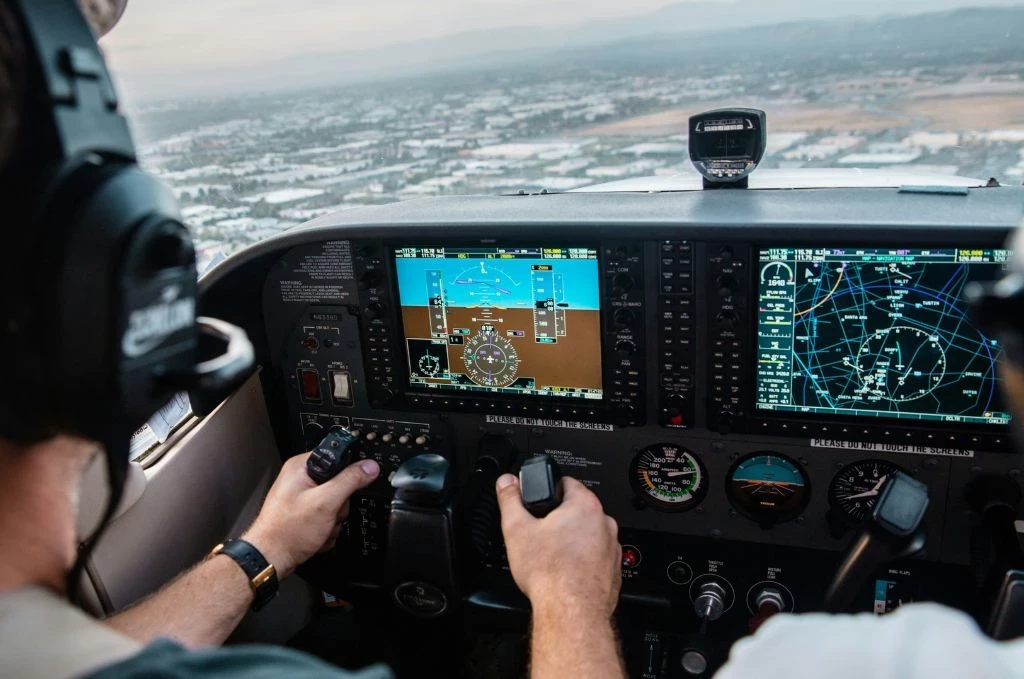
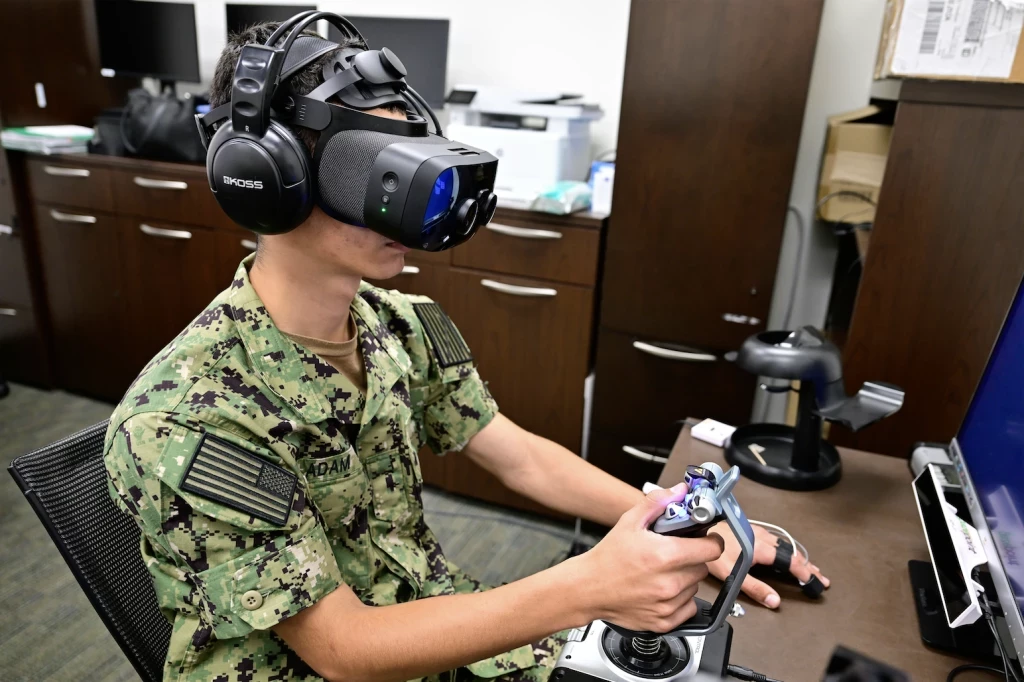
Subsequent iterations - Pilot Training 2.0 and 2.5 - focused on integrating more technology. We expanded simulator capacity, including lower-cost, high-access devices. While traditional full-motion simulators remain valuable, we can now replicate many training elements at scale. This provides more repetitions and more deliberate practice.
When I went through pilot training, preparation often meant “chair flying” with a cardboard cockpit layout and a plunger as a control stick. Today, trainees can replicate and record sorties in simulator-based environments, which is a significant leap forward.
Our current model, FUPT (Future Undergraduate Pilot Training), incorporates best practices from civilian aviation, including FAA Part 141 standards. Trainees earn single- and multi-engine instrument ratings and receive more instrument experience than previously. This strengthens foundational airmanship.
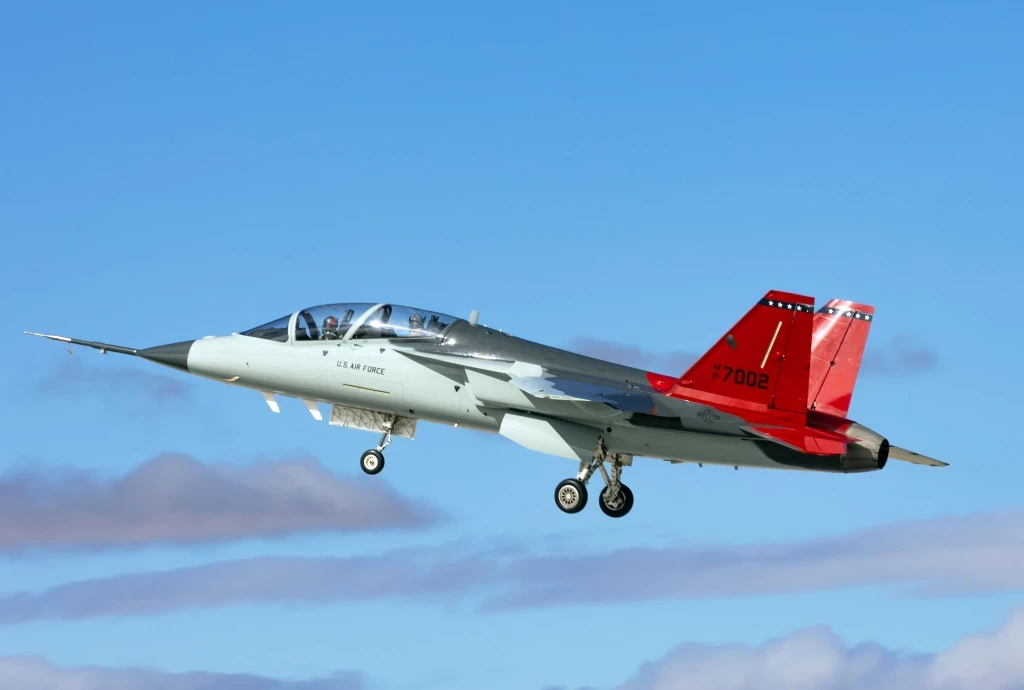
We have also begun receiving the T-7, which represents the future of our pilot training enterprise. Designed to align with fifth-generation and beyond platforms, it reflects a deliberate shift toward predictive adaptation rather than reactive adjustment.
3. Pilot shortages remain a persistent challenge across allied air forces. Beyond recruitment, what changes to training design, throughput, or force development do you believe are most effective in accelerating readiness without compromising quality?
We do not lack individuals who want to be pilots. The priority is identifying top talent and then assessing skills at multiple points throughout training.
We have shifted to a competency-based model. In the past, there was no proficiency advance. Now, once a trainee demonstrates mastery of a defined competency, they can progress more quickly or reallocate sorties to areas that require further development. This allows us to accelerate progression without lowering standards.
Quality is preserved because advancement is contingent on meeting defined competencies. The benchmark does not change; the pathway becomes more efficient.
We are on track to produce approximately 1,500 pilots in Fiscal Year 2026. Questions about quality inevitably arise. Our approach is data-driven. We assess performance across iterations of training reform - UPT Next, UPT 2.0, 2.5, and now FUPT - and measure outcomes. The data show graduates performing on par with, and in some cases exceeding, previous cohorts, in part due to improved technology and training tools.
For full access to the extended discussion, including additional analysis and forward-looking perspectives, visit the Military Flight Training conference website and download the complete interview.