MGen Scott Malcolm on Deployed Medical Readiness
Add bookmark
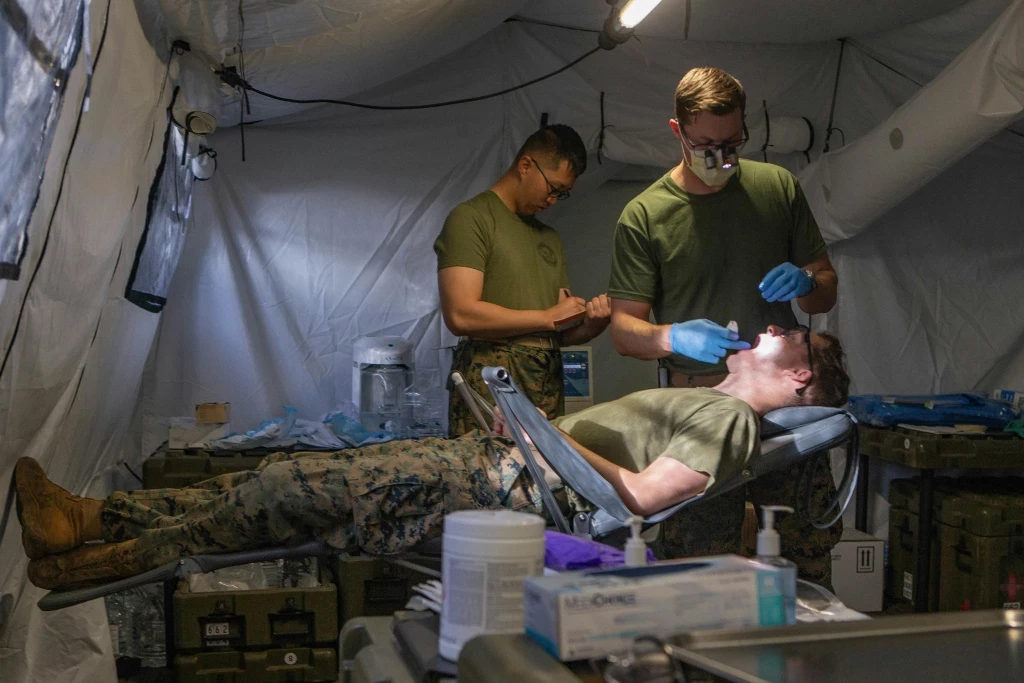
Ahead of the Deployed Medical & Healthcare Delivery conference, taking place 24–25 March 2026 at Cavendish Venues, The Minster Building, London (UK), I sat down with Major General Scott Malcolm, Surgeon General of the Canadian Armed Forces, to discuss the realities of medical support in today’s evolving threat environment.
In our conversation, MGen Malcolm reflects on the operational experiences that shaped his leadership - from Bosnia and Sri Lanka to Kandahar and Canada’s pandemic response - and explains why militaries cannot afford to plan for the “last war.” He outlines the pressures facing NATO and partner nations, including mass casualty planning, patient evacuation, workforce constraints, and medical logistics in contested environments. He also makes the case for deeper civil–military–industry integration and stronger interoperability as essential foundations for readiness, resilience, and deterrence.
To begin, could you outline your professional journey within the Canadian Armed Forces and highlight the operational and leadership experiences that have most shaped your approach to deployed medical care?
For sure - and thank you for taking the time to speak with me.
I’ve spent much of my career at the tactical level, which gave me extensive deployed operational experience across a range of environments. In my first year of service, I deployed to Bosnia on a peacekeeping mission, followed shortly after by a humanitarian deployment to Sri Lanka following the 2004 tsunami. Those early experiences shaped my understanding of what it means to deliver medical care in austere and uncertain conditions.
Between deployments, I worked within Canada’s primary care military health system. As we do not operate military hospitals and rely heavily on the civilian sector for specialist and surgical care, I gained a strong appreciation for ensuring personnel remain medically fit and operationally ready.
In 2008–2009, I deployed to Afghanistan as the Officer Commanding Role 1 in Kandahar, leading a team of nearly 90 medical technicians and physician assistants. I was responsible for planning medical support to combat operations and ensuring our teams were prepared to manage casualties both on patrol and at forward operating bases. It was a defining leadership experience, particularly given the responsibility of placing medical personnel in harm’s way while supporting operational objectives.
Following Afghanistan, I moved into progressively senior leadership roles within our clinic network, including regional advisory positions overseeing multiple clinics and supporting Army, Navy, and Air Force personnel. After promotion to Colonel, I became Director of Force Health Protection. That role taught me that leadership is not about possessing every technical answer, but about translating expert advice into operationally realistic plans.
I later commanded clinics across Western Canada and completed our National Security Programme alongside allied officers. Shortly before the pandemic, I returned to Ottawa as lead medical planner, planning the repatriation missions from Wuhan and Japan, deployments into long-term care facilities, and later supporting the national vaccine rollout while seconded to the Public Health Agency of Canada.
After commanding Health Services Division, I assumed the role of Surgeon General in December 2023.
It has been a varied career spanning peacekeeping, combat operations, domestic crisis response, and strategic leadership - and the current global security environment makes this role both demanding and consequential.
Having served across a range of operational environments, from Bosnia and Afghanistan to disaster response and pandemic leadership, how has the nature of deployed medical support evolved, and what pressures are most acute in today’s security environment?
A great deal has changed. Afghanistan heavily shaped my understanding of deployed healthcare. However, one of the classic risks in military planning is preparing for the last war instead of the next one. It’s natural to gravitate toward what we know - but that is precisely the danger.
In Afghanistan, we operated with air superiority. Casualties could typically be evacuated within 30 minutes to a Role 3 facility delivering world-class care, with survival rates of 98–99%. That created a particular model of medical support.
Contrast that with the Ukraine theatre: no air superiority, a peer or near-peer adversary, extended evacuation times, and a highly contested environment. The question becomes: how do we deliver equivalent medical outcomes under fundamentally different conditions?
This remains one of the most complex problems we face. It begins with understanding how the next fight will be fought. Medical support planning is intrinsically linked to operational doctrine.
If rapid evacuation is not possible, we must consider delivering more care closer to the front line. Yet drones and persistent surveillance increase risk to forward-deployed medical personnel. With scarce resources - surgeons, anaesthesiologists, specialist nurses - there is a delicate balance between risk and benefit in pushing those capabilities forward.
We are further along in our thinking than we were a year ago, but I would not claim we have definitive answers. We must remain adaptable and avoid defaulting to past models. Preparation must cover a full spectrum of scenarios.
With respect to acute pressures: Canada and its partners and allies must be prepared to respond at scale and at the speed of relevance in an increasingly dangerous, unstable, and unpredictable global security environment. While it is difficult to predict exactly what the future will bring, we need to rapidly plan for operational contingencies that have not been experienced for generations. Fail to plan, plan to fail. Hope is not a plan of action.
Key to this line of effort is enhancing mutual operational readiness and interoperability with partners and allies across all domains, including medical. High levels of interoperability and readiness have a deterrent effect: they change the cost/benefit analysis for potential adversaries and reduce the likelihood of conflict.
The NATO Medical Action Plan emphasises a ‘whole of society’ approach to medical readiness. From your perspective as Surgeon General, what does effective civil–military–industry integration look like in practice, and where do NATO nations still face friction?
There is a lot to unpack.
In November 2024, I was attending a NATO Headquarters meeting. In an elevator, a British gentleman noticed the number of people in uniform and commented that it made sense, given that “World War III is around the corner.”
That comment struck me. For many Canadians, conflict in Europe had felt geographically distant. While the Canadian government and Armed Forces were aligned on the seriousness of the situation, broader society had not fully internalised it.
That has changed. With global escalation and increased defence investment, Canadians are now far more engaged. Within the healthcare sector, I’ve seen strong support for preparedness initiatives - particularly heartening given healthcare systems are still recovering from the pandemic.
We’ve stood up a federal–provincial–territorial civil–military committee focused on pan-Canadian health system preparedness. That signals serious intent.
The friction lies in execution. The NATO Medical Action Plan identifies the right core issues - regulatory frameworks, workforce shortages, mass casualty planning, patient evacuation, and medical logistics - but moving from concept to implementation is hard.
In Canada, regulatory harmonisation is a priority. Recognising licensure across nations is critical to interoperability and connects directly to workforce shortages. We are exploring how to optimise use of nurse practitioners and physician assistants, and adjust internal training pipelines to accelerate readiness.
Each NATO nation must reconcile these issues within its own system, then contribute coherently to the collective effort.
Mass casualty planning and patient evacuation remain central challenges in peer and near-peer conflict scenarios. Based on recent conflicts and exercises, where do you see the greatest gaps in preparedness, and how should nations be prioritising investment?
Canada’s geography makes us unique - we are far from likely theatres of conflict - so we must deliberately plan how to receive casualties from overseas.
Our system is complex: ten provincial systems, three territorial systems, plus the military health system. Bringing those together into a coherent pan-Canadian response requires deliberate coordination. Integration across jurisdictions is a key challenge.
We need to sustain the positive momentum we now have and continue working with partners and allies. Table Top Exercises (TTXs) such as Exercises CANADA PARATUS and TRILLIUM CURA are major steps forward in enhancing healthcare system resiliency. Stress testing beyond current capacity helps reveal the cracks and seams so we can prioritise what must be improved. This is iterative work that must be sustained and resourced.
That said, TTXs and planning conferences can only simulate so much. We now need to exercise and validate capabilities and TTPs, which requires significant resources, investment, and commitment. There are no shortcuts to high levels of operational readiness and interoperability.
We continue to improve our ability to work effectively with healthcare partners and allies at home and abroad. By enhancing readiness and interoperability - and sharing expertise and best practices — we are all better prepared to respond quickly and effectively to contingencies and crises.
Ex VIGOROUS WARRIOR 26 in Estonia is part of that. The Vigorous Warrior series, organised by the NATO Centre of Excellence for Military Medicine every two years, allows NATO and partner nations to exercise in realistic Article 3 and 5 scenarios, train alongside civilian assets, test doctrinal concepts, and stress medical assets from first responder through field/theatre hospitals to definitive care.
Medical logistics has become increasingly complex, particularly in contested environments. How important is interoperability, both within NATO and with industry partners, in ensuring resilient medical supply chains?
Medical logistics is fundamentally about understanding how the fight will be fought.
How will we move blood and blood products? How do we ensure access to critical medications? How do we reconcile differences in formularies across nations?
The NATO Medical Action Plan has correctly identified the core challenges. Each country must address them domestically before bringing solutions to the NATO table. There is strong progress underway - particularly in Canada over the past year - and while it is a significant undertaking, I am confident we are moving in the right direction to support NATO effectively should the need arise.
Interoperability within NATO and with industry partners is critical for resilient medical supply chains in contested environments. Key to this is adopting NATO-standard digital, “plug and play” capabilities to create shared, transparent, and agile logistics networks. NATO and allied partners are modernising and integrating health services capabilities toward common digitised interoperability, enabling a resilient multinational supply chain. Participation is proportional to national commitment to this modernisation effort.
Several related developments on our side include:
Operational Sustainment Modernization (OSM) Strategy
The CAF are operating at the intersection of rapid technological advances and a shifting geopolitical environment. We increasingly operate in contested logistics conditions, with growing threats to Strategic Lines of Communications. Joint Logistics considerations must be integrated into military planning, threat assessments, and force protection.
OSM sets outcomes for modernising Joint Logistics, resulting in a modernised Joint Logistics Network that is data-driven, resilient, agile, and horizontally integrated. Joint Logistics will be transformed through People, Processes, Technology and Systems, and Governance. Strengthening Joint Logistics and the JLN increases readiness and resilience - and investments here are investments in operational success.
Canadian Joint Forces Command (CJFC)
CFHS recently integrated with a new Level 1 organisation, CJFC, aligned with similar allied structures. Its purpose is to strengthen governance, coherence, and accountability in joint capabilities (like health services and joint logistics) through centralised leadership and clear lines of authority. This supports a pan-domain mindset and more agile joint capabilities, enabling rapid responses to evolving threats.
Health services and logistics are joint capabilities essential to readiness and delivery of joint effects across all domains. Their integration into CJFC supports unified, flexible, operationally effective, and strategically aligned delivery.
Security, Sovereignty, and Prosperity: Canada’s Defence Industrial Strategy
This marks a turning point for the CAF, the Defence Team, and Canadian companies that equip and sustain us. As we rebuild, rearm, and reinvest, Canada is strengthening defence industry and building a more resilient defence industrial base. Procurement will be used to build sovereign capabilities, grow the industrial base, and support domestic suppliers — placing Canadian workers and innovators at the centre of a generational effort to reinforce security and readiness.
By 2035, the strategy aims to create an estimated 125,000 new jobs, increase defence exports by 50%, and expand the share of defence acquisitions awarded to Canadian firms by 70%. Budget 2025 committed $6.6 billion over five years, including $2.1 billion in 2025–26, to accelerate this work.
The strategy is built on five pillars:
- Renewing the Government of Canada’s relationship with industry
- Procuring through a new Defence Investment Agency and a “Build Partner Buy” framework
- Investing purposefully in an innovative Canadian defence sector
- Securing supply chains for critical goods and materials
- Working with partners across Canada, including in the North and the Arctic
You have a strong interest in leadership development, change management, and quality improvement. How critical are these disciplines to modern military medical services, particularly when responding to rapid operational and technological change?
These disciplines are central to everything we are discussing.
Leaders must be adaptable and open. My time in Force Health Protection reinforced that leaders do not need all the answers - they must recognise their limits and leverage the breadth of expertise within their teams.
As rank increases, there can be a self-imposed pressure to appear decisive and all-knowing. Effective leadership is about integrating diverse perspectives and moving from idea to implementation.
In change management, I often remind colleagues: while all improvements are changes, not all changes are improvements. Change for its own sake is not valuable; improvement must be evidence-based and team-driven.
Strong leaders listen to their teams, identify problems, enable solutions, and build cohesion. Leadership and change management are inseparable.
Finally, as NATO allies and partners continue to refine collective medical readiness, what value do forums like the Deployed Medical & Healthcare Delivery conference offer senior medical leaders, and why is now the right moment for stakeholders to engage in this discussion?
Conferences like this provide a safe environment - safe in the sense that participants share a commitment to NATO’s best interests - but are free to present innovative, even provocative ideas.
Progress requires challenging legacy thinking. We cannot plan for the last war; we must plan for the next. That means welcoming creative ideas and testing them rigorously.
Having these discussions outside of crisis conditions is critical. It allows leaders to reflect, internalise, and adjust their thinking before decisions must be made under pressure.
In my own presentation, I intend to challenge how we characterise a “Role 2” capability and propose reconsidering our nomenclature for deployed surgical capability. I welcome debate on that - disagreement is productive.
This conference offers exactly that space: rigorous, collegial challenge. It broadens awareness of gaps and limitations across health systems, clarifies next steps to enhance interoperability, readiness, and resiliency, and strengthens networks and informal relationships that pay dividends during real-world crises requiring rapid communication and coordination.
Any final thoughts?
The magnitude of these defence and security challenges is global, society-wide, pan-domain, and immense in scale and impact. There is a collective realisation that the world has fundamentally changed and that decisive, rapid action is required to be prepared for what may come. This is a much easier sell in Europe, where the threat is closer and shaped by a long history of conflict - but Canada and its partners and allies will rise to the occasion together, as we have time after time before.