How Are Counter-UAS Changing European Land Warfare?
Add bookmark
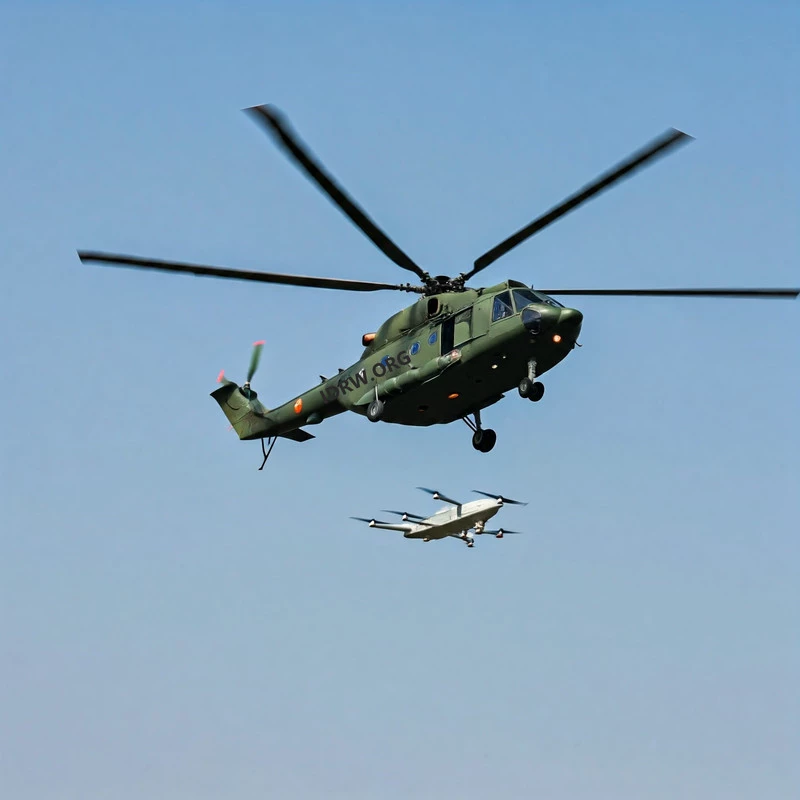
The rapid proliferation of drones is forcing European armies to rethink how land forces are protected, equipped and deployed. Whether used as low-cost FPV weapons against individual vehicles, loitering munitions or part of coordinated attacks, uncrewed aerial systems have undoubtedly become a persistent feature of the modern battlefield.
For European military planners, this has pushed Counter-UAS systems from a specialist capability into a major procurement and force-protection priority. Defence iQ's Land Warfare Global Market Report 2026–2030 identifies counter-drone capability alongside air and missile defence, electronic warfare, autonomous systems and resilient command networks as key areas being shaped by lessons from Ukraine.
The challenge for European land forces is no longer simply how to destroy a drone, but rather how to build affordable, layered and networked Counter-UAS architectures capable of operating at scale.
This article is based on research and analysis from the Land Warfare Global Market Report 2026-2030: Selected Markets, published by Defence iQ and available to download via the Land Warfare Europe website.
Why have Counter-UAS systems become so important?
The war in Ukraine has demonstrated how dramatically inexpensive drones can alter the economics of warfare.
Uncrewed systems are being employed for reconnaissance, targeting, strike missions, logistics support and battle damage assessment. According to the Market Report, low-cost FPV drones have repeatedly destroyed armoured vehicles and artillery systems at a fraction of the cost associated with traditional precision-guided weapons.
This creates a difficult cost-exchange problem. Employing an expensive missile against every small drone is unlikely to provide a sustainable defensive model during prolonged high-intensity operations.
European militaries are consequently pursuing a broader mix of Counter-UAS technologies, including electronic warfare, kinetic interceptors, directed-energy systems and AI-enabled detection. The European Defence Agency's 2024 review highlighted 18 member states investing in C-UAS solutions.
That breadth of activity suggests counter-drone defence is becoming less of a discrete equipment category and more of an integral component of European land-force architecture.
What does a modern Counter-UAS system look like?
There is no single solution to the drone threat.
The Market Report identifies several complementary approaches. Multi-sensor radar and electro-optical/infrared systems can provide detection; electronic warfare can jam or spoof drones; kinetic effectors can physically destroy them; and emerging technologies such as directed energy potentially provide additional options.
The growing emphasis, however, is on combining those capabilities.
NATO exercises have demonstrated layered counter-drone architectures integrating radar, electronic warfare and short-range air defence against drone swarms. At the same time, European militaries are moving towards sensor-to-shooter networks that connect radars, command centres, intelligence systems and interceptors through secure digital architectures.
Counter-UAS therefore increasingly overlaps with Integrated Air and Missile Defence (IAMD). European forces must potentially defend against FPV drones, loitering munitions, cruise missiles, helicopters and ballistic threats simultaneously. The Market Report describes IAMD as a top European defence priority and highlights the growing investment in layered systems covering different ranges and altitudes.
The objective is not simply to field more interceptors, but to match the appropriate sensor and effector to each threat quickly enough to preserve both operational effectiveness and ammunition stocks.

Are drones changing European procurement priorities?
Perhaps the strongest evidence of the impact of Counter-UAS comes from Estonia.
In April 2026, the Estonian government suspended a planned US$587 million (€500 million) infantry fighting vehicle acquisition intended to replace its CV90 fleet.[1] Instead, Estonia opted to extend the service life of the existing vehicles and redirect funding towards counter-drone systems, air defence, uncrewed capabilities and longer-range fires.
According to the Market Report, officials explicitly cited lessons from Ukraine, increasing vehicle costs and the declining battlefield dominance of heavy armour when explaining the shift.
This does not mean that armoured vehicles are disappearing. The same report records substantial continuing investment in tanks and IFVs across Europe. Rather, it demonstrates that protection against drones is increasingly competing directly with traditional land programmes for finite procurement budgets.
Estonia plans to spend more than US$11.2 billion (€10+ billion) on defence between 2026 and 2029, with significant investment directed towards air defence, drones, ammunition and infrastructure.
How are European countries investing in Counter-UAS?
A similar shift can be seen across Europe.
Latvia is pursuing a dedicated C-UAS research and development programme covering high-speed interceptor drones, electronic warfare and guided missile systems.[2] The US$11.7 million (€10 million) initiative is jointly funded by government and industry and is intended specifically to address threats including drone swarms and small aircraft.
Sweden is moving further into operational procurement. In 2026, the Swedish Defence Materiel Administration placed an approximately US$273 million order with Saab for a mobile modular Counter-UAS system. The proposed architecture combines radars, electro-optical sensors, command-and-control, electronic warfare and kinetic effectors, with deliveries planned for 2027–2028.
Greece is also placing anti-drone capability within a much wider modernisation programme. Its long-term force restructuring includes the planned "Achilles Shield" layered air, missile and drone defence architecture alongside increased domestic UAV and Counter-UAS production.[3]
These examples illustrate an important trend: European countries are approaching Counter-UAS not simply through foreign equipment purchases, but through domestic R&D, industrial partnerships and integration with wider air-defence networks.
Counter-UAS and the changing European defence market
The acceleration of Counter-UAS investment is taking place alongside a much larger expansion of European defence spending.
The EU's Readiness 2030 initiative is intended to mobilise up to €800 billion in defence-related investment, while the Security Action for Europe (SAFE) mechanism provides up to €150 billion in loans supporting joint procurement.
For industry, this is creating opportunities well beyond conventional prime contractors. The Market Report highlights a growing ecosystem of SMEs and defence technology companies across the Baltics, Poland, Ukraine, Germany and the Nordic states working in autonomy, AI, sensors, electronic warfare and drone technology. It identifies drones, EW and Counter-UAS among the battlefield lessons driving the transformation of Europe's land warfare industrial base.
The pressure will increasingly be on companies to provide systems that can be integrated into wider military networks rather than operate as isolated counter-drone products.
What comes next for Counter-UAS in European land warfare?
The trajectory is clear. Drones are unlikely to become less numerous, less capable or less affordable. Counter-UAS systems will therefore need to become more scalable, more mobile and more deeply integrated into formations operating at brigade level and below.
For European decision-makers, the critical questions are increasingly about cost-per-intercept, interoperability, electronic warfare resilience, sensor integration and procurement speed.
Ukraine has demonstrated how quickly drone technology and tactics can evolve. European armed forces must therefore avoid building counter-drone architectures around a static threat.
The emerging model is instead one of layered defence: combining detection, electronic warfare, kinetic effects, air defence and increasingly automated command-and-control into an adaptable network.
For European land warfare, that represents a significant shift. Counter-UAS capability is no longer simply about defeating drones, but instead is becoming fundamental to whether forces can manoeuvre, survive and fight effectively on an increasingly transparent battlefield.
References
[1] Gosselin-Malo, Elisabeth. "Estonia to halt $587M Infantry Fighting Vehicle buy in favor of drones, air defense." Breaking Defense. April 13, 2026. https://breakingdefense.com/2026/04/estonia-to-halt-587m-infantry-fighting-vehicle-buy-in-favor-of-drones-air-defense/.
[2] Asere, Anda. "The Ministry of Defence and Latvian companies join forces to develop anti-drone solutions." Labs of Latvia. March 13, 2025. https://labsoflatvia.com/en/news/the-ministry-of-defence-and-latvian-companies-join-forces-to-develop-anti-drone-solutions.
[3] Unmanned AirSpace. "Hellenic Aerospace Industry developing C-UAS for Greek armed forces." January 28, 2025. https://www.unmannedairspace.info/counter-uas-systems-and-policies/hellenic-aerospace-industry-developing-c-uas-for-greek-armed-forces/.