How the Transparent Battlefield is Transforming Dismounted Soldier Modernisation
Add bookmark
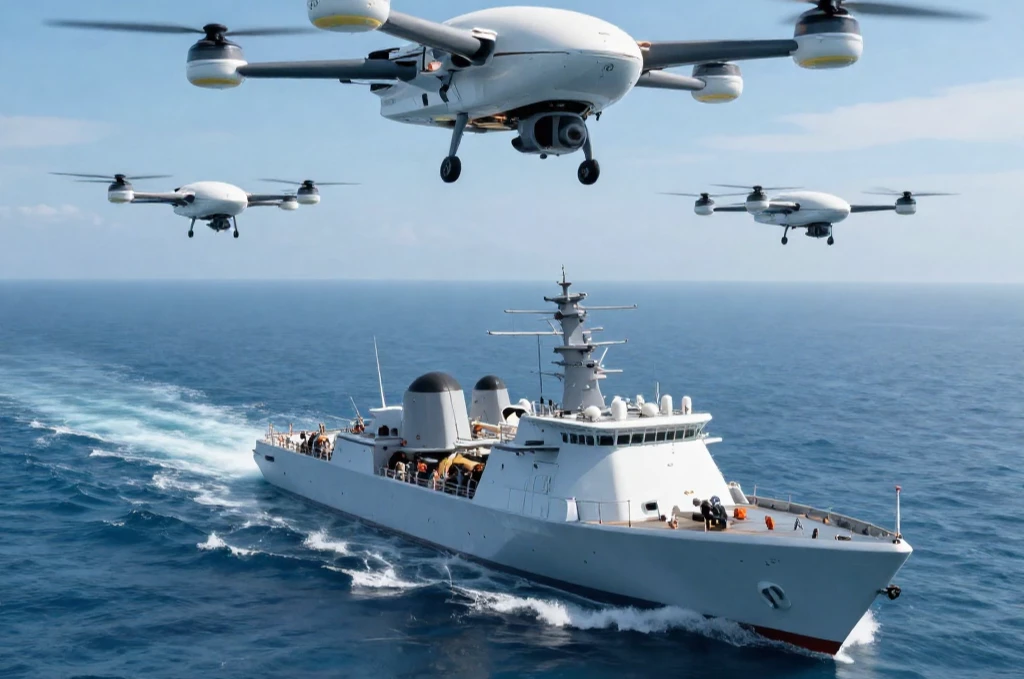
The modern battlefield is becoming increasingly difficult to hide on. Persistent drones, advanced sensors, electronic warfare and real-time data are giving forces an unprecedented ability to detect, locate and share information on their opponents. For the dismounted soldier, the consequences are significant.
Russia's war against Ukraine has demonstrated how commercially derived technologies can be rapidly adapted for reconnaissance, targeting, strike and logistics. First-person-view (FPV) drones, small reconnaissance UAS and loitering munitions have altered the threat facing infantry at platoon and company level, while electronic warfare and precision fires further reduce the margin for error.
The result is what is increasingly described as the transparent battlefield – and it is becoming one of the principal drivers of dismounted soldier modernisation.^1
According to the International Dismounted Soldier Market Report 2026, the dismounted soldier systems market across selected countries is forecast to grow from US$5.16 billion in 2026 to US$5.64 billion in 2031, with cumulative expenditure reaching approximately US$32.4 billion. Germany, France, Poland and the UK are among the largest markets after the United States.
But where is this investment heading, and how is the transparent battlefield changing what the modern soldier needs?
What Does the Transparent Battlefield Mean for Dismounted Soldiers?
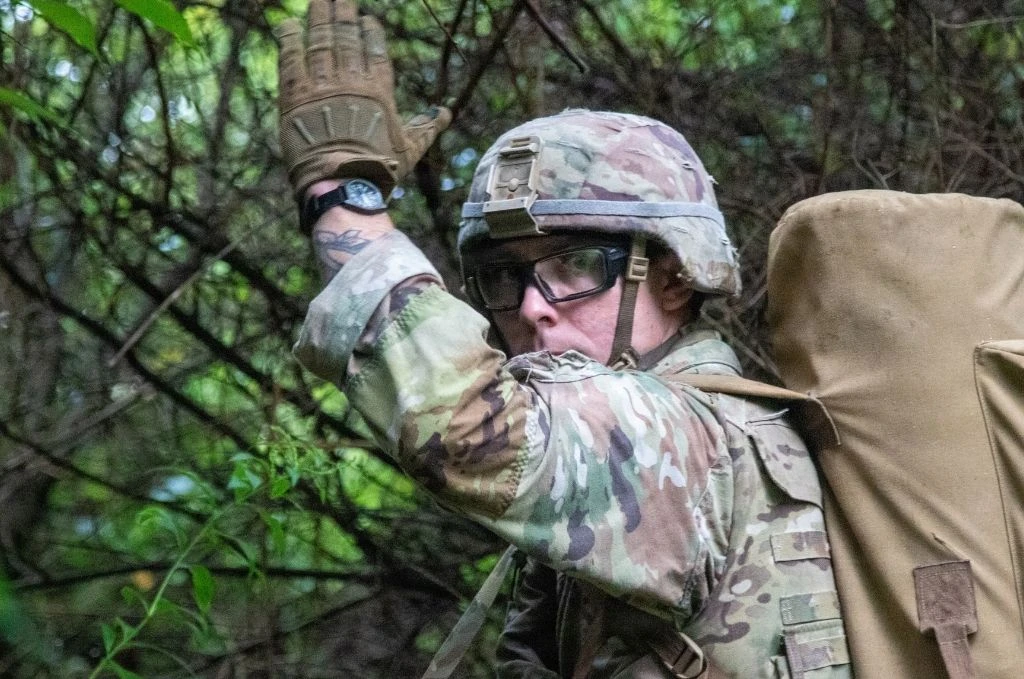
Dismounted troops remain indispensable because they can operate where vehicles cannot: clearing and holding ground, navigating restrictive terrain and conducting close combat. Yet the environment surrounding them has changed.
Persistent, low-cost drones, advanced sensors and real-time data streams mean activity can be detected and tracked increasingly quickly. Camouflage, terrain, weather, deception and electronic warfare continue to provide protection, but soldiers have less time to remain static after moving, firing or resupplying.
This makes speed, concealment and operational discipline increasingly important to survival. Signature management must also extend beyond traditional camouflage. Dismounted forces now need to consider their visual, thermal, acoustic, electromagnetic and digital signatures. Soldiers who mass, remain static, transmit for extended periods or use predictable routes can become increasingly vulnerable to UAS, thermal imagery, electro-optical systems, ground sensors and signals intelligence.
Dismounted soldier modernisation is therefore no longer simply about providing more advanced equipment. It is about enabling soldiers to detect threats, communicate, strike and relocate quickly - without simultaneously making them easier for an adversary to find.
How Are Drones Changing Dismounted Soldier Operations?
Few technologies demonstrate this challenge more clearly than UAS.
Small drones can detect positions, observe movement, correct artillery fire and conduct FPV attacks. As a result, counter-UAS is becoming a routine infantry requirement rather than solely a specialist air-defence activity.^2 The response requires a layered combination of awareness, warning, concealment, movement, electronic protection and support from higher-level air-defence and electronic-warfare assets.
Yet drones are simultaneously becoming an increasingly valuable tool for the soldier.
Nano- and micro-UAS can inspect routes, buildings and dead ground, identify suspected enemy positions and confirm targets before personnel expose themselves.^3 Their operational value is particularly strong in urban, woodland and complex terrain, where ground-level observation can be restricted.
The U.S. Army continues to employ the Black Hornet micro-UAS in small-unit activity. In June 2026, soldiers from the 10th Mountain Division used a Black Hornet during its Counter-Small UAS Academy, demonstrating how organic reconnaissance and counter-drone training are increasingly converging at unit level.
The modern soldier must therefore be capable of operating on both sides of the drone equation: exploiting organic UAS for reconnaissance and situational awareness while reducing vulnerability to enemy systems.
How Is the Dismounted Soldier Becoming a Connected Battlefield Node?
Another fundamental change is taking place in how dismounted troops interact with the wider force.
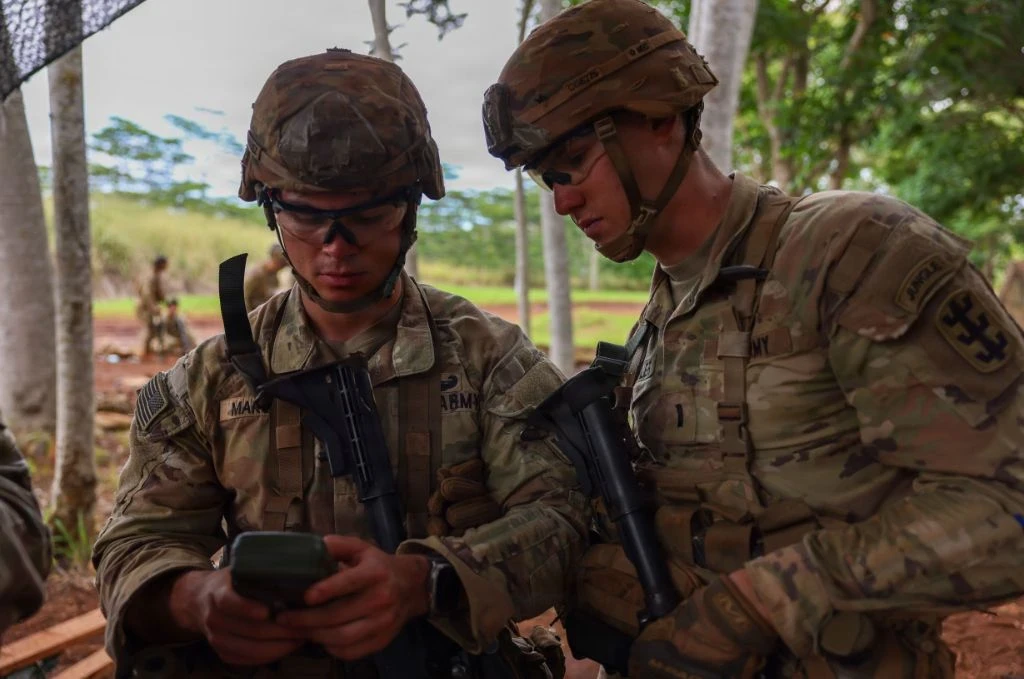
Technological advancement is shifting the soldier from an isolated operator into a connected node within a wider combat network. Secure radios, mesh networks, rugged tablets, digital targeting applications and AI-enabled decision-support tools can accelerate the collection, sharing and exploitation of battlefield information.
The British Army's Project ASGARD illustrates this direction of travel. The programme is intended to connect sensors, decision-makers and effectors more closely, while its dismounted data capability supports company-level and lower formations through tactical communications, tablets, headsets and other digital equipment. The operational objective is to reduce the delay between observation and action while retaining appropriate human command and control.
This direction is also reflected in UK procurement. In February 2026, the Ministry of Defence announced that soldiers would receive new AI-capable radios, headsets and tablets designed to improve the use of sensor data.^4
Across Europe, Germany's Gladius 2.0 programme is similarly connecting soldiers and vehicles to the D-LBO digital battlefield network.^5 Following a further order in April 2026, the programme is set to cover 353 platoon systems and more than 12,000 individual sets, incorporating IT equipment, optics, optronics, clothing, protection and load-carrying equipment.
France is also pursuing networked combat through SCORPION, linking dismounted troops, command posts and armoured vehicles through shared tactical data to strengthen coordination and accelerate targeting.
How Can Militaries Add New Technology Without Increasing Soldier Burden?
There is a fundamental contradiction at the centre of dismounted soldier modernisation: almost every new capability has the potential to add weight, power requirements or information.
Body armour, ammunition, night vision, radios, batteries, tablets and UAS controllers can collectively create a substantial physical burden. U.S. Army guidance cited in the report identifies a fighting load of no more than 30% of body weight and an approach load of no more than 45%, although mission requirements can exceed those thresholds.
There is also a cognitive equivalent. A soldier receiving multiple radio calls, drone feeds, map updates, targeting data and helmet-display alerts still needs to identify the information that matters most in seconds.
This is why future systems will need to do more than simply collect information. Sensor fusion, edge computing and AI-supported tools can help filter data, prioritise threats and present mission-relevant information, rather than simply increasing the volume available to the user. The report emphasises that systems adding weight, restricting movement or increasing visual clutter are unlikely to achieve widespread adoption.
Why Is Interoperability Critical to Dismounted Soldier Modernisation?
The connected soldier also creates an interoperability challenge.
Dismounted personnel increasingly operate within networks encompassing armoured platforms, artillery, UAS, electronic warfare assets, satellites and higher-echelon intelligence systems. Cross-domain interoperability is therefore essential for rapid situational awareness, target hand-off and coordinated manoeuvre.
Europe's Generic Open Soldier System Reference Architecture (GOSSRA) provides one approach. Developed by a seven-country consortium and grounded in the NATO Architecture Framework, GOSSRA provides a standardised framework for integrating sensors, communications devices and effectors across EU and NATO forces.
Open architectures are particularly important because threats are evolving faster than conventional procurement cycles. Ukraine has demonstrated that UAS and electronic-warfare tactics can change within short operational cycles, increasing the need for rapid experimentation, iterative upgrades and structured feedback from frontline users.
What Comes Next for Dismounted Soldier Modernisation?
Future dismounted forces will require lighter modular protection, resilient tactical communications, improved signature management, organic reconnaissance, counter-UAS capabilities, advanced optics and faster sensor-to-shooter links. Training must evolve alongside equipment, preparing troops to operate UAS, respond to FPV threats, maintain electromagnetic discipline and continue operating when communications or GNSS are degraded.
For industry, the opportunity is increasingly shifting away from stand-alone products towards modular, networked and rapidly upgradeable capability packages. Integrated soldier systems combine protection, weapons, optics, communications, power, navigation, night vision, UAS access and mission computing into a coherent architecture.
The transparent battlefield has not diminished the importance of the dismounted soldier. Instead, it is changing what soldiers need to survive and generate effect.
The challenge for the next generation of dismounted soldier modernisation will therefore be finding the right balance: becoming more connected without becoming more detectable, better protected without becoming less mobile, and better informed without becoming overloaded.
Footnotes
1. Ebbutt, Giles. "Future soldier programmes: An overview." European Security & Defence. September 2025.
2. Ruitenberg, Rudy. "Dutch army to equip its soldiers with personal drone-protection kits." Defense News. December 23, 2024.
3. Teledyne FLIR Defense. "Teledyne FLIR Defense Wins $91 Million Contract from U.S. Army for Black Hornet 4 Nano-Drones." October 22, 2024.
4. Ministry of Defence. "Soldiers to get new AI capable radios, headsets and tablets with futuristic sensor data." GOV.UK. February 8, 2026.
5. Rheinmetall. "Bundeswehr orders IdZ-ES soldier systems from Rheinmetall." April 27, 2026.