Colonel Fredrik Andersson on Arctic Warfare, NATO Integration and Defending the High North
Add bookmark

Ahead of Defence iQ's Arctic Security Summit, Editor Joanne Swann spoke with Colonel Fredrik Andersson to explore security in the High North and the realities of operating in one of the world's harshest military environments.
As Commander of the Norrland Dragoon Regiment (K4) and a leading expert in cold weather warfare, Colonel Andersson brings extensive operational experience from Sweden's sub-Arctic warfare domain. In this interview, he discusses the growing strategic importance of the Arctic following Sweden and Finland's accession to NATO, the operational demands of surviving and fighting in extreme climatic conditions, and the role of multinational cooperation in strengthening allied deterrence.
Drawing on your experience commanding ranger units in sub-Arctic environments, how would you characterise the most significant operational challenges forces face in the High North today?
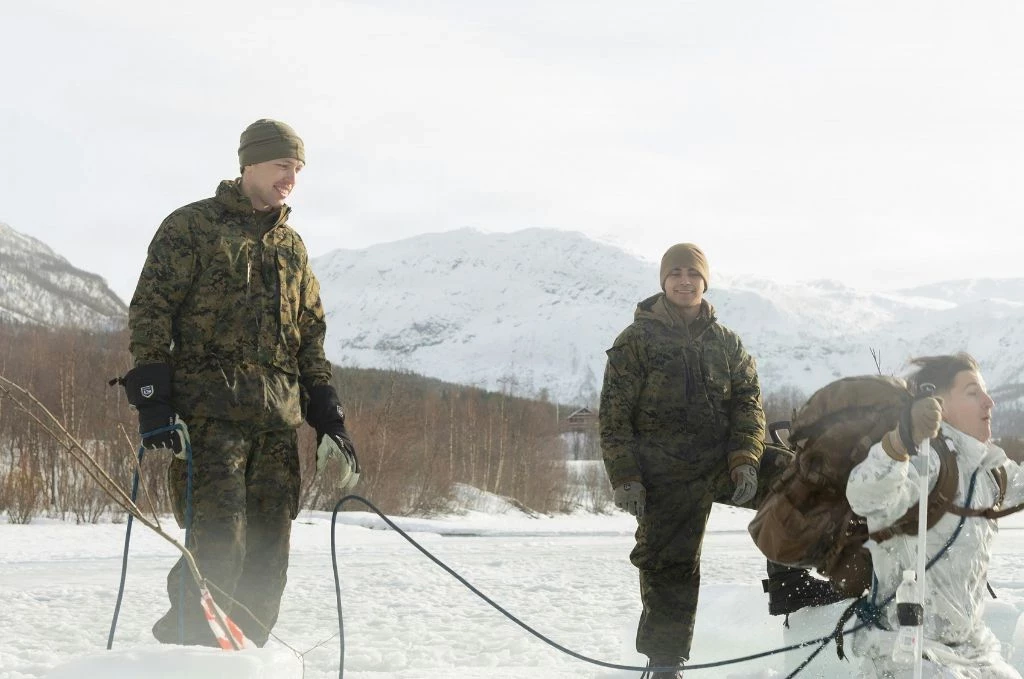
The most significant challenge is that the environment itself remains a decisive factor. Cold, distance, climate, polar nights or midnight sun, limited infrastructure, and the difficulty of sustaining forces over time all shape operations in the High North. Technology helps, but it does not remove the basic requirement for soldiers and units to move, shoot, communicate, survive and fight in extreme conditions. If you do not master snow, cold weather, and the Arctic environment, they become another enemy and potentially a deadly one.
With the Arctic shifting from a "low tension" environment to one of increased strategic competition, what changes are you seeing in how Sweden approaches deterrence and defence in the region?
Sweden is increasingly approaching the High North as a central part of national and allied defence. Deterrence is no longer only about presence, but about readiness, interoperability, mobility, and the ability to operate with NATO allies from day one. The shift is from national defence as a neutral country towards integrated deterrence as part of NATO and a wider allied posture. At the same time, Sweden has increased both capability and readiness in the High North. This includes strengthening units, improving the ability to operate over greater distances and in harsher conditions, and increasing training and cooperation with allies and partners in the region.
As Commanding Officer of the Norrland Dragoon Regiment K 4, how are you preparing troops for the complexities of cold weather warfare and operating in extreme climatic conditions?
At K 4, we prepare our troops by building competence from the individual level upwards. In the High North, the individual soldier with the right training, mindset, and fieldcraft remains central to operational effectiveness. Cold weather warfare is not just about equipment; it is about the right attitude, discipline, fieldcraft, leadership, and judgement. Soldiers must learn to operate when fatigue, cold, terrain, and isolation affect every decision. We train to operate and lead in conditions where small mistakes can have major consequences.
The 2026 summit emphasises a multi-domain approach. From your perspective, how important is integration across land, air, sea, cyber, and space in maintaining Arctic security?
Integration across domains is essential in the Arctic. No single service or domain can solve the security challenges of the region alone. Land forces need air support, maritime awareness, resilient communications, cyber capabilities - including offensive cyber, space-based services, and timely intelligence. In the High North, with its vast distances and limited infrastructure, connectivity becomes critical. Without the ability to coordinate and share information across domains, operations quickly lose tempo and effectiveness. The side that can connect sensors, decision-makers and capabilities, while coordinate effects and actions across domains at multiple levels, will have a decisive advantage.
Given your background in joint force training and operational deployments, what role does multinational collaboration play in strengthening NATO's posture in the Arctic?
Multinational collaboration is fundamental. The Arctic and High North are too vast, complex, and strategically important for any one nation to handle alone. NATO's strength lies in combining geography, capabilities, experience, and political will. Exercises, shared procedures, mutual understanding, and personal relationships all matter, because interoperability must be built before a crisis, not during one. Ultimately, it is all about connectivity - technical, procedural, and, last but not least, cultural. Forces must not only be able to communicate and operate together technically, but also understand how allies and partners think, plan, and act under demanding conditions.
Arctic nations are investing heavily in capabilities such as ISR, ice-capable platforms, and long-range strike. In your view, which capability areas should be prioritised to ensure effective situational awareness and response?
Situational awareness should be the first priority. The Arctic and High North cover enormous areas, which means ISR is essential in order to position forces at the right place and at the right time. Without persistent ISR and resilient communications, it becomes difficult to understand, decide, or act effectively. There is also a significant risk of surprise caused by misinformed decision-making, delayed reactions, limited awareness, or deception. Mobility, sustainment, long-range fires, air defence, and protection against electronic warfare are also critical. In the Arctic, the ability to respond is directly linked to the ability to see, communicate, move, and endure.
Based on your experience in both operational and strategic roles, how can military, government, and industry better collaborate to develop Arctic-ready solutions?
Arctic-ready solutions must be developed with the operating environment in mind from the start. Armed forces, government agencies, research institutions, academia and industry need to work closely together, test equipment in real conditions, and shorten the distance between operational lessons and capability development. Climate and terrain affect not only personnel, but also vehicles, sensors, batteries, communications systems, weapons, and energy supply. This also has a direct impact on logistics and sustainment systems, which become more demanding and more vulnerable in Arctic conditions. Solutions that perform well in temperate environments may fail in the High North unless they are specifically designed, tested, and adapted for cold weather operations.
You will be speaking at Defence iQ's Arctic Security 2026 event in Stockholm - what key insights can attendees expect from your session, and why is this a must-attend forum for those focused on Arctic defence and security?
Attendees can expect a practical perspective based on operational experience from training and leading units in sub-Arctic conditions. My session will focus on Sweden's approach to cold weather warfare, how we train and prepare soldiers for operations in the High North, and the challenges of maintaining combat effectiveness and survivability in extreme environments.
A key message will be that success in Arctic warfare depends on the ability to master the environment. If you do not understand and adapt to the cold, snow, darkness, and terrain, the environment itself quickly becomes a threat. I will also address how Arctic conditions affect equipment, communications, and sustainment. Defence iQ's Arctic Security Conference 2026 is an important forum because it brings together military leaders, academia, industry, and decision-makers to discuss practical solutions for operating and maintaining security in an increasingly important strategic region.