How Are Unmanned Ground Vehicles Changing Modern Warfare?
Add bookmark
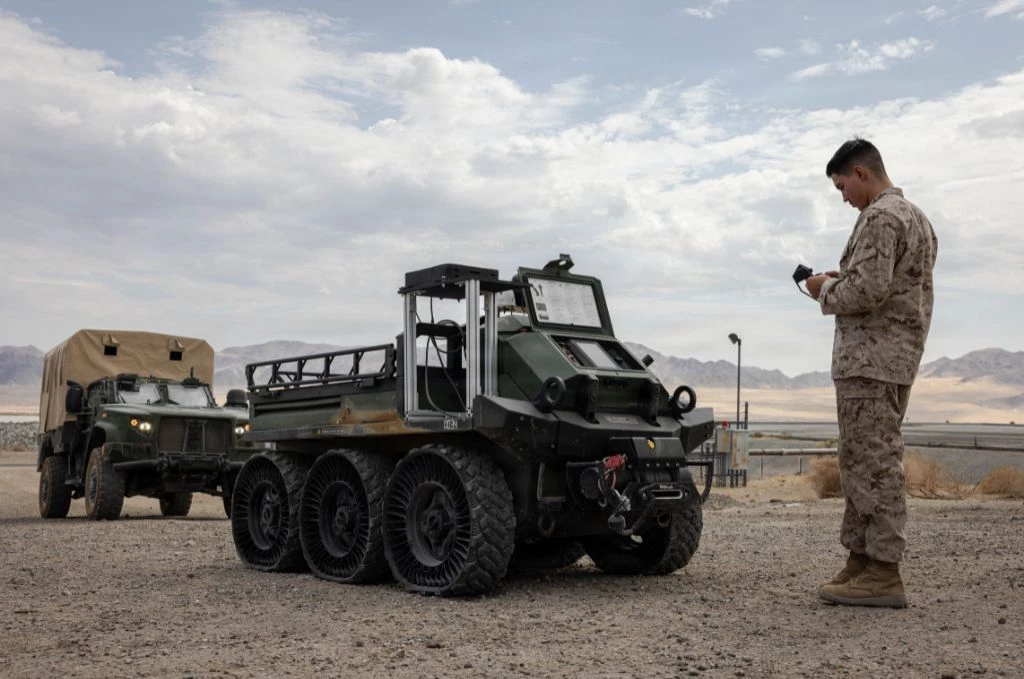
Unmanned ground vehicles are moving from military experimentation towards practical deployment on the battlefield.
While drones have dominated much of the debate around uncrewed warfare, autonomous and remotely operated ground vehicles are increasingly being used for some of the most dangerous and demanding land operations, including explosive ordnance disposal, route clearance, reconnaissance, logistics and resupply.
According to the Uncrewed & Autonomous Systems Market Report 2026–2031, the selected countries covered by the study are expected to spend approximately US$4.19 billion on UGVs between 2026 and 2031.
Crucially, investment is increasingly centred on practical battlefield applications rather than futuristic concepts. The report identifies route clearance, EOD, resupply, reconnaissance and support to dismounted troops among the areas driving demand.
So, how are unmanned ground vehicles changing modern warfare - and where are militaries already putting them to work?
Taking soldiers out of the most dangerous missions
Perhaps the clearest argument for military UGVs is also the simplest: they can put a machine in places where sending a soldier would carry considerable risk.
Explosive ordnance disposal is already one of the most established applications.
In 2024, the British Army ordered 50 L3Harris T4 bomb-disposal robots, demonstrating continued investment in robotic systems for handling explosive threats. [1]
Germany is pursuing the same principle. In March 2025, the German Armed Forces awarded a contract for 41 Telemax HT300 UGVs for EOD and counter-IED operations. The systems are designed to operate in high-risk environments and navigate difficult terrain while allowing dangerous ordnance-disposal tasks to be conducted remotely.
This reflects one of the central demand drivers identified by the market report: personnel preservation. Militaries are investing in uncrewed systems capable of undertaking "dull, dirty and dangerous" tasks, reducing the need to expose personnel unnecessarily.
For UGVs, this gives robotics an immediate and measurable battlefield purpose.
UGVs are becoming battlefield logistics platforms
The role of the unmanned ground vehicle is also expanding beyond specialist EOD equipment.
Moving ammunition, food, equipment and other supplies towards frontline positions exposes soldiers and crewed logistics vehicles to enemy observation and attack. Autonomous ground vehicles offer a way of moving some of that burden away from personnel.
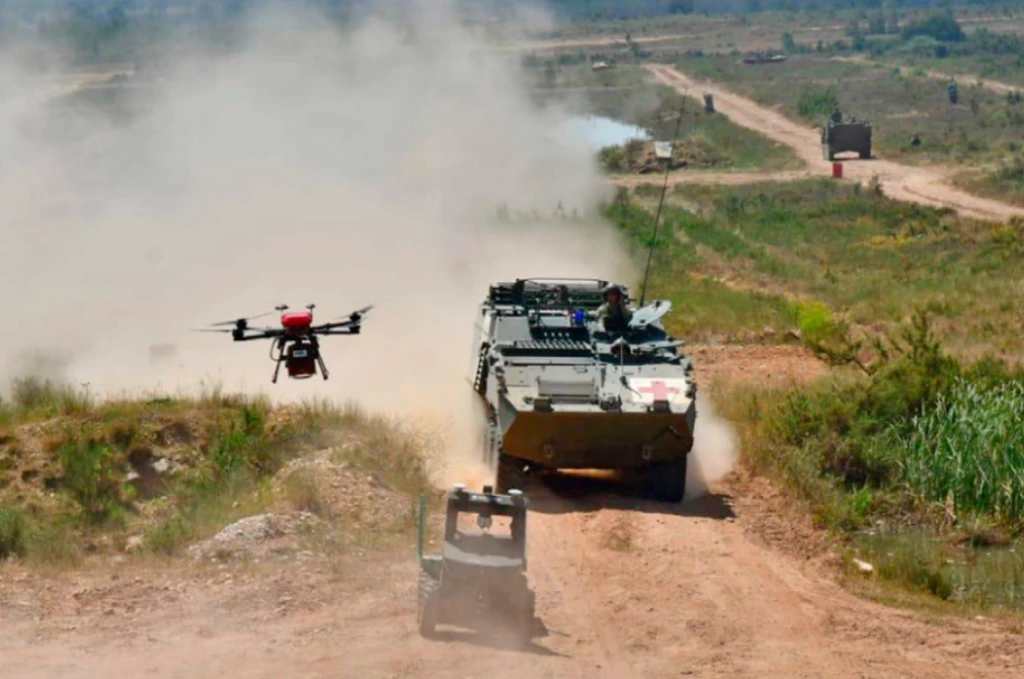
The Netherlands is already exploring this model. During its Next Generation Concept Development exercise, the Dutch Army tested autonomous robots and electric vehicles with a particular emphasis on resupply. The market report estimates that the Netherlands could dedicate approximately US$17 million to developing and acquiring logistics UGVs between 2026 and 2031.
The Dutch Army has also been developing new operational concepts for robotic and unmanned platforms, demonstrating that the challenge is not simply acquiring the technology but understanding how it should be incorporated into military units and operations. [2]
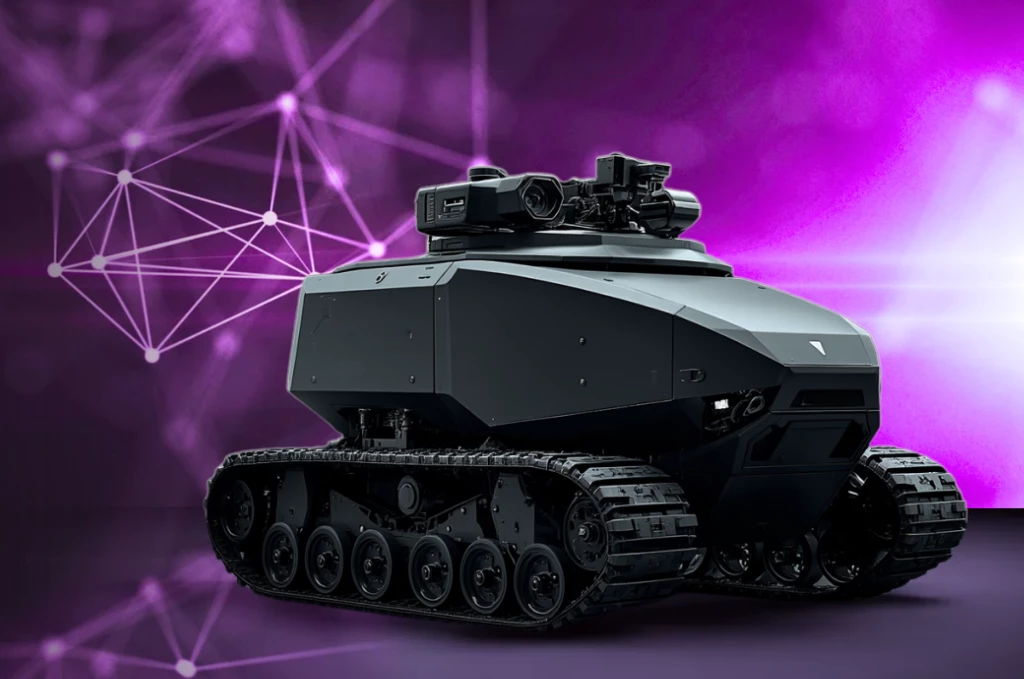
This is an important distinction. The future of battlefield robotics is unlikely to be defined solely by autonomous "robot tanks". Some of the most valuable systems may instead be those that quietly remove logistical and physical burdens from soldiers.
Ukraine is accelerating the shift from experimentation to operations
The war in Ukraine has provided perhaps the clearest demonstration of how quickly unmanned ground vehicles can evolve when there is an immediate operational requirement.
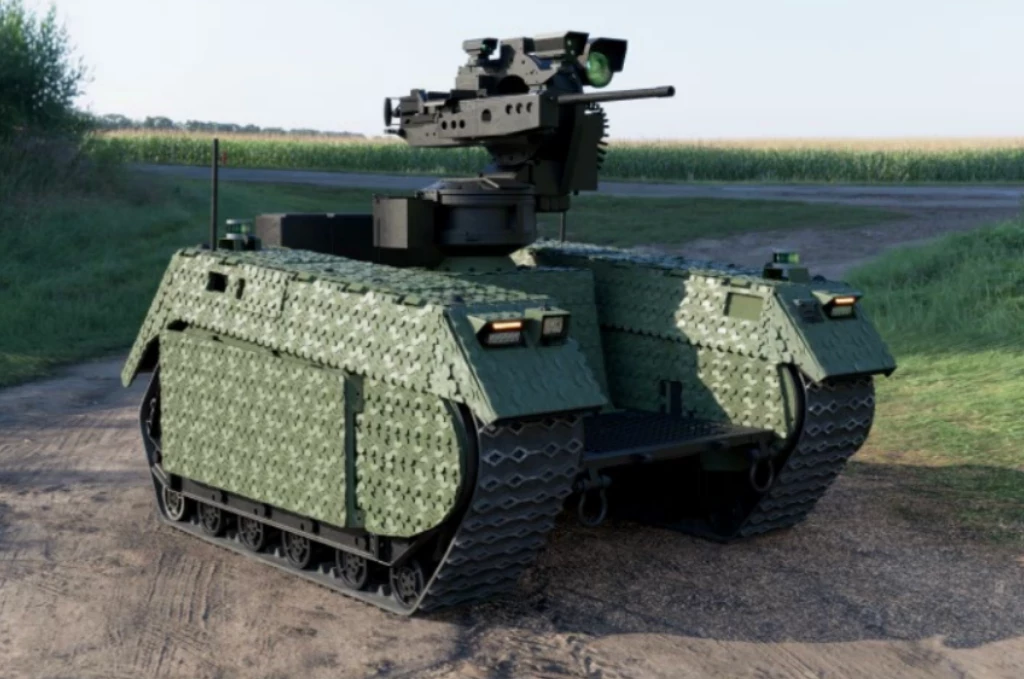
Ukraine has continued to deploy Milrem Robotics' THeMIS UGVs for demining, EOD and battlefield support. Additional systems have been supplied following operational experience, suggesting that these platforms are moving beyond experimentation towards sustained battlefield use.
In May 2025, Milrem Robotics announced that another six THeMIS UGVs would be supplied for Ukraine, adding to systems already delivered and employed there. [3]
This battlefield experience matters beyond Ukraine itself.
Militaries are increasingly able to observe which applications deliver genuine operational value. The result is a shift away from pursuing autonomy for its own sake and towards identifying tasks where robots can directly improve survivability, persistence or logistical efficiency.
That lesson is reflected across the wider market. Rather than concentrating solely on ambitious transformational programmes, demand is increasingly focused on practical battlefield applications.
Europe is developing a new generation of military robots
Across Europe, several programmes indicate that unmanned ground vehicles are becoming part of longer-term force modernisation.
France's DROIDE programme, launched in December 2024, is a seven-year initiative intended to develop autonomous ground systems for the French Army. The programme envisages multi-mission robotic systems supporting dismounted soldiers in areas including reconnaissance, combat support and logistics, with deployment targeted for 2030–2035.
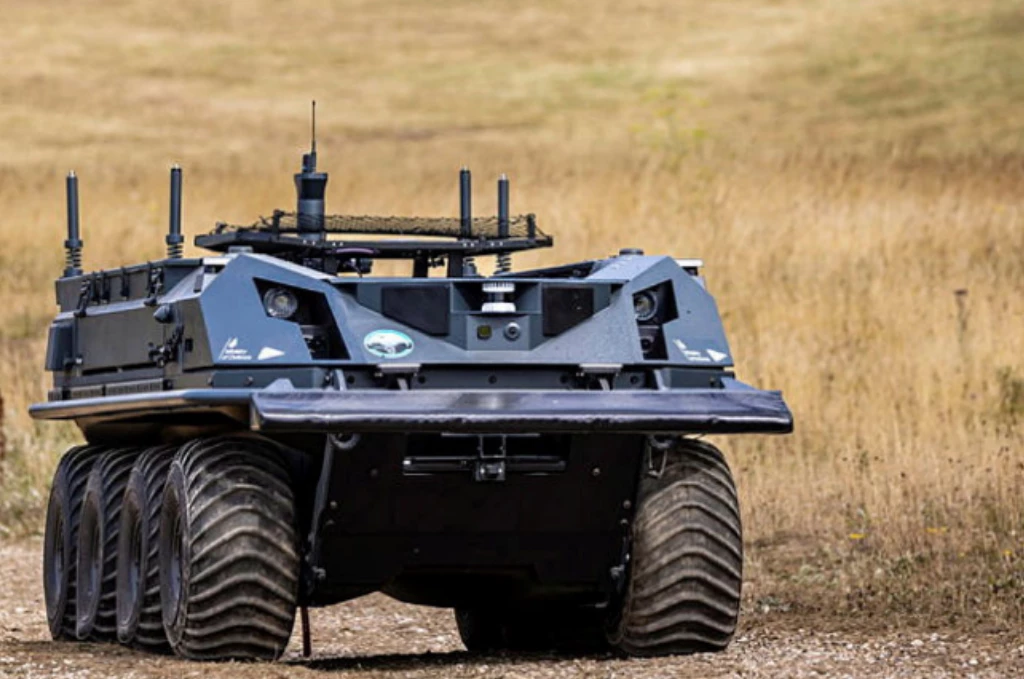
The UK has also experimented with the Mission Master SP through its Robotic Platoon Vehicles programme. [4] The platform can perform tasks including reconnaissance, silent watch and last-mile resupply, while its autonomy suite provides follow-me and waypoint-navigation capabilities alongside human oversight.
Meanwhile, the Netherlands has already acquired THeMIS vehicles as part of its efforts to develop robotic land capabilities. [5]
These programmes point towards a broader transformation in how armies are approaching robotics. Instead of developing one UGV to perform one highly specialised function, militaries are increasingly exploring modular platforms capable of supporting different missions.
Autonomy is becoming as important as the vehicle itself
The development of UGVs is not solely a hardware story.
Artificial intelligence, autonomy software, sensor fusion and resilient navigation are increasingly determining what military robots can actually achieve. The market report identifies AI as a central enabling technology for next-generation uncrewed systems, with particular emphasis on resilient navigation, machine-assisted perception and cooperative autonomy.
This becomes particularly important when GPS or communications are unavailable.
Electronic warfare can disrupt satellite navigation and command links, meaning remotely controlled systems cannot always depend upon a continuous connection with their operator. Newer systems therefore increasingly incorporate onboard processing, sensor fusion and autonomy software that allow them to continue operating when external information is degraded.
This could fundamentally change how UGVs are controlled.
Rather than requiring one operator to continuously control one robot, tactical edge autonomy could allow a single operator to supervise multiple autonomous platforms. The report identifies this transition from "one operator, one drone" towards "one operator, multiple drones or robots" as an important development in human-machine teaming.
The challenge is integrating robots into real armies
Developing capable military robots is only part of the problem.
They also need to work with existing command networks, logistics systems and military formations.
Integration and interoperability remain significant barriers. New UAS, UGVs and other autonomous platforms must connect with command-and-control, logistics, intelligence and cyber architectures that were often designed for conventional crewed systems.
Training presents another challenge. As militaries introduce more autonomous systems, personnel increasingly require skills in areas such as network management, software, data analysis and diagnostics.
The question for armies is therefore becoming less about whether a robot can perform a task, and more about how that robot can be incorporated into a functioning military formation.
What is the future of unmanned ground vehicles?
The direction of travel is increasingly clear.
Unmanned ground vehicles are unlikely to replace soldiers or conventional armoured vehicles wholesale. Instead, their immediate value lies in augmenting human forces and taking on tasks that are dangerous, repetitive or physically demanding.
That means carrying supplies towards exposed positions. Detecting explosives ahead of crewed vehicles. Conducting reconnaissance without immediately exposing soldiers. Supporting casualty evacuation. Operating sensors in dangerous areas. And, increasingly, performing these missions with greater levels of autonomy.
The selected markets in the Uncrewed & Autonomous Systems Market Report are forecast to spend approximately US$4.19 billion on UGVs between 2026 and 2031. But the significance of that investment goes beyond market size.
The bigger change is doctrinal.
Military robots are beginning to move from demonstrations and trials into defined operational roles. As autonomy improves and battlefield experience accumulates, the unmanned ground vehicle is becoming less of a futuristic concept and more of a practical tool for modern land forces.
References
[1] Shephard Media. "British Army orders 50 L3Harris T4 EOD robots." https://www.shephardmedia.com/news/landwarfareintl/british-army-orders-50-l3harris-t4-eod-robots/ May 10, 2024.
[2] Defence Industry Europe. "Dutch army develops new operational concepts for robotic systems, unmanned platforms." https://defence-industry.eu/dutch-army-develops-new-operational-concepts-for-robotic-systems-unmanned-platforms/ April 7, 2024.
[3] Defence Industry Europe. "Milrem Robotics to supply six THeMIS UGVs to CNIM for delivery to Ukraine." https://defence-industry.eu/milrem-robotics-to-supply-six-themis-ugvs-to-cnim-for-delivery-to-ukraine/ May 20, 2025.
[4] Hoffmann, Oliver. "Another success for the Mission Master SP: Awarded for UK's Robotic Platoon Vehicles Programme." https://www.rheinmetall.com/en/media/news-watch/news/2022/2022-04-29_another-success-for-the-mission-master-sp Rheinmetall. April 29, 2022.
[5] Defence Procurement International. "Dutch Army Enhances Combat Power with Armed UGVs: The Royal Netherlands Army orders seven THeMIS UGVs from Estonia's Milrem Robotics." https://www.defenceprocurementinternational.com/news/land/dutch-army-to-acquire-seven-themis-unmanned-ground-vehicles-from-milrem September 29, 2020.