Opinion: Wow-worthy? Russia's Newest Airborne Radars Are a Potential Game Changer
Contributor:
Keith Mallon.
Posted: 09/05/2011 12:00:00 AM EDT | 0
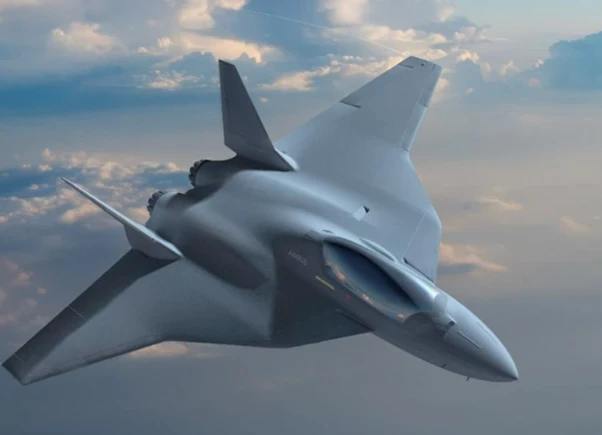
The question that is certainly worth debating is: if Russian 5th Generation aircraft will include the capability to defeat airborne low-observable technologies; does an aircraft sold on stealth over aerodynamic performance make sense?
Of course, the flip side of the argument is just how stealthy the T-50, itself, actually is. Some camps claim “not very”. Although such debates do remind me of a presentation from the vaults of Defence IQ’s long-forgotten stealth conference (yes, we have vaults here, where the ghosts of PowerPoint past lurk in peace). As recounted by Bill Sweetman here, the Russian Institute of Theoretical and Applied Electromagnetics detailed some of the technologies that were then being developed on the Su-35S.
Posted: 09/05/2011 12:00:00 AM EDT | 0
|
This year’s round of air shows left me feeling decidedly unsettled as old certainties just keep on disappearing.
Take, for, instance the recent MAKS 2011, held at Zhukovsky as usual, just outside Moscow. Whereas the 2010 Zhuhai Airshow generated a plethora of coverage from aviation reporters, this 2011’s MAKS passed by almost unnoticed. That is, if you ignore the rather embarrassing sight of the much vaunted T-50 experiencing a flame out as it rolled down the runway…
Indeed, if ever there were a sign that Russia doesn’t preoccupy Western military minds as it once did, this surely was it.
Thankfully, Robert Wall of Aviation Week was on hand to relay to us some nuggets of useful information from the show. In another sign of changed times, the presence of mocked-up sensors for the new T-50 showed a whole new level of Russian openness.
The presence of both L band and X band radars is worth mentioning, as this is a crucial capability in an aircraft that is due to mix it up with the likes of the F-22 Raptor and F-35. A 2009 article in Air Power Australia speculates on the relative stealthiness of both western aircraft, designed to beat X-band radars as distinct from the lower frequency L band radar on display at MAKS. In short, speculation suggests that L band could be a very useful foil to Western stealth technology.
Take, for, instance the recent MAKS 2011, held at Zhukovsky as usual, just outside Moscow. Whereas the 2010 Zhuhai Airshow generated a plethora of coverage from aviation reporters, this 2011’s MAKS passed by almost unnoticed. That is, if you ignore the rather embarrassing sight of the much vaunted T-50 experiencing a flame out as it rolled down the runway…
Indeed, if ever there were a sign that Russia doesn’t preoccupy Western military minds as it once did, this surely was it.
Thankfully, Robert Wall of Aviation Week was on hand to relay to us some nuggets of useful information from the show. In another sign of changed times, the presence of mocked-up sensors for the new T-50 showed a whole new level of Russian openness.
The presence of both L band and X band radars is worth mentioning, as this is a crucial capability in an aircraft that is due to mix it up with the likes of the F-22 Raptor and F-35. A 2009 article in Air Power Australia speculates on the relative stealthiness of both western aircraft, designed to beat X-band radars as distinct from the lower frequency L band radar on display at MAKS. In short, speculation suggests that L band could be a very useful foil to Western stealth technology.

It is possible for L-band AESAs to be installed in the leading edges of the LEX or wings on
the T-50. Image: Allocer, MAKS Airshow
The question that is certainly worth debating is: if Russian 5th Generation aircraft will include the capability to defeat airborne low-observable technologies; does an aircraft sold on stealth over aerodynamic performance make sense?
Of course, the flip side of the argument is just how stealthy the T-50, itself, actually is. Some camps claim “not very”. Although such debates do remind me of a presentation from the vaults of Defence IQ’s long-forgotten stealth conference (yes, we have vaults here, where the ghosts of PowerPoint past lurk in peace). As recounted by Bill Sweetman here, the Russian Institute of Theoretical and Applied Electromagnetics detailed some of the technologies that were then being developed on the Su-35S.
Radar technology develops quickly and, as Sweetman points out, what the Russians were developing at that stage to reduce radar cross section (RCS) had already been placed on many 4th generation Western fighters. But it does point out the ongoing evolution of stealth vs. counter-stealth continuously complicates comparisons between fighters.
One thing that is also of note is that the US Navy is going to endow its Super Hornets with Infra Red Search and Track systems – allowing electro-optical tracking of low observable aircraft under certain circumstances and further altering the playing field between the combat aircraft types.
-
Opinion: The Challenge of Moving on From 9/11 -
Sizing Up the European Response to the Arab Spring -
Opinion: Confusing the UK Defence Budget Debate with Faulty Falklands Comparisons -
The Armoured Vehicles Round Up - DSEi 2011 -
Will the Libyan Conflict Make NATO Better at What it Does? -
Czech Army Places its Armoured Vehicle Plans Under the Fiscal Microscope -
US Navy Powers Towards Energy Independence -
Hacker Activism and Judicial Action: Confronting Britain's 'Hacktivists' -
Opinion: Figuring European Rivalries Into NATO's Libyan Air Campaign -
Cutting Edge Test Beds Accelerate US Air Force Network Centric Capabilities
* = required.
Not a member yet? Sign up
You Should Check Out:
Events of Interest


Not a member? Sign Up
Reasons for Joining
Address your challenges through knowledge sharing with peers from our global network of specialists.
Benchmark your business initiatives with the who's who in the field.
Hear from industry pioneers how to maximize ROI in today's challenging economy.
And best of all It's FREE!