Insights, Interviews and Market Analysis
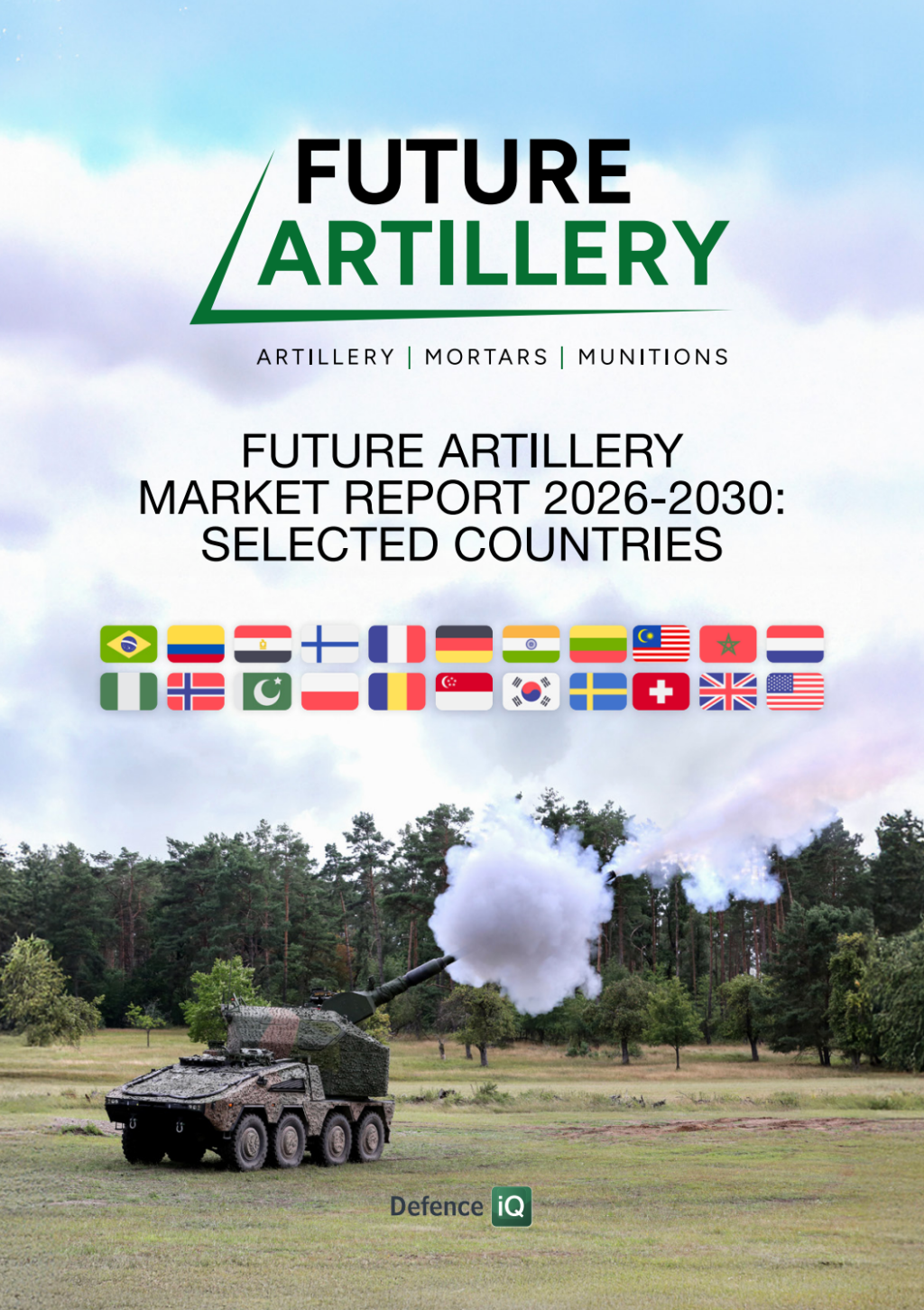
Future Artillery Market Report 2026-2030: Selected Countries
The global artillery systems market (selected countries ) is expected to increase from US$14.2 billion in 2026 to US$16.1 billion in 2030, at a CAGR of 3.1%. This growth is mainly driven by the U.S., Poland, Germany, India, the UK, France, Finland, and South Korea, which are the leading spenders in the domain.
Download our Future Artillery 2026 Market Report to explore what’s driving this growth in detail. Including a wealth of information such as key national procurement programmes and capability priorities, to emerging trends in self-propelled artillery, long-range fires, and advanced munitions. The report provides clear insight into where investment is accelerating, which systems are gaining traction, and what this means for industry and defence stakeholders out to 2030.
Strategic Content of Future Artillery
Strategic Context of Future Artillery is an exclusive extract from the Future Artillery Market Report 2026-2030: Selected Countries. This pull-out provides a focused overview of the strategic drivers shaping artillery modernisation across key markets, including capability priorities, procurement trajectories, operational lessons from recent conflicts, and the evolving role of long-range fires within multi-domain operations. It highlights how selected nations are aligning doctrine, investment, and industrial capacity to meet emerging threat environments and deliver scalable, interoperable artillery capabilities. For the full dataset, in-depth country analysis, budget forecasts, and programme breakdowns, readers are encouraged to consult the complete Future Artillery Market Report 2026-2030.
Artillery Operational Requirements and Battlefield Challenges
Artillery Operational Requirements and Battlefield Challenges is an exclusive extract from the Future Artillery Market Report 2026-2030: Selected Countries. This pull-out examines the evolving operational demands placed on artillery forces and the practical challenges shaping capability development. It explores requirements such as extended range, precision effects, survivability in contested environments, mobility, rapid deployment, ammunition resilience, and integration within joint and multi-domain command architectures. For comprehensive market forecasts, country-by-country procurement analysis, industrial insights, and detailed programme data, readers should refer to the full market report.
Capability Area and Technology Themes
Capability Area and Technology Themes is an exclusive extract from the Future Artillery Market Report 2026–2030: Selected Countries. This pull-out analyses the principal capability areas and enabling technologies shaping next-generation artillery development. It explores advancements in long-range precision fires, automation and digital fire control systems, loitering munitions integration, advanced propellants, survivability enhancements, counter-battery capabilities, and the incorporation of AI-enabled targeting and data fusion. For full country-level forecasts, programme analysis, budget data, and detailed market projections, readers should consult the complete future artillery market report 2026–2030: selected countries.
Market Opportunities for Future Artillery
Market Opportunities for Future Artillery is an exclusive extract from the Future Artillery Market Report 2026–2030: Selected Countries. This pull-out identifies the key commercial growth areas emerging across the artillery ecosystem, including system upgrades, long-range precision munitions, digital fire control modernisation, counter-battery solutions, and ammunition production expansion. For detailed country-level forecasts, procurement timelines, budget allocations, and programme-by-programme analysis, readers should consult the full Future Artillery Market Report 2026–2030.
Christelle Collet (NATO): Rethinking Indirect Fires For a Contested Battlespace
Indirect fires are undergoing rapid transformation as modern conflicts become more contested, technology-driven, and multi-domain in nature. The experiences emerging from recent conflicts, particularly in Ukraine, have accelerated the need for artillery systems that are not only more precise and capable of longer range, but also more survivable, scalable, and digitally integrated. Christelle Collet, Land Munitions Officer within NATO’s Defence Industry, Innovation and Armaments (D2IA) Division, works at the intersection of technical expertise, operational lessons, and multinational capability development. With a background in energetic materials research and munitions safety, she now supports NATO efforts to advance land munitions capability development while strengthening interoperability across Allied forces. Ahead of Defence iQ’s Future Artillery 2026 conference, Christelle shares her perspective on the evolving role of indirect fires, the growing importance of industrial resilience and munitions production, and the technologies likely to reshape artillery over the coming decade.
Colonel Stephan Sjöberg On Sweden's Artillery Transformation and The Future of Multi-Domain Operations
Precision fires, deep strike capabilities, and the integration of intelligence, sensors, and effectors across domains are reshaping how land forces operate and how military leaders think about firepower. For Sweden, this transformation is particularly significant. Following years in which artillery capabilities were reduced, the Swedish Armed Forces are now rapidly rebuilding and modernising their fires capability as part of a broader shift in national defence posture and integration into NATO. Ahead of Defence IQ's Future Artillery Conference, we spoke with Colonel Stephan Sjöberg, Chief of Artillery for the Swedish Armed Forces, about the lessons shaping Sweden's artillery resurgence, the growing importance of multi-domain operations, and the role of innovation, cooperation, and resilience in future fires capabilities.
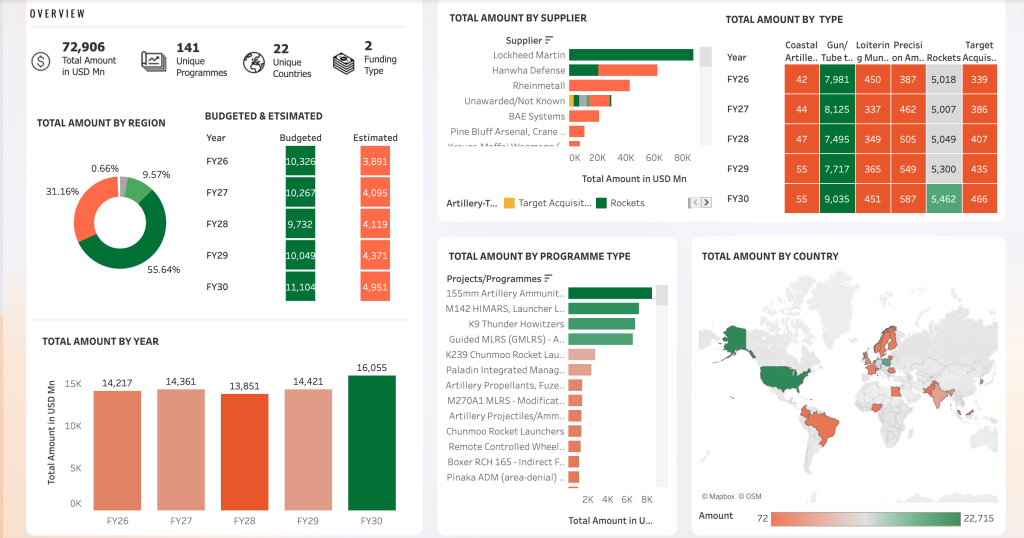
Future Artillery Interactive Market Report 2026
The Future Artillery Interactive Market Report is designed to give defence stakeholders a clear, evidence-based view of how the global artillery landscape is evolving. It brings together market data, capability trends, procurement activity, and regional analysis into a single, interactive format that allows users to explore the market at both a strategic and programme-specific level. Users can interrogate data by geography, platform type, calibre, and end user, enabling more informed decision-making for capability development, investment planning, and competitive positioning. For military planners, industry leaders, and analysts, it provides a practical tool to understand where demand is emerging, how requirements are shifting, and which technologies and suppliers are shaping the future of artillery capability.
The Top 10 Artillery Programmes Shaping the Future of Indirect Fires
Artillery has re-emerged as one of the most decisive capabilities in modern land warfare. High-intensity conflict in Ukraine, the return of large-scale manoeuvre warfare, and the realities of persistent surveillance and counter-battery threats have forced militaries to reassess the role, scale, and survivability of their fires capabilities. As a result, artillery modernisation is both strategic and central to national deterrence and warfighting doctrine.
This list highlights some of the most significant artillery programmes currently shaping the global market - offering a focused snapshot of where investment is concentrated, which capabilities are being prioritised, and how leading militaries are responding to operational lessons from recent conflicts. With Future Artillery 2026 approaching this May, this overview provides a useful reference point for understanding the strategic context behind current procurement decisions, setting the scene for deeper discussions around capability development, interoperability, industrial capacity, and the future of fires in multi-domain operations.
![[Exclusive Whitepaper] Getting a Fires Solution in the Modern Battlefield: Technologies around the Artillery Platform](https://eco-cdn.iqpc.com/eco/images/event_content/ujQAeeV4KEwpoHX6B4J3ACyMJ5JC4Ylpn9x999OM.png "[Exclusive Whitepaper] Getting a Fires Solution in the Modern Battlefield: Technologies around the Artillery Platform")
[Exclusive Whitepaper] Getting a Fires Solution in the Modern Battlefield: Technologies around the Artillery Platform
As modern conflicts evolve, so do the challenges of achieving rapid, effective fire solutions. This exclusive whitepaper explores the latest advancements in artillery, C5ISTAR integration, and battlefield survivability - offering critical insights into the technologies shaping the future of firepower.
![[Exclusive Interview] An ARRC perspective on Joint Fires - Insights from Brigadier Rob Alston](https://eco-cdn.iqpc.com/eco/images/event_content/iDKIeHucCFPdX082m9IyUlnyBK43vm3Ix0dWbOA9.png "[Exclusive Interview] An ARRC perspective on Joint Fires - Insights from Brigadier Rob Alston")
[Exclusive Interview] An ARRC perspective on Joint Fires - Insights from Brigadier Rob Alston
Unlock Exclusive Insights into NATO's Joint Fires Strategy
How is NATO adapting its artillery strategies for the future battlefield? In this exclusive interview, Brigadier Rob Alston, Chief of Joint Fires and Influence at NATO Allied Rapid Reaction Corps (ARRC), shares his insights on the evolving role of joint fires, the integration of lethal and non-lethal effects, and how modern warfare is reshaping command and targeting strategies.
With advancements in long-range precision munitions, data-driven targeting, and multi-domain coordination, NATO is redefining its approach to massed fires and strategic deployment. But what challenges remain? And how is NATO ensuring its forces are combat-ready at all times?
Download the full interview now to explore how NATO’s firepower is evolving for the conflicts of tomorrow.
Video: Precision, Sustainability, Lethality: What EPVD® Brings to the Fight
What if the next revolution in lethality came not from new munitions, but from inside the barrel itself? Paradigm Shift Technologies’ EPVD® Advanced Gun Barrel Coatings replace toxic chrome with a high-performance, environmentally friendly solution that delivers a minimum 100% longer barrel life while improving accuracy and reducing maintenance costs.
Validated across USAF and Navy testing programs, EPVD® enables advanced munitions while minimizing heat damage and erosion, allowing warfighters to stay in the fight longer, with fewer barrel changes and lower sustainment burdens. The Department of Defense and allied nations are actively seeking alternatives to hexavalent chrome, and EPVD® is already proving it can fill that critical capability gap.
For programs seeking to increase readiness, lower cost-per-shot, and meet environmental compliance without compromising performance, Paradigm Shift’s EPVD® is the next logical step in modernizing your barrel fleet.

International Artillery Market Report 2025-2029
At a Compound Annual Growth Rate (CAGR) of 4.2%, combined with an increasingly complex battlefield, demands for artillery platforms are not only increasing in quantity but changing in nature. As forces shift to near-peer deterrence, new mobility, targeting, range, networking, and lethality capabilities are required. This report covers the artillery sector's most critical programmes, spending, and forecasts. This report covers programmes related to:
- Gun/Tube artillery
- Rocket Artillery
- Precision Ammunition
- Loitering Munitions
- Target Acquisition Technologies such as AI
- Coastal Artillery

Artillery Market Report 2024-2028
The global artillery systems market is expected to grow by about US$2 billion in the next 4 years due to a number of security pressures. Not only are they expected to increase in platform numbers, there is a concerted effort to increase their capabilities and effectiveness through the use of new technologies. To help capture that growth and development, we have provided a market report of the countries attending our Future Artillery Conference in 2024. Whether you are looking to be better informed or expand your talking points, this report covers the expenditures on:
- Rockets
- Gun/tube type artillery
- Loitering munitions
- Target acquisition technologies (AI)

Mobilizing Artillery Interview with Colonel Leon L. Rogers II
Despite all the advances in technology, artillery remains a core part of any army. We were very fortunate to interview Colonel Leon L. Rogers II, Project Manager, Combat Ammunition Systems (PM CAS), from the JPEO Armaments & Ammunition. In this piece, Colonel Rogers dives into the latest developments and challenges faced by the JPEO Armaments & Ammunition. An essential piece of reading for anyone interested in the JPEO’s wishes from industry.

Future Artillery 2023 Post-Show Report
For hundreds of years, artillery has continued to shape the landscape of the battlefield.
With new technologies and concepts applied to artillery, it ensured that it remained relevant to this day. This is the reason why conferences such as Future Artillery continue to hold such incredible importance.
In this Post Show Report, discover the pivotal discussions and insights from Future Artillery 2023, where the most critical issues facing the indirect fire community were addressed. Attendees gained invaluable perspectives through dedicated sessions, fostering a deeper understanding of artillery’s evolving landscape.
This Post Show Report covers:
- Expert commentary: gain exclusive access to commentary and analysis from renowned experts and thought leaders who attended and presented at the conference.
- Attending Nations: learn more about the global convergence of military minds as nations from across the world came together to shape the future of the battlefield.
- Past Vendor Showcase: explore the list of esteemed vendors and industry professionals.
- Notable Job Titles in Attendance: See the list of job titles of top-tier professionals and decision-makers from a variety of key roles and industries.

Ukraine: The Deep Battle
The adoption of the HIMARS has received great fan fair in the media, giving Ukrainian forces unprecedented capabilities in theatre. Adam Schluer puts the adoption into perspective, analysing what these capabilities mean for both Ukrainian and Russian forces.

Mobilizing Artillery, Interview with Leon L. Rogers II, Project Manager, Combat Ammunition Systems (PM CAS), JPEO Armaments & Ammunition US Army
Despite all the advances in technology, artillery remains a core part of any army. We were very fortunate to interview Colonel Leon L. Rogers II, Project Manager, Combat Ammunition Systems (PM CAS), from the JPEO Armaments & Ammunition. In this piece, Colonel Rogers dives into the latest development and challenges faced by the JPEO Armaments & Ammunition. An essential piece of reading for anyone interested in the JPEO’s wishes from industry.

Towed Artillery and its Future
Several defence news outlets have reported with some fanfare that the future of towed artillery looks bleak. Simply put, because of faster kill chains, better ISR, precision ammunition, and the shift towards preparing for near-peer competition, the mobility of artillery assets has gained a premium status in the minds of military planners. When one examines the Defence iQ Market report, one notices that most programmes are for Self-Propelled Howitzers. The calls that towed artillery heads for extinction are misleading, as they still fulfil a niche role due to some advantages over SPHs. This opinion piece briefly explores why this is.

2022 Past Attendees Snapshot!
View the attendee snapshot to find out which companies of senior leaders from within the military, industry and academia artillery community, who attended our last conference, many of which have confirmed their attendance again for 2023.


Global market report 2017 - 2018
In this complimentary global market report, learn the latest programme developments of countries from all around the world, some of which will be present at the conference: Finland, the U.S., France, Czech Republic, Israel and many more.
Future Artillery 2019 Sample Delegate List
As the industry's leading joint fires meeting, Future Artillery will be welcoming over 15 Heads of Artillery and 200 other military and industry delegates to network, debate and discuss the core land power concepts and combined arms technologies shaping artillery operations today.
Download the 2019 sample delegate list on the right >>
Don't like filling in forms? Email us at enquire@defenceiq.com and we'll send you a copy!

Artillery Challenges: From East to West
In 2017, Future Artillery welcomed over 180 delegates from more than 25 nations. Among them were representatives from as far a field as the contested South Pacific to the tense borders of Eastern Europe. Defence IQ caught up with two of the nations in attendance - New Zealand and the Czech Republic - to investigate how the pressures vary from east to west, including training, interoperability, budget and technology...

The Future of Artillery: According to the Industry
Defence IQ’s world-renowned Future Artillery conference will be taking place (May 13 - 15). As always, it will host many of the world’s major artillery solution providers. Ahead of the event, we sought insight from Orbital ATK, Lockheed Martin, Rockwell Collins, Nexter Systems and ESG to find out where they see the direction of artillery operations heading in the coming years and where they fit into this predictive landscape…
In Partnership With:

QUESTIONS?
Address: IQPC Ltd, 129 Wilton Road,
London SW1V 1JZ
Telephone: +44 (0) 113 210 042
Fax: 44 (0) 207 368 9301
Email: enquire@iqpc.co.uk

©2026 IQPC. All rights reserved.