Christelle Collet (NATO): Rethinking Indirect Fires For a Contested Battlespace
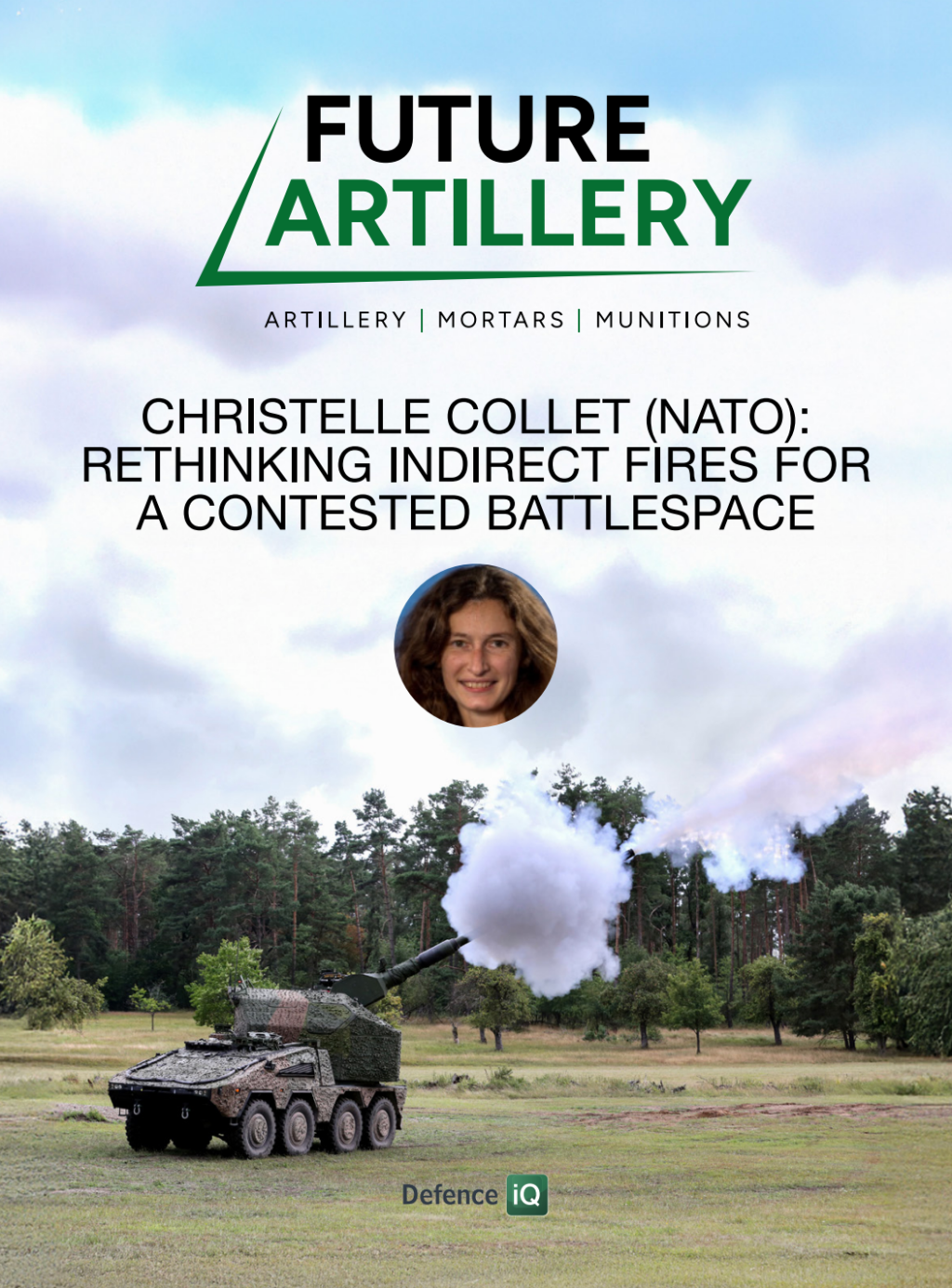
Indirect fires are undergoing rapid transformation as modern conflicts become more contested, technology-driven, and multi-domain in nature. The experiences emerging from recent conflicts, particularly in Ukraine, have accelerated the need for artillery systems that are not only more precise and capable of longer range, but also more survivable, scalable, and digitally integrated. Christelle Collet, Land Munitions Officer within NATO’s Defence Industry, Innovation and Armaments (D2IA) Division, works at the intersection of technical expertise, operational lessons, and multinational capability development. With a background in energetic materials research and munitions safety, she now supports NATO efforts to advance land munitions capability development while strengthening interoperability across Allied forces. Ahead of Defence iQ’s Future Artillery 2026 conference, Christelle shares her perspective on the evolving role of indirect fires, the growing importance of industrial resilience and munitions production, and the technologies likely to reshape artillery over the coming decade.
In Partnership With:

QUESTIONS?
Address: IQPC Ltd, 129 Wilton Road,
London SW1V 1JZ
Telephone: +44 (0) 113 210 042
Fax: 44 (0) 207 368 9301
Email: enquire@iqpc.co.uk

©2026 IQPC. All rights reserved.