Is the Global Defence Market Ready for Unmanned Underwater Vehicles?
Contributor:
Neil Waghorn
Posted: 06/02/2011 12:00:00 AM EDT | 0
• Autonomy
• Risk Reduction
• Low Profile
• Deployability
• Environmental adaptability
• Persistent
Posted: 06/02/2011 12:00:00 AM EDT | 0
|
There has been no shortage of media attention covering Unmanned Aerial Vehicles. In fact, the inventory of popular press referrals only seems to be growing: drones, RUAVs, UCAVs, and RPAs fill out a list of increasingly technical designations that are not fully comprehended by many aviation enthusiasts. The future of global defence is clearly unmanned - Unmanned Space Vehicles may push the envelope of expectations but this eventuality, also, seems somehow within easy grasp. When it comes to Unmanned Underwater Vehicles (UUVs), however, the media interest barely emerges from the murky depths. Exploring the outer limits of technical development is only one piece of the attraction that unmanned aquatic systems offer. With the current climate of defence cuts and austerity measures, it is important to highlight the ‘value for money’ potential of UUVs in today’s world and to continue their development in tomorrow’s.
While UAVs can actively surveil from the skies (and with extended loitering times), UUVs can provide below-surface intelligence, ensuring security in ways that UAVs simply cannot. The US Navy, in its ‘UUV Master plan’ identifies what UUVs should bring to the table:
• Autonomy
• Risk Reduction
• Low Profile
• Deployability
• Environmental adaptability
• Persistent

The REMUS 6000 is Kongsberg's UUV solution and currently serves in a number
of civilian underwater research capacities [image courtesy of Waitt Institute]
The idea meets the present threat environment
Naval mines are not just a legacy from wars bygone, but remain a clear and present threat, as apparent from the mining of the Libyan port of Mistrautra by Gadaffi’s forces. The ability of naval mines, or simply even the threat of mines being present, to deny access to vital shipping lanes and ports means that counter-mine technology is vital. UUVs can offer the ability to help identify, mark and disable mines. The advantage of using UUVs to conduct these global defence activities is primarily that it removes the immediate danger to the EOD (explosive ordnance disposal) diver. UUVs can also identify and mark routes through naval minefields to ensure that maritime traffic - be it military, commercial or aid - can reach its intended destination unscathed. Secondary advantages of using UUVs include their persistence and environmental adaptability. Whilst divers are restricted by their oxygen supplies and visibility, ‘UUVs can operate in all water depths, in foul weather and seas, under tropical or arctic conditions, and around the clock.’
The added layer of maritime security in Global Defence
Civilian transport hubs and routes, such as airports and train terminals, are known to be targets of choice for terrorist organisations large and small. In fact, intelligence gained from the raid of Osama Bin Laden’s compound revealed that an attack on the US rail network was under serious consideration. These soft targets must harden their security to prevent an attack. UUVs offer ports, and transport arteries leading from them, improved security by adding another layer of surveillance and the ability to actively search for explosives.
Dual use technologies for Global Defence
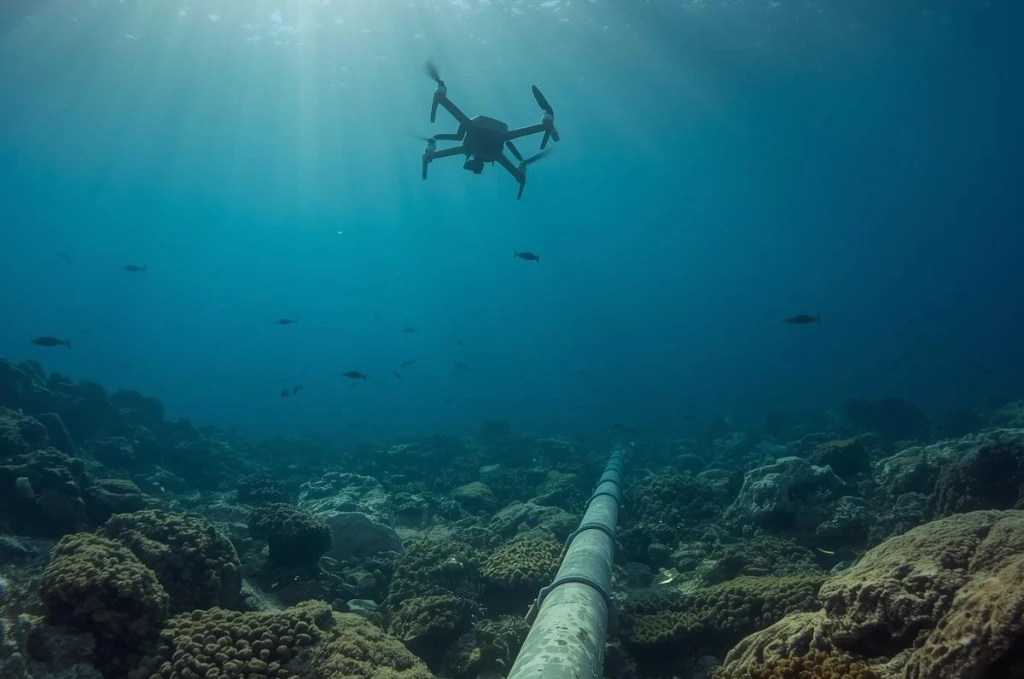
UUVs may serve as a force multiplier, not just for naval forces, but also for civilian organisations, as well. UUVs can conduct seabed observation to assist with pipeline installation, or build oceanographic information regarding Seabed Mountains and potential earthquake or tsunami regions. It is important to remember that collective oceanographic knowledge is still particularly scant, especially when it comes to depth measurements. UUVs offer scientists the potential tools to help fill in this picture.
This seabed survey application was very recently demonstrated by the recent location of remains of the Air France flight 447 in the Atlantic Ocean. These remains were discovered and analysed using three AUVs (Autonomous Underwater Vehicles) REMUS 6000s. It is hoped that eventually the search will locate and identify one of the jet’s black boxes, allowing experts to explain what caused it to crash in 2009.
Looking towards potential applications for Global Defence
It is envisaged that UUVs could also serve as communication relay stations, allowing signals and communications to be passed over longer ranges. As this technology matures, it will further ensure the security of a naval fleet by extending sensor ranges. It could also enable clandestine special operations to receive mission updates or pass intelligence in real time. It is also foreseeable that UUVs will be developed to handle a payload capacity. This would allow UUVs to act as ‘motherships’ for smaller UUVs, or allow the UUV to transport equipment of supplies covertly, or even place mines (as well as adding to the range of onboard sensors). The placing of mines is not the only potentially offensive use for UUVs. UUVs could be notionally armed with either torpedoes or surface-launched missiles. The use of UUVs as offensive covert weapon platforms would provide any navy a low cost alternative to a pricy and maintenance-intensive submarine fleet.
While the rest of society is fascinated by the flight of UAVs and their actions around the world (particularly their secretive anti-terror applications), the shift of proven unmanned technologies to underwater and deep sea domains will only intensify. Likewise, industry investment in these technologies will more closely resemble the present day UAV market, where smaller manufacturers will have as much access to military buyers as their larger aerospace counterparts. In a time of significant global fiscal constraint, this is certain to fuel the demand for ‘value for money’, a driving force that continues to ignite defence interest in unmanned systems.
-
Remote-controlled Roadside Bomb Hits Kenyan Military Convoy in Border Town -
BRIC Countries Russia and Brazil Flex Their Muscles in Race for Regional Control -
Results: Top 10 Defence Blogs 2011 -
Opinion: Libya Stalemate Looms for NATO as Gaddafi Holds His Ground -
What's the Next Step for European Defence Equipment Cooperation? -
Non-traditional Airborne ISR Makes the Leap from Unconventional to Conventional Warfare -
BRIC Countries China and India Go Head to Head in Defensive Buildup -
Effective Joint Personnel Recovery Under the Scrutinising Gaze of the World's Press -
Balancing an Imperfect Relationship Between Special Forces and Their Rotary Wing Assets -
Pakistan, Bin Laden and the Line of Succession to Al Qaeda's Number One
* = required.
Not a member yet? Sign up
You Should Check Out:
Events of Interest
-
Air and Missile Defence India
Le Meridien, New Delhi, India
June 5- 6, 2012 -
5th Annual GDI APAC: Geospatial Defence & Intelligence Asia-Pacific
Bangkok, Thailand
September 12- 13, 2012 -
Maritime Reconnaissance & Surveillance 2012
Melia Roma Aurelia Antica, Roma, Italy
September 25- 27, 2012 -
Jordan Air Defence Summit
Amman, Jordan
September 17- 18, 2012
You Might Also Like
-
US Demand for UAVs Rising Due to 'Unprecedented Capability'
Unmanned aerial vehicles (UAVs) are bringing "unprecedented" intelligence, surveillance and... Read more
Defence IQ Press
-
UAVs 'Changing the Face of Warfare'
No other weapon has changed the way the US military wages war in recent years like the unmanned aerial... Read more
Defence IQ Press
-
UAVs' Cost-Effectiveness is Compelling Argument
The cost-effectiveness of unmanned aerial vehicles (UAVs) is making them an increasingly appealing prospect,... Read more
Defence IQ Press
-
RN divers swap wetsuits for body armour in Afghanistan
10 Sep 10 It's a long way from the murky waters of the Defence Diving School at Horsea Island, but four... Read more
UK Ministry of Defence [MoD]


Not a member? Sign Up
Reasons for Joining
Address your challenges through knowledge sharing with peers from our global network of specialists.
Benchmark your business initiatives with the who's who in the field.
Hear from industry pioneers how to maximize ROI in today's challenging economy.
And best of all It's FREE!