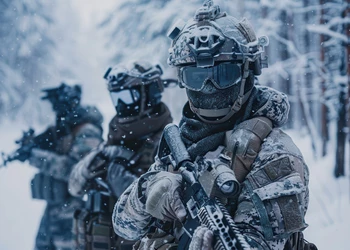
Special Forces Interest Sparked by Navy SEAL Raid on bin Laden Compound
Contributor:
Defence IQ Press
Posted: 06/21/2011 12:00:00 AM EDT | 0
In a far less well-documented recent incident, members of the Australian special forces killed the prominent insurgent leader Hayat Ustad during an Afghan police led operation in Uruzgan province on 29 April.
A concerted campaign against insurgents with the Provincial Response Company–Uruzgan began last month, and the killing of Ustad was said to simply mark the most recent successful operation in which an insurgent leader has been killed or captured.
There were no civilian casualties or collateral damage during the raid and the work of the small team with special forces training is thought to have impacted upon two district-level cells and a larger regional-level insurgent group.
Growing numbers of special forces units
In 2014, international forces are set to hand over control of much of Afghanistan to local security forces.
Conventional troops will begin pulling out of the country this summer, but Army special forces teams would remain behind to continue to train and mentor their Afghanistan counterparts.
According to reports, during the past 12 months the United States has become reliant on its teams equipped with special forces gear and training, which General Petraeus says have not only helped neutralise insurgent leaders, but are also offering special forces training to members of the Afghan forces.
The reported plans would see the number of conventional troops on the ground decrease from 100,000 today to 20-30,000 by the end of 2014. The US special forces contingent, however, would remain at 10,000.
Around 4,000 of these members of the US Army Special Forces are said to be involved with direct action, while the remaining 6,000 help train Afghan officers and police forces, with strong results.
Petraeus told the Associated Press: "Targeted intelligence-driven operations are increasingly led by Afghan special operations forces". These raids were said to now amount to three to four operations each week in the capital Kabul.
Recruiting special forces
Outside Afghanistan, countries are having much greater issues finding the necessary number of recruits for Special Forces selection for elite teams like the British SAS.
Brigadier Richard Dennis, in a letter which was seen by the Daily Telegraph, highlighted Special Forces recruiting is being hampered by the increasing pressures the military is finding itself under.
Dennis described the "unrelentingly demanding" operations within Afghanistan as being among the factors which were combining to "mitigate against Special Forces recruitment".
The head of infantry said he was satisfied that the infantry "delivers sufficient officer and soldier volunteers", however, he added: "I am less confident about how we guarantee better depth of quality to increase selection pass rates.
"Indeed, for any measure to be successful you might consider that Army action is essential if we are to increase selection success and the enduring quality of our SF [Special Forces] community."
Figures reported by the newspaper suggested the British special forces are now short of one-third of its frontline SAS staff. A source indicated to the newspaper that the high levels of casualties among UK special forces, and large numbers coming to the end of their career or switching jobs were all causing problems.
The United States has also previously experienced issues recruiting members of its marine special forces and army special forces, but this is something it believes it is now addressing.
USA Today reported that in 2010, 277 Navy SEALs graduated, which is a record high. An additional 1,141 people signed up for Special Forces training.
Capt. Adam Curtis, director of Naval Special Warfare recruiting, told USA Today: "We have definitely ramped up production — mentoring and prepping physically and mentally the guy in a way that has only been done for a few years, and I think we're seeing benefits from that."
In spite of this trend, problems remain with retaining SEALs and this is an area which, if left unaddressed, will eventually affect the kind of operational capability that saw through the successful raid against bin Laden’s Pakistan compound.
Posted: 06/21/2011 12:00:00 AM EDT | 0
|
The role of special forces
On 2 May 2011, US Navy SEALs flew from Afghanistan to the Pakistani city of Abbottabad and initiated an assault on the compound being used as a hideout by the Al Qaeda leader Osama bin Laden, who was killed in the ensuing firefight. The mission, which continues to receive widespread global media attention, is now being hailed as a landmark military achievement – and is catalysing a renewed interest in special warfare capabilities worldwide.
SEAL Team 6 might currently be the most well known US special forces team in the world, but it is just one of many operating within warzones across the globe.
On 2 May 2011, US Navy SEALs flew from Afghanistan to the Pakistani city of Abbottabad and initiated an assault on the compound being used as a hideout by the Al Qaeda leader Osama bin Laden, who was killed in the ensuing firefight. The mission, which continues to receive widespread global media attention, is now being hailed as a landmark military achievement – and is catalysing a renewed interest in special warfare capabilities worldwide.
SEAL Team 6 might currently be the most well known US special forces team in the world, but it is just one of many operating within warzones across the globe.

In 2010, a record number of US Navy SEALs passed selection and training
In a far less well-documented recent incident, members of the Australian special forces killed the prominent insurgent leader Hayat Ustad during an Afghan police led operation in Uruzgan province on 29 April.
A concerted campaign against insurgents with the Provincial Response Company–Uruzgan began last month, and the killing of Ustad was said to simply mark the most recent successful operation in which an insurgent leader has been killed or captured.
There were no civilian casualties or collateral damage during the raid and the work of the small team with special forces training is thought to have impacted upon two district-level cells and a larger regional-level insurgent group.
Growing numbers of special forces units
In 2014, international forces are set to hand over control of much of Afghanistan to local security forces.
Conventional troops will begin pulling out of the country this summer, but Army special forces teams would remain behind to continue to train and mentor their Afghanistan counterparts.
According to reports, during the past 12 months the United States has become reliant on its teams equipped with special forces gear and training, which General Petraeus says have not only helped neutralise insurgent leaders, but are also offering special forces training to members of the Afghan forces.
The reported plans would see the number of conventional troops on the ground decrease from 100,000 today to 20-30,000 by the end of 2014. The US special forces contingent, however, would remain at 10,000.
Around 4,000 of these members of the US Army Special Forces are said to be involved with direct action, while the remaining 6,000 help train Afghan officers and police forces, with strong results.
Petraeus told the Associated Press: "Targeted intelligence-driven operations are increasingly led by Afghan special operations forces". These raids were said to now amount to three to four operations each week in the capital Kabul.
Recruiting special forces
Outside Afghanistan, countries are having much greater issues finding the necessary number of recruits for Special Forces selection for elite teams like the British SAS.
Brigadier Richard Dennis, in a letter which was seen by the Daily Telegraph, highlighted Special Forces recruiting is being hampered by the increasing pressures the military is finding itself under.
Dennis described the "unrelentingly demanding" operations within Afghanistan as being among the factors which were combining to "mitigate against Special Forces recruitment".
The head of infantry said he was satisfied that the infantry "delivers sufficient officer and soldier volunteers", however, he added: "I am less confident about how we guarantee better depth of quality to increase selection pass rates.
"Indeed, for any measure to be successful you might consider that Army action is essential if we are to increase selection success and the enduring quality of our SF [Special Forces] community."
Figures reported by the newspaper suggested the British special forces are now short of one-third of its frontline SAS staff. A source indicated to the newspaper that the high levels of casualties among UK special forces, and large numbers coming to the end of their career or switching jobs were all causing problems.
The United States has also previously experienced issues recruiting members of its marine special forces and army special forces, but this is something it believes it is now addressing.
USA Today reported that in 2010, 277 Navy SEALs graduated, which is a record high. An additional 1,141 people signed up for Special Forces training.
Capt. Adam Curtis, director of Naval Special Warfare recruiting, told USA Today: "We have definitely ramped up production — mentoring and prepping physically and mentally the guy in a way that has only been done for a few years, and I think we're seeing benefits from that."
In spite of this trend, problems remain with retaining SEALs and this is an area which, if left unaddressed, will eventually affect the kind of operational capability that saw through the successful raid against bin Laden’s Pakistan compound.
-
Contract Watch - Four Remaining Mysteries about France and Russia’s Mistral Deal -
Apache Longbow Helicopter Upgrade Launches the Future of Airborne UAV Management -
London 2012 Opens Window of Opportunity for Cyber Criminals -
Successful Cyber Attacks Reveal Chinks in US and UK Security Reviews -
EU's Largest New Member, Poland, Takes Over Presidency -
Precision NATO Air Strikes in Libya - The Other Side of Counter-insurgency -
Shanghai Cooperation Organisation Aims to Replace NATO in the Middle East -
Middle Eastern Security Complex Comes of Age in a World of Burgeoning Cyber Threats -
Non-traditional Airborne ISR: Immediate Battlefield Intelligence at a Fraction of the Cost -
Opinion: Liam Fox Faces Uphill Battle as He Leads MoD Into Cyber War
* = required.
Not a member yet? Sign up
Events of Interest
-
Armoured Vehicles Asia 2012
Amara Hotel, Singapore
September 26- 27, 2012 -
Surface Warships 2013
Venue TBC, Madrid, Spain
January 30- 31, 2013 -
Airborne Early Warning and Battle Management
London, UK
January 22- 23, 2013 -
3rd Annual Irregular Warfare Summit
Washington Marriott Wardman Park, Washington, DC
May 30- 1, 2012
You Might Also Like
-
Senior US leaders offer condolences in wake of helicopter crash
Senior U.S. leaders extended condolences to the families of American and Afghan forces lost in an... Read more
US Department of Defense
-
US Navy Admiral says demand will increase for Special Ops forces
Special operations forces will become more important in the future, said Navy Adm. Eric T. Olson, who turned... Read more
US Department of Defense
-
Statement from the UK Secretary of State for Defence following the death of Osama Bin Laden
Secretary of State for Defence, Dr Liam Fox, said: "Osama Bin Laden was responsible for the... Read more
UK Ministry of Defence [MoD]
-
How Will Al-Qaeda Survive the Death of Osama Bin Laden?
On the night of 1 May 2011, US President Obama announced the death of the leader of Al Qaeda, Osama Bin... Read more
Bruno Vanasse


Not a member? Sign Up
Reasons for Joining
Address your challenges through knowledge sharing with peers from our global network of specialists.
Benchmark your business initiatives with the who's who in the field.
Hear from industry pioneers how to maximize ROI in today's challenging economy.
And best of all It's FREE!