Exclusive Content
Fire Support for the Future Dismounted Soldier - Exclusive Interview with Colonel Gregory Tomlin
Colonel Greg Tomlin, Director of Army Capability Manager for Division Artillery Formations, U.S. Army, shares a grounded view of how fire support is evolving to meet the needs of dismounted soldiers. In his interview, he discusses the challenges of integrating intelligence from high-end sensors with frontline operations, the balance between precision and massed fires in urban environments, and the technical limitations still facing digital fire control. While there is growing interest in emerging capabilities like UAVs and loitering munitions, Col Tomlin stresses the importance of reliability, communication infrastructure, and not losing sight of the fundamental role that artillery plays in supporting troops on the ground.
Interview with Colonel Vivarelli: Italy's Vision for the Future Dismounted Soldier
In this exclusive conversation ahead of International Dismounted Soldier 2025, Colonel Alessandro Vivarelli, Head of the Capability Development Branch for the Italian Army, shared his vision for the future of the dismounted soldier. Drawing from frontline experience and strategic leadership, Vivarelli discusses how Italy is adapting to evolving threats, such as drone warfare, the transparent battlefield, and the cognitive toll on troops. He emphasises the need for innovation, multinational collaboration, and modernised training to ensure readiness for complex, technology-driven conflicts. Key topics covered in the interview include:
- How the war in Ukraine is reshaping battlefield analysis and force protection.
- Italy’s role in NATO and EU projects to boost interoperability and soldier modernisation.
- Balancing lethality, mobility, and cognitive demands through modular technologies.
- The role of unmanned ground vehicles (UGVs) and exoskeletons in reducing soldier burden.
- How simulation and tactical experimentation are transforming Italian Army training.
- The “Tactical Bubble” concept for integrated, multi-capability battlefield operations.
This insight-rich discussion provides valuable lessons for any military stakeholder focused on preparing soldiers for the challenges of contemporary and future warfare.
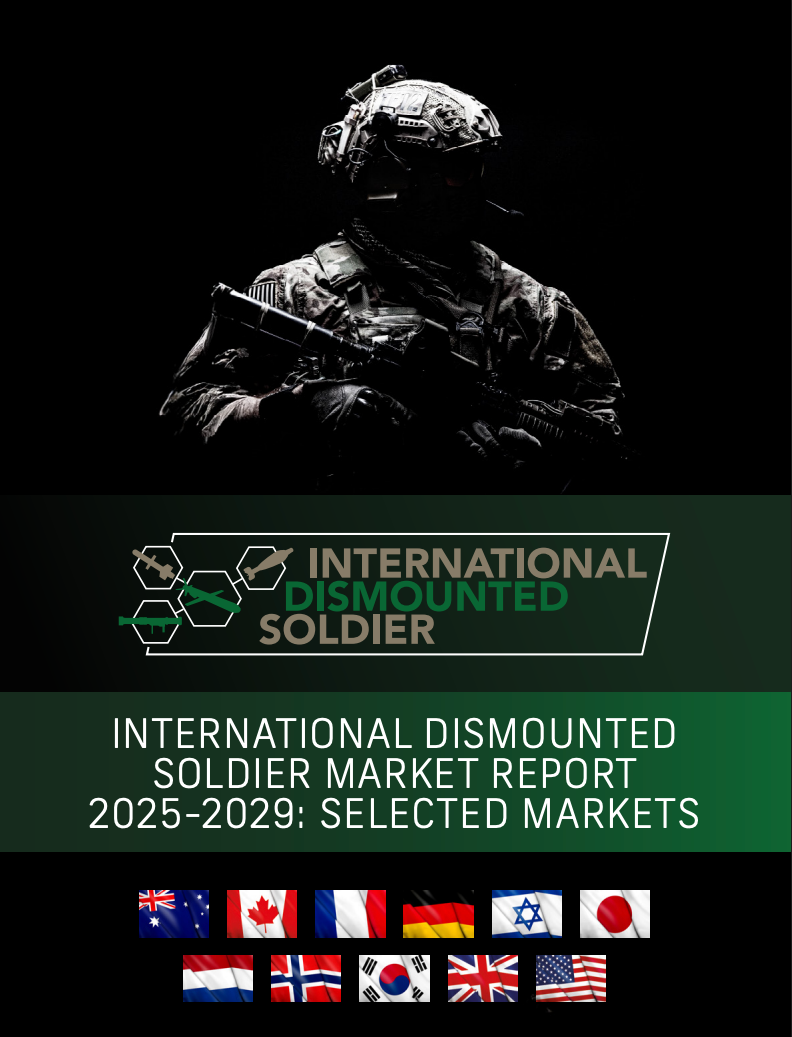
International Dismounted Soldier Market Report 2025-2029: Selected Market
Read Defence IQ’s latest International Dismounted Soldier 2025 Market Report for exclusive insights into the future of infantry modernisation. Covering selected markets from 2025 to 2029, this in-depth analysis explores key technologies, global procurement trends, and strategic investment priorities across 11 leading nations. Essential reading for defence professionals and industry suppliers operating in the soldier systems space.
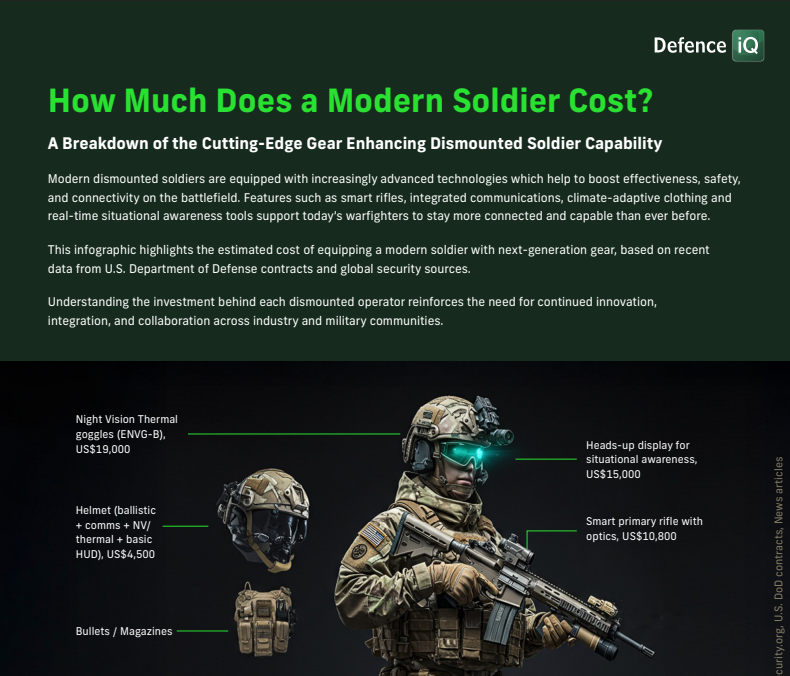
How Much Does a Modern Soldier Cost?
Take a look at Defence iQ's latest infographic, offering a detailed breakdown of the estimated cost of outfitting a modern dismounted soldier with next-generation equipment. Drawing from recent U.S. Department of Defense data and global security sources, it highlights the advanced technologies now standard in soldier systems—ranging from smart rifles and integrated communications to climate-adaptive clothing and real-time situational awareness tools.

Colonel Niklas Edelsvärd, Deputy Senior Representative Army Land Systems Division, FMV: Arming Light Forces, Maximising Lethality
Many European nations' return to a near-peer focus caused by the invasion of Ukraine has caused many military planners to implement several step changes. From a European defence perspective, perhaps the most significant change was the joining of Nordic nations to NATO. This presentation was delivered in 2023 by Colonel Niklas Edelsvärd from the FMV - Swedish Defence Materiel Administration, which covers:
- The context in the FMV and Sweden finds itself
- Presentation of some of the soldier projects the FMV is working on from a joint procurement perspective
- An outlook on the FMV’s research and development of soldier systems

NLD Urban ET&E, Interview with Lieutenant Colonel Ron Dresen, Staffoff/SME Urban Ops RNLA
In this interview, Lieutenant Colonel Ron Dresen, Staff Officer and Subject Matter Expert on Urban Ops at the RNLA, shares his wealth of experience and knowledge of Urban Warfare. In this piece, he explains how the War in Ukraine has put a new perspective on urban combat operations and what this means for the Royal Netherlands Army and modern European forces in terms of what needs to be improved.

Trials and Development; Interview with Lieutenant Colonel Arthur Dawe Commanding Officer, Infantry Trials and Development Unit, British Army
In this exclusive interview, Lieutenant Colonel Arthur Dawe, Commanding Officer of the Infantry Trials Development Unit discusses the future of the British Armed Forces as it modernises and digitises. Dawe also provides insight into the impact of technologies such as AI and ML on the battlefield. Read the 8 minute interview now to learn more about the projects transforming the way British Land Forces conduct operations in the tactical environment.

Lessons From Ukraine
The War in Ukraine shows the clear importance of the dismounted soldier in contemporary warfare. In many respects, it demonstrates the value of personal training, communication, and firepower on the modern battlefield. Ukrainian defence expert, Pavlo Khoma, shares the lessons learned from the beginning of the invasion, delivering a unique insight into how things have changed in modern warfare but also how things remain the same.
In Partnership With:

QUESTIONS?
Address: IQPC Ltd, 129 Wilton Road,
London SW1V 1JZ
Telephone: +44 (0) 113 210 042
Fax: 44 (0) 207 368 9301
Email: enquire@iqpc.co.uk

©2026 IQPC. All rights reserved.