Content Library
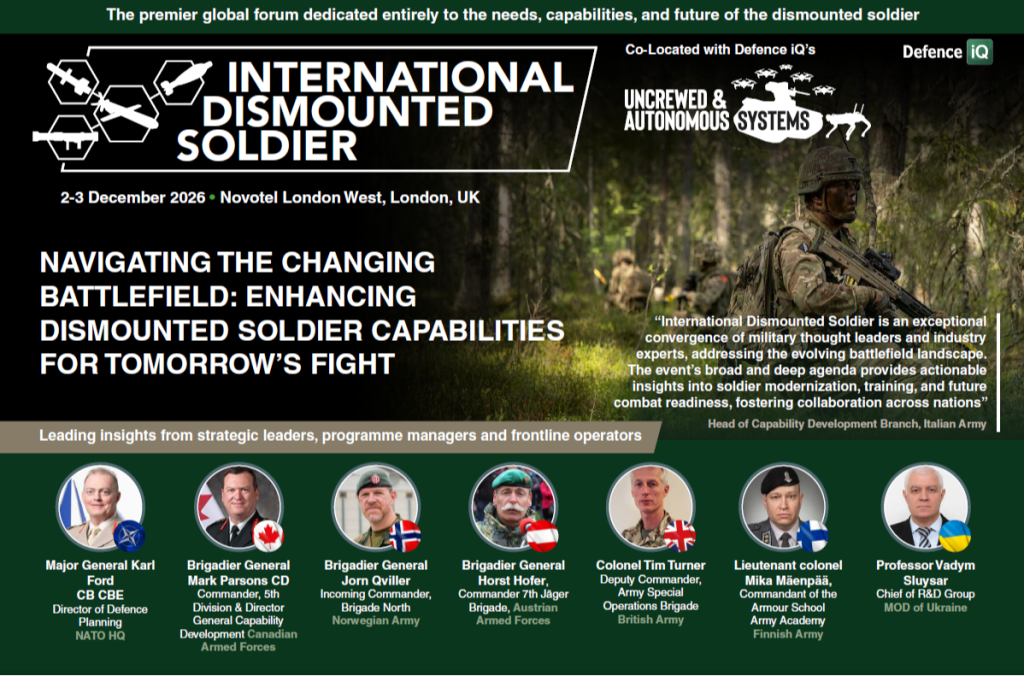
International Dismounted Soldier Agenda
Defence iQ is proud to host the 17th edition of the International Dismounted Soldier Conference in London this December. The full 2026 agenda is now available to view and download, providing an in-depth look at the speakers, sessions and capability updates shaping t ...
Exclusive Content

International Dismounted Soldier Interactive Market Report 2026
The International Dismounted Soldier Interactive Market Report provides a comprehensive overview of the evolving global dismounted soldier market, exploring the key programmes, procurement priorities and capability developments shaping the future of the individual warfighter. Through an interactive format, the report highlights investment trends, emerging requirements and opportunities across areas including soldier systems, lethality, protection, communications and situational awareness.

International Dismounted Soldier Global Market Report 2026-2031
The International Dismounted Soldier Global Market Report 2026–2031 provides an in-depth overview of the evolving dismounted soldier market, examining key capability priorities, procurement programmes and investment trends worldwide. It explores how armed forces are modernising soldier systems across areas including weapons, protection, communications, situational awareness and digital technologies, highlighting the developments shaping future dismounted operations through 2031.
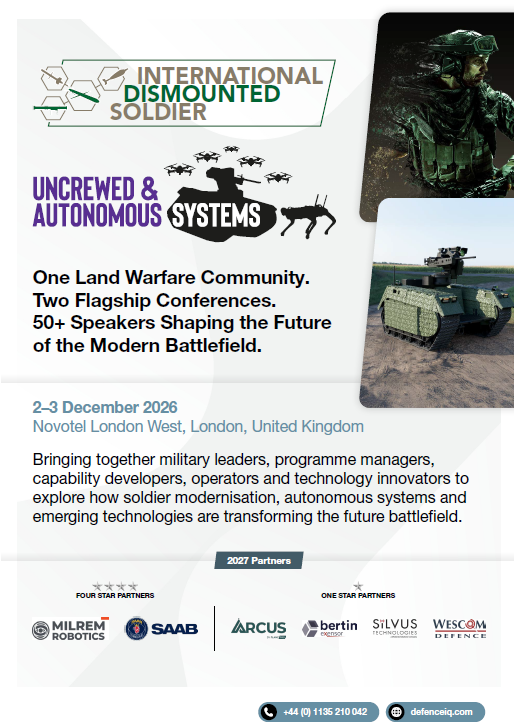
IDS x UxS Joint Speaker List
Download the Joint Speaker List to discover the experts and military leaders speaking at International Dismounted Soldier and Uncrewed & Autonomous Systems.
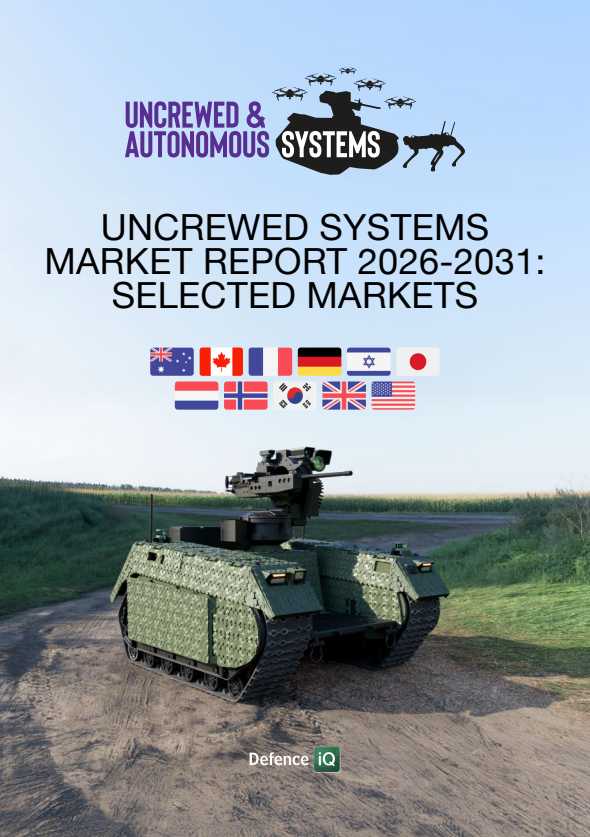
Uncrewed and Autonomous Systems Market Report 2026-2031
The uncrewed and autonomous systems market across the selected countries is moving into a broader and more operationally driven phase. Demand is no longer centred only on high-end UAV platforms. It now spans tactical and strategic ISR drones, loitering munitions, UGVs for logistics and force protection, shipborne and maritime uncrewed systems, contractor-operated ISR services, autonomy software, and counter-UAS architectures. Across the market, the main catalysts are the lessons of Ukraine, intensifying great-power competition, the need to reduce risk to personnel, and the growing maturity of AI, edge computing, sensor fusion and resilient communications.
Find out all the latest trends driving autonomous systems in our Uncrewed and Autonomous Systems Market Report 2026-2031 - download it today!

Beyond the Rifle: Rethinking the Dismounted Soldier For the Future Battlefield
Ahead of Defence iQ's International Dismounted Soldier Conference 2026, we spoke with Major Sebastian Langvad, Teacher of Complex Operations at the Norwegian Defence University College, about the experiences shaping his view of modern land warfare. Drawing on a career spanning intelligence, light infantry, deployments in Afghanistan and the Middle East, and Arctic operations in Northern Norway, Major Langvad discusses the importance of stealth and adaptability, how forces can turn extreme environments into a tactical advantage, the relationship between territorial and allied forces, and why militaries may need to rethink the role of the human soldier as unmanned capabilities advance.
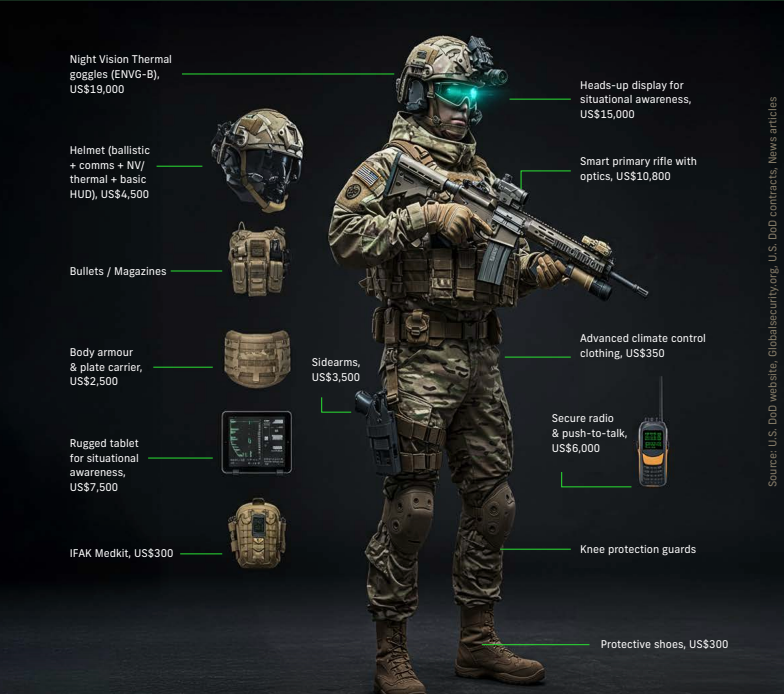
How Much Does a Modern Soldier Cost Infographic
Modern dismounted soldiers are equipped with increasingly advanced technologies which help to boost effectiveness, safety, and connectivity on the battlefield. Features such as smart rifles, integrated communications, climate-adaptive clothing and real-time situational awareness tools support today's warfighters to stay more connected and capable than ever before. This infographic highlights the estimated cost of equipping a modern soldier with next-generation gear, based on recent data from U.S. Department of Defense contracts and global security sources. Understanding the investment behind each dismounted operator reinforces the need for continued innovation, integration, and collaboration across industry and military communities.
International Dismounted Soldier Post Show Report 2025
The International Dismounted Soldier Conference returned to London on the 28th–29th October 2025, bringing together military leaders, capability developers, procurement specialists, researchers, and industry partners at the Millennium Gloucester Hotel to examine one of the most pressing challenges facing modern land forces: how to prepare, equip, and support dismounted soldiers for an increasingly complex and transparent battlefield.
The 2025 conference welcomed representatives from 19 nations and featured more than 30 expert speakers drawn from military organisations, government agencies, NATO bodies, research institutions, and industry. Attendees included representatives from organisations such as NATO, the British Army, the U.S. Army, and the NATO Support and Procurement Agency (NSPA), alongside senior decision-makers holding appointments including Deputy Chief of the Defence Staff, Chief Procurement Officer, and Director, Close Combat Lethality Task Force. Across two days of presentations, panel discussions, and networking sessions, participants shared lessons learned, examined emerging capability requirements, and explored approaches to strengthening dismounted force effectiveness for future operations.
This Post Show Report captures the key themes, insights, and takeaways from the conference. It provides an overview of the discussions that took place and reflects on the challenges and opportunities facing military organisations as they seek to develop combat-ready soldiers capable of operating effectively across the evolving battlefields of tomorrow.
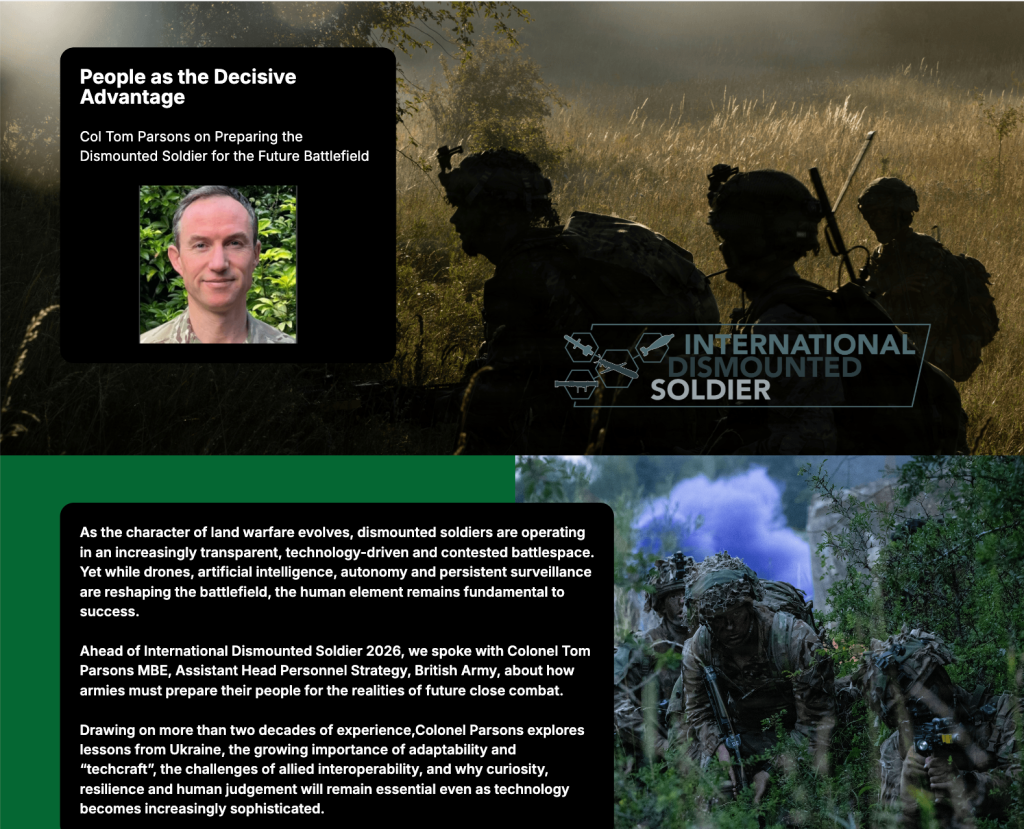
People as the Decisive Advantage: Col Tom Parsons on Preparing the Dismounted Soldier for the Future Battlefield
As the character of land warfare evolves, dismounted soldiers are operating in an increasingly transparent, technology-driven and contested battlespace. Yet while drones, artificial intelligence, autonomy and persistent surveillance are reshaping the battlefield, the human element remains fundamental to success. Ahead of International Dismounted Soldier 2026, we spoke with Colonel Tom Parsons MBE, Assistant Head Personnel Strategy, British Army, about how armies must prepare their people for the realities of future close combat. Drawing on more than two decades of experience, Colonel Parsons explores lessons from Ukraine, the growing importance of adaptability and "techcraft", the challenges of allied interoperability, and why curiosity, resilience and human judgement will remain essential even as technology becomes increasingly sophisticated.
Fire Support for the Future Dismounted Soldier - Exclusive Interview with Colonel Gregory Tomlin
Colonel Greg Tomlin, Director of Army Capability Manager for Division Artillery Formations, U.S. Army, shares a grounded view of how fire support is evolving to meet the needs of dismounted soldiers. In his interview, he discusses the challenges of integrating intelligence from high-end sensors with frontline operations, the balance between precision and massed fires in urban environments, and the technical limitations still facing digital fire control. While there is growing interest in emerging capabilities like UAVs and loitering munitions, Col Tomlin stresses the importance of reliability, communication infrastructure, and not losing sight of the fundamental role that artillery plays in supporting troops on the ground.
Interview with Colonel Vivarelli: Italy's Vision for the Future Dismounted Soldier
In this exclusive conversation ahead of International Dismounted Soldier 2025, Colonel Alessandro Vivarelli, Head of the Capability Development Branch for the Italian Army, shared his vision for the future of the dismounted soldier. Drawing from frontline experience and strategic leadership, Vivarelli discusses how Italy is adapting to evolving threats, such as drone warfare, the transparent battlefield, and the cognitive toll on troops. He emphasises the need for innovation, multinational collaboration, and modernised training to ensure readiness for complex, technology-driven conflicts. Key topics covered in the interview include:
- How the war in Ukraine is reshaping battlefield analysis and force protection.
- Italy’s role in NATO and EU projects to boost interoperability and soldier modernisation.
- Balancing lethality, mobility, and cognitive demands through modular technologies.
- The role of unmanned ground vehicles (UGVs) and exoskeletons in reducing soldier burden.
- How simulation and tactical experimentation are transforming Italian Army training.
- The “Tactical Bubble” concept for integrated, multi-capability battlefield operations.
This insight-rich discussion provides valuable lessons for any military stakeholder focused on preparing soldiers for the challenges of contemporary and future warfare.

International Dismounted Soldier Market Report 2025-2029: Selected Market
Read Defence IQ’s latest International Dismounted Soldier 2025 Market Report for exclusive insights into the future of infantry modernisation. Covering selected markets from 2025 to 2029, this in-depth analysis explores key technologies, global procurement trends, and strategic investment priorities across 11 leading nations. Essential reading for defence professionals and industry suppliers operating in the soldier systems space.

Colonel Niklas Edelsvärd, Deputy Senior Representative Army Land Systems Division, FMV: Arming Light Forces, Maximising Lethality
Many European nations' return to a near-peer focus caused by the invasion of Ukraine has caused many military planners to implement several step changes. From a European defence perspective, perhaps the most significant change was the joining of Nordic nations to NATO. This presentation was delivered in 2023 by Colonel Niklas Edelsvärd from the FMV - Swedish Defence Materiel Administration, which covers:
- The context in the FMV and Sweden finds itself
- Presentation of some of the soldier projects the FMV is working on from a joint procurement perspective
- An outlook on the FMV’s research and development of soldier systems

Trials and Development; Interview with Lieutenant Colonel Arthur Dawe Commanding Officer, Infantry Trials and Development Unit, British Army
In this exclusive interview, Lieutenant Colonel Arthur Dawe, Commanding Officer of the Infantry Trials Development Unit discusses the future of the British Armed Forces as it modernises and digitises. Dawe also provides insight into the impact of technologies such as AI and ML on the battlefield. Read the 8 minute interview now to learn more about the projects transforming the way British Land Forces conduct operations in the tactical environment.

Lessons From Ukraine
The War in Ukraine shows the clear importance of the dismounted soldier in contemporary warfare. In many respects, it demonstrates the value of personal training, communication, and firepower on the modern battlefield. Ukrainian defence expert, Pavlo Khoma, shares the lessons learned from the beginning of the invasion, delivering a unique insight into how things have changed in modern warfare but also how things remain the same.
Sponsorship & Exhibition Information
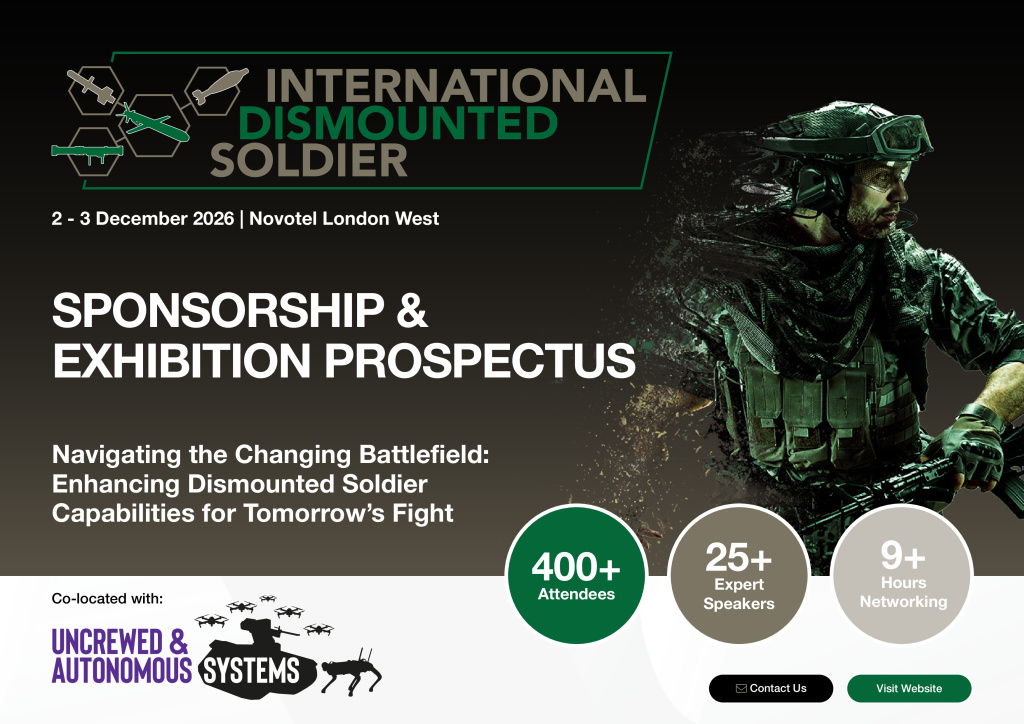
2026 International Dismounted Soldier - 2026 Sponsorship & Networking Prospectus
View the International Dismounted Soldier - 2026 Partnership & Networking Prospectus, and explore:
- 2026 Early confirmed expert Speakers
- Event Overview
- Attendee Breakdown
- Who You Can Meet Onsite
- Sponsorship Opportunities
- Attendee Testimonials
If you have any questions, contact India Davies (Sponsorship Sales Manager) - partner@defenceiq.com
2026 International Dismounted Soldier - 2026 Agenda
Check out the International Dismounted Soldier - 2026 Agenda, and explore:
- Expert Confirmed Speakers
- Day 1 Sessions & Topics
- Day 2 Sessions & Topics
- Chairman & Producer Welcome
- Networking Break Opportunities
- Event Partners
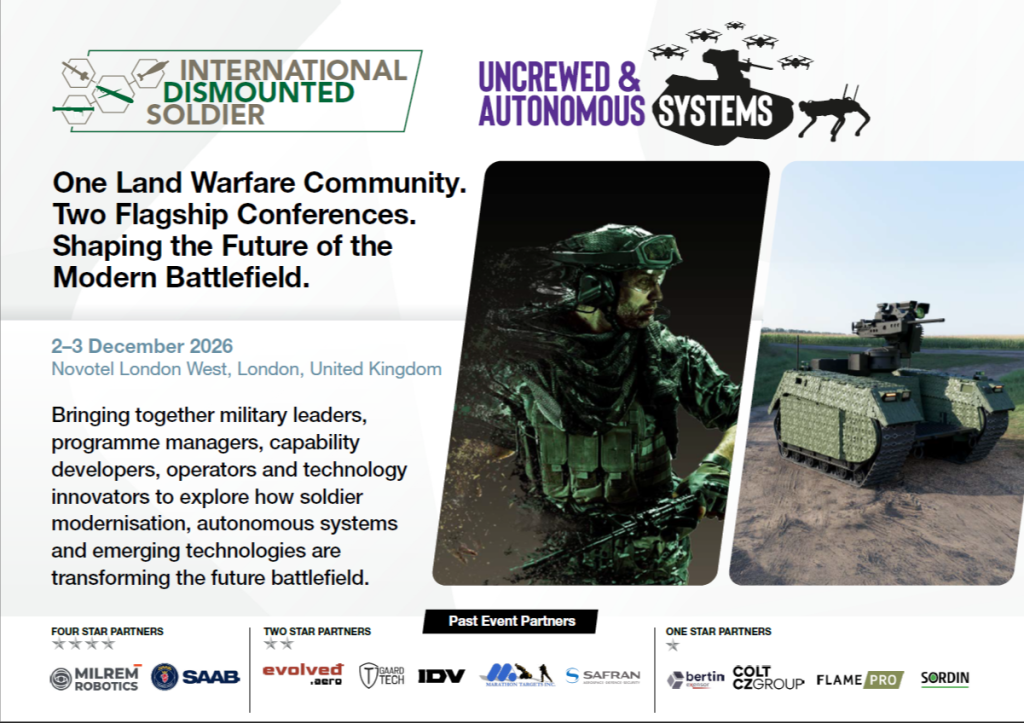
2026 International Dismounted Soldier - 2026 Joint Prospectus
Check out the International Dismounted Soldier & Uncrewed & Autonomous Systems Events Prospectus, and explore:
- Event overviews and key themes
- Previous military speakers
- Past and early confirmed sponsors and exhibitors
- Event locations
- Partnership opportunities
If you have any questions, please contact India Davies (Sponsorship Sales Manager) - partner@defenceiq.com

Event Information
IDS 2027 Request For Approval Letter

Early Joint Attendee Snapshot
See Who Is Already Joining Us in 2026
Interest in International Dismounted Soldier is already translating into strong attendance, with organisations from across defence, government and industry securing their place for December.
The early Joint Attendee Snapshot gives you a first look at who is already in the room for Uncrewed & Autonomous Systems and International Dismounted Soldier 2026.
Explore the organisations represented, the roles attending and the breadth of the community coming together across the co-located events. With places already filling, this is an opportunity to see where the strongest interest is coming from, identify the organisations you want to meet and understand the calibre of the audience you'll be joining.
Download the early Attendee Snapshot today and see who you'll be sharing the room with this December.
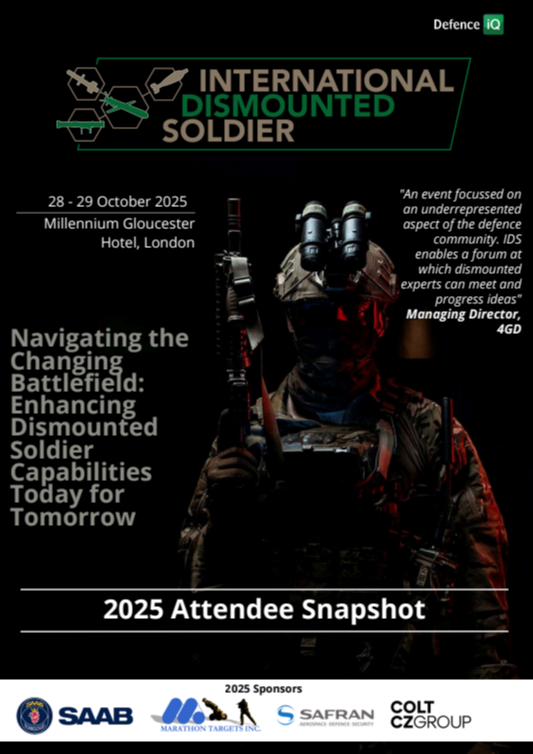
2025 Attendee Snapshot
Download the attendee snapshot to see who you can meet at International Dismounted Soldier 2025!

Joint Event Prospectus
See how Uncrewed & Autonomous Systems and International Dismounted Soldier 2026 combine to create a broader platform for collaboration across the defence community. The Joint Event Prospectus provides an overview of the shared vision behind both co-located events, showcasing how the combined exhibition, networking spaces, and conference programmes create greater opportunities to engage with military leaders, government stakeholders, and industry. Explore the event objectives, discover the engagement opportunities available, and gain a clear understanding of how your organisation can maximise its involvement across both conferences.
Download the Joint Event Prospectus today, or get in touch with the team to discuss attendance, speaking, or partnership opportunities.
In Partnership With:

QUESTIONS?
Address: IQPC Ltd, 129 Wilton Road,
London SW1V 1JZ
Telephone: +44 (0) 113 210 042
Fax: 44 (0) 207 368 9301
Email: enquire@iqpc.co.uk

©2026 IQPC. All rights reserved.