Full Spectrum Air Defence Day 3 | 25 June 2026
8:00 - 9:00
REGISTRATION AND REFRESHMENTS
9:00 - 9:10
CHAIRMANS OPENING REMARKS
• Update on prototyping and testing of US Army DEW for operational capability
• Modernising lethality to counter evolving UAS threats
• New technologies and innovation needed to increase DEW performance
• How should directed energy weapons be employed within a layered IAMD architecture to complement kinetic and electronic warfare effects, rather than compete with them?
• What changes are required to C2, sensors, and battle management systems to effectively integrate directed energy weapons into joint and coalition IAMD operations?
• What are the key challenges in powering, maintaining, and sustaining directed energy systems at scale?
• How can government, industry, and operators accelerate the transition of directed energy from trials and demonstrations into trusted, deployable IAMD capabilities?
• Insights into current adversary capabilities


• Modernisation of Swiss medium-range air defence, incorporating advanced radar technologies to improve detection and tracking of modern threats
• Successfully linking command and control with sophisticated radar components
• Leveraging international collaboration to enhance tracking capabilities, and contributing to a comprehensive air defence network across Europe

10:30 - 11:00
MORNING COFFEE AND NETWORKING BREAK
ENHANCING TRACKING CAPABILITIES WITH PASSIVE SENSORS & MULTISPECTRAL SURVEILLANCE
• Adapting C-UAS technologies to adversary innovation
• Approaches to operating in contested, degraded, and denied environments
• Implications for Force Design, Policy, and Investment
• Aligning MoD capability needs with UK industrial strengths
• Next generation C-UAS from a capability and industrial perspective
• Enhancing effector efficiency
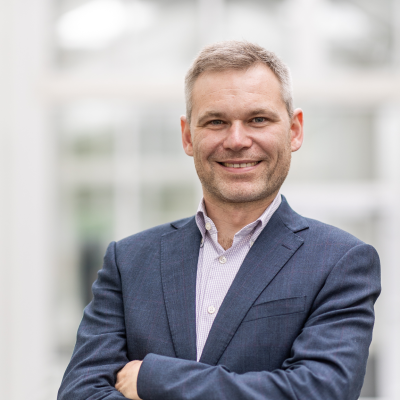
Martin Suitters
Head of Innovation & Capability, Complex WeaponsUK Defence Solutions Centre

• Integrating multi-sensor data streams to deliver a unified operational picture and improve early detection accuracy
• Leveraging advanced data processing and AI/ML analytics to filter noise, classify threats, and reduce operator cognitive load
• Enhancing resilience and adaptability by employing modular, scalable C4 architectures that can evolve quickly against emerging missile threats
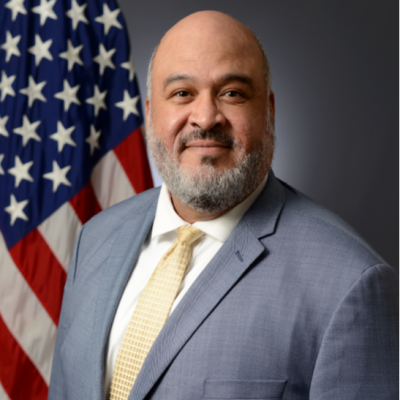
Deven Lowman
Director of C4 & Missile Defense, Strategic Space and Intelligence OfficeOUSD A&S

• Importance of space-based sensors for birth-to-death tracking and discrimination

12:30 - 13:30
LUNCH AND NETWORKING BREAK
FUTURE ROADMAP OF RADAR TECHNOLOGIES
• Optimising DEW performance across different environments
• Leveraging HPM in modern defence
• Potential limitations in DEW from an S&T perspective
• Integration challenges for existing systems and infrastructure
• Emerging radar techniques for defence and security scenarios
• Integration of AI into future radar technologies
• Adapting radar systems to counter emerging threats
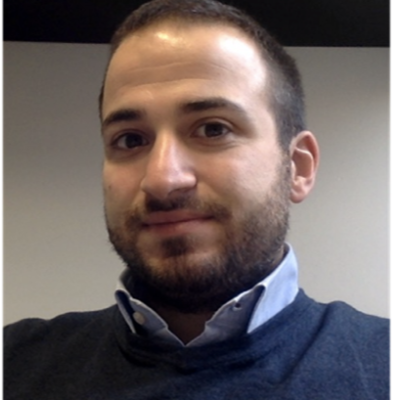
Dr Carmine Clemente
Director of the Centre for Signal and Image ProcessingUniversity of Strathclyde

• How can advances in radar data fusion, AI-enabled processing, and sensor management improve battle management and reduce decision timelines in high-density threat environments?
• What are the main technical and organisational barriers to integrating new radar capabilities into existing IAMD networks?
• How resilient are current radar systems to electronic attack, cyber intrusion, and physical disruption, and how should resilience of advanced systems be balanced against cost and complexity?
• What acquisition, testing, and operational validation approaches are most effective in moving advanced radar technologies from experimentation into trusted, deployable IAMD systems?
14:30 - 15:00
AFTERNOON TEA AND NETWORKING BREAK
15:00 - 15:30
INTEGRATING MARITIME MISSILE DEFENCE CAPABILITIES
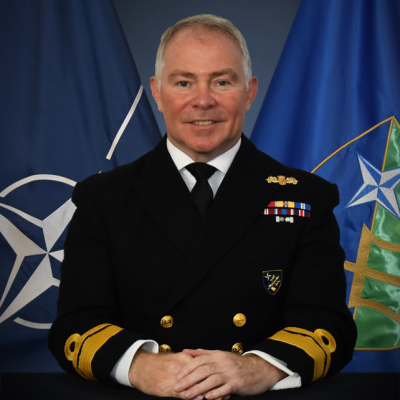
Rear Admiral Craig Wood -
Deputy Commander,
STRIKFORNATO
• Strengthening alliance readiness to address emerging challenges
• Observations and lessons identified from NEPTUNE STRIKE
• Future planning priorities
15:30 - 16:00
PREPARING FOR THE NEXT GENERATION OF MISSILE THREATS
• Training for growing AMD capabilities
16:00 - 16:30
TRAINING PRIORITIES FOR SWEDISH AIR DEFENCE
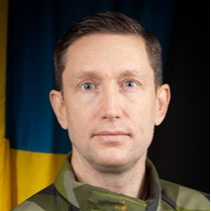
Lieutenant Colonel Magnus Stegmark -
Commander,
Swedish Air Defence Combat School
• Strengthen coordination between Air Defence units across domains

16:30 - 17:00
PRIORITIES FOR THE MARINE AIR COMMAND AND CONTROL SYSTEM
Lieutenant Colonel Robert Barclay -
MACCS Integration Branch Head,
Marine Corps Combat Development Command
• Enhancing air battle management capabilities
• Developing multi-domain C2
• Overview of the modernisation plan
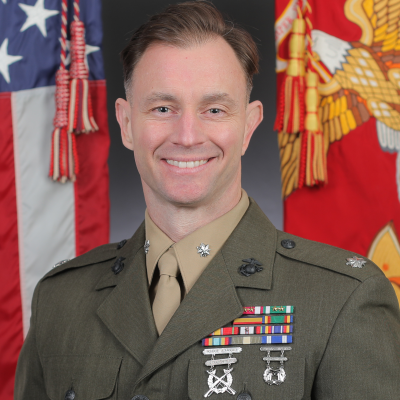
Lieutenant Colonel Robert Barclay
MACCS Integration Branch HeadMarine Corps Combat Development Command