Exclusive content: Interviews, Presentations and latest insights and more
Seabed Security and The Law of The Sea: Are Existing Legal Frameworks Fit For Purpose?
As seabed activity intensifies and critical underwater infrastructure becomes increasingly central to global communications and energy systems, protecting these assets has emerged as a growing priority for governments, militaries, and industry stakeholders alike. Subsea data cables carry the vast majority of the world’s digital communications, while offshore energy infrastructure forms a critical backbone of national economies. Yet the legal frameworks governing the seabed were largely developed in a different strategic era. As threats evolve - from sabotage and grey zone activity to the growing use of autonomous underwater technologies - questions are emerging around whether existing maritime law can effectively address these challenges. Ahead of Defence iQ’s Seabed Security Conference, Professor James Kraska, Charles H. Stockton Chair of International Maritime Law at the U.S. Naval War College, shares his perspective on the adequacy of current international legal frameworks, the challenges of attribution and deterrence, and the role of national legislation in strengthening the protection of critical undersea infrastructure.
Commander Julien Le Roux on Confronting Emerging Threats to Critical Undersea Infrastructure
The seabed is no longer a blind spot. It's becoming one of the most strategically contested environments in modern defence. As activity beneath the surface increases, so too does the risk to the infrastructure that quietly underpins everything from global communications to energy supply. What was once largely overlooked is now firmly on the radar of military planners and policymakers.
In this interview, Commander Julien Le Roux brings a practitioner's perspective shaped by years at the intersection of submarine operations, engineering, and undersea warfare leadership. He outlines how the threat landscape is evolving, why ambiguity is now a defining feature of seabed operations, and what this means for how navies prepare, collaborate, and respond.
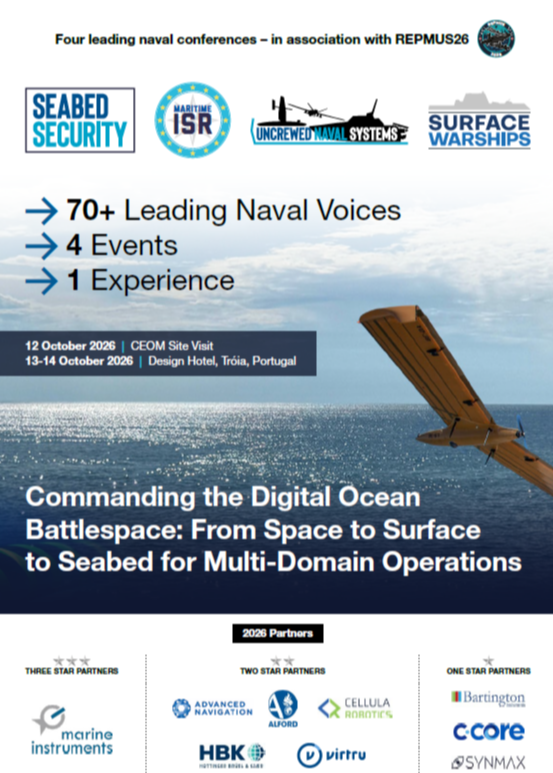
Combined Speaker Line Up & Agenda at a Glance
We're pleased to share the full speaker line-up across Surface Warships, Maritime ISR, Seabed Security and Uncrewed Naval Systems.
All taking place on 13 -14 October 2026 at the Design Hotel in Tróia, Portugal. Explore the agenda at a glance and full speaker line up and discover the 70+ senior naval leaders speaking across our four naval conferences.
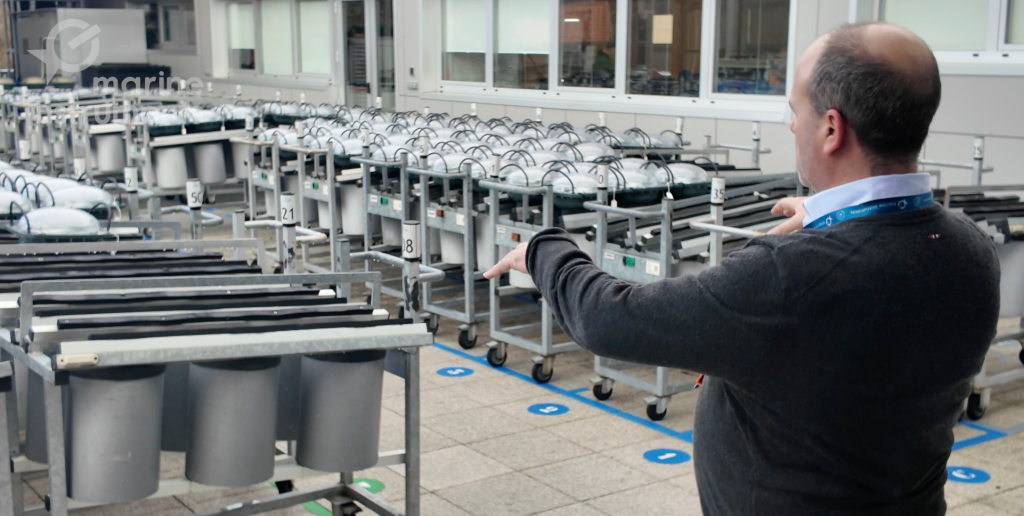
Digitalising the Ocean: Interview with Gabriel Gomez of Marine Instruments on Smart Sensors, Autonomous Systems, and Seabed Security
In this exclusive interview recorded ahead of Defence IQ’s Seabed Security conference, Gabriel Gómez, General Manager at Marine Instruments, discusses how the company’s technologies are helping to digitalise the maritime domain and strengthen the protection of critical underwater infrastructure. Drawing on Marine Instruments’ origins in fisheries technology, Gómez explains how innovations such as smart sensor buoys, solar-powered UAVs, and autonomous systems are now supporting maritime surveillance, seabed infrastructure protection, and multi-domain awareness. The conversation explores the importance of reliable data, the advantages of dual-use innovation, and the growing role of AI and autonomous platforms in securing an increasingly contested maritime environment.

Seabed Security and Related Underwater Programmes by Country
As seabed activity accelerates worldwide, the protection of critical underwater infrastructure - from data cables and pipelines to military assets - has become a strategic imperative. This infographic offers a global snapshot of national programmes and cutting-edge technologies being deployed to enhance seabed security. From autonomous underwater vehicles to advanced mine countermeasure systems, discover how countries are responding to emerging maritime threats in the undersea domain. Produced in association with Defence IQ’s Seabed Security Conference, this visual guide supports understanding of current initiatives shaping the future of undersea defence.

Tim Ripley: Seabed Warfare - Responding to New Threats and New Technological Challenges
This professional report examines the fast-emerging domain of seabed warfare - a critical but often overlooked frontier in modern defence strategy. Prompted by events such as the 2022 Nord Stream pipeline sabotage, the analysis explores how vital undersea infrastructure, including communication cables, energy pipelines, and wind farm connectors, has become a target in grey zone and hybrid conflicts. Defence journalist Tim Ripley investigates the escalating risks, the evolving capabilities of key state actors, and the innovative technologies being developed to detect, deter, and respond to threats on the ocean floor.
Attendee Snapshot
Seabed Security provides a unique opportunity to engage directly with the organisations and individuals leading this effort. Taking place in Troia, Portugal, the event will convene senior naval leaders, seabed warfare specialists, defence technologists, and programme managers to explore strategies, technologies, and collaborative approaches to securing the seabed.
To help you plan your attendance, we’ve released the attendee list, offering a clear view of the companies and job titles already confirmed. Whether you're looking to benchmark your approach, build partnerships, or gain insight into current priorities, this list shows exactly who you’ll be meeting.
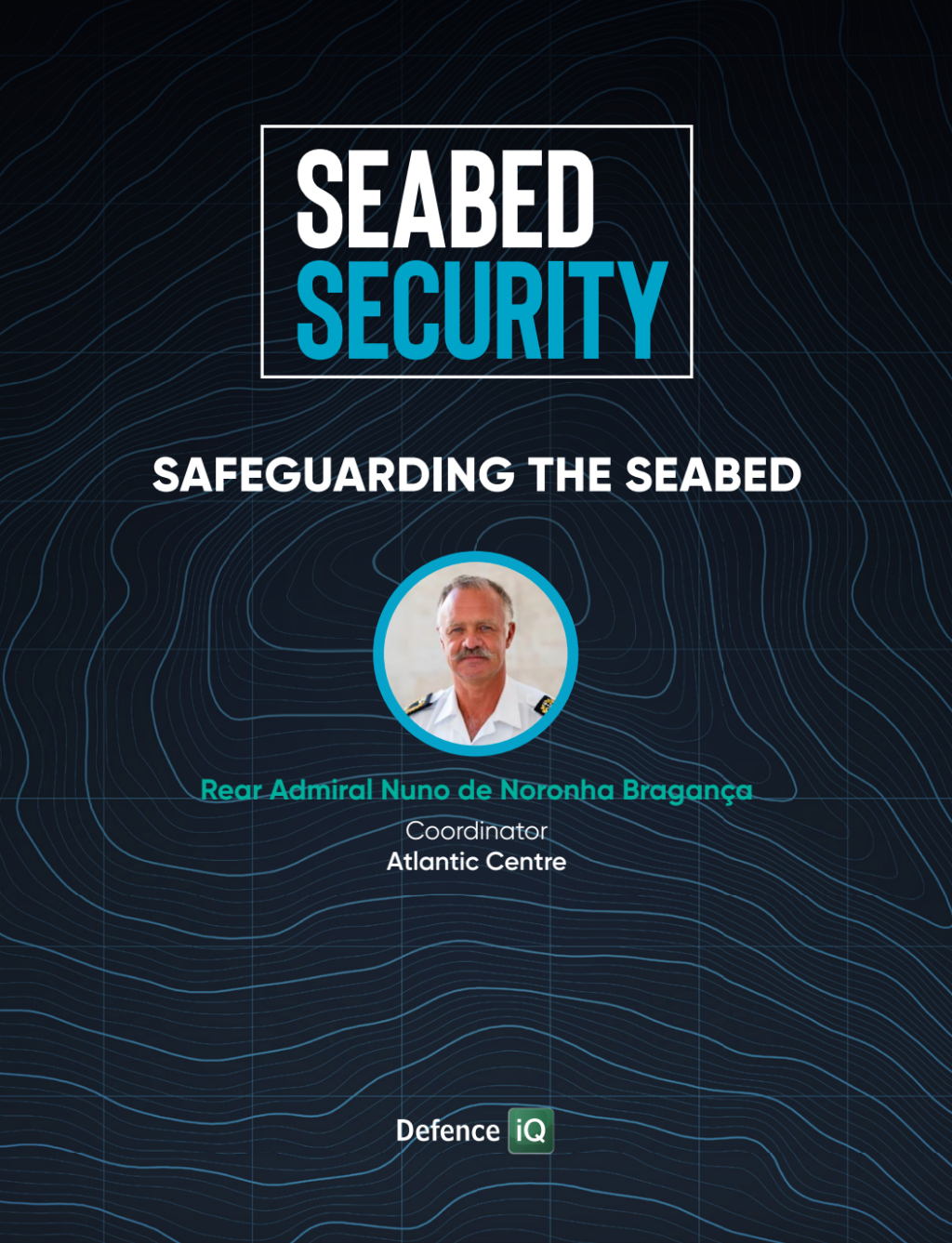
Safeguarding the Seabed: Rear Admiral Nuno De Noronha Bragança of the Atlantic Centre
The seabed has become a new frontier of strategic importance, carrying the data, energy, and resources that modern societies depend on. As risks grow from natural hazards, human activity, and deliberate threats, protecting this critical infrastructure demands greater resilience, innovation, and cooperation. In this exclusive Defence iQ interview, Rear Admiral Nuno de Noronha Bragança offers his expert insights into these challenges, drawing on his experience at the Atlantic Centre to highlight the need for collective action in safeguarding the underwater domain.
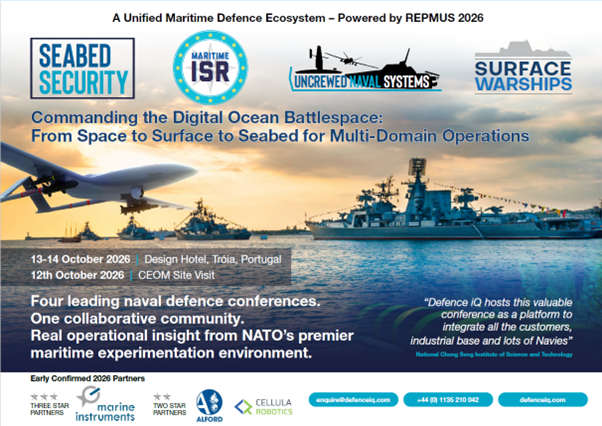
Defence iQ’s Unified Maritime Experience
The Joint Maritime Conference brings together four leading naval defence events, Seabed Security, Uncrewed Naval Systems, Maritime ISR, and Surface Warship, at a single venue in Tróia, Portugal. Delegates will gain access to cutting-edge insights, operational case studies, and opportunities to engage with senior leaders, technologists, and industry innovators across the maritime domain.
By attending, seabed security professionals can explore the latest approaches to underwater monitoring, critical infrastructure protection, and threat detection, while benefiting from exposure to complementary expertise in surface, ISR, and uncrewed naval systems.
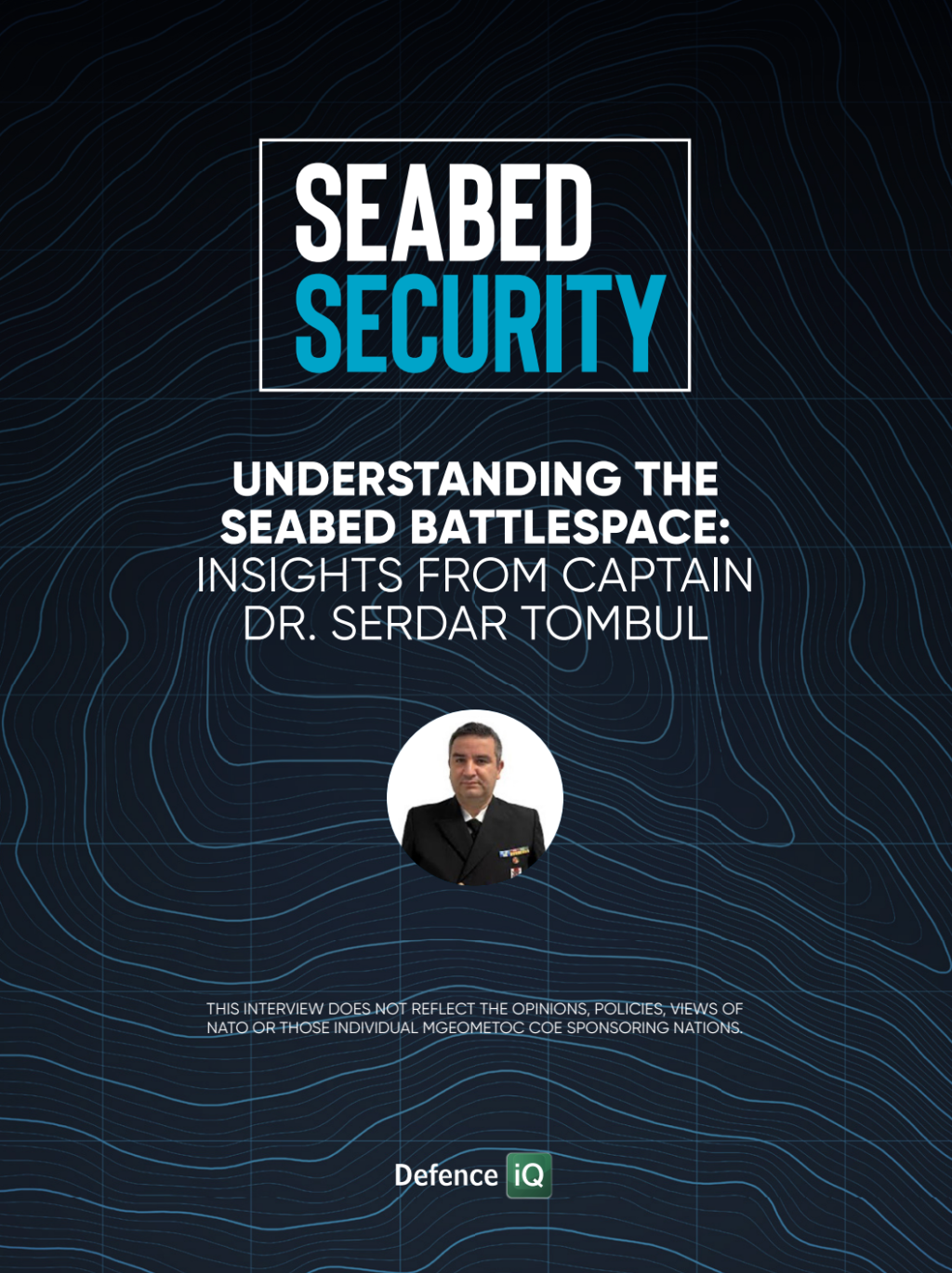
Understanding the Seabed Battlespace: Insights from Captain Dr. Serdar Tombul
The seabed is no longer a distant or secondary concern. As undersea infrastructure grows in scale and strategic importance, so too does the need to better understand the environment in which it operates. From submarine operations to advanced acoustic research and NATO-level concept development, Captain Dr. Serdar Tombul brings a perspective grounded in both operational experience and technical expertise. Ahead of Seabed Security 2026, he reflects on how environmental intelligence, evolving technologies, and closer international cooperation are reshaping how we approach the protection of critical underwater infrastructure.

Warships; Their Subsystems, and Organic Unmanned Platforms Selected Countries Market Report 2024-2029
Protection of sea routes and infrastructure remains a top priority for many players on the world stage. Nations continue to face old challenges, such as the vastness of the oceans and new ones, as more underwater infrastructure is built and relied on. As a result, Navies worldwide continue to invest in new technologies and programmes. In preparation for our Surface, Air, and Seabed Warfare conference, we are publishing our market report covering programmes covering:
- Large surface combatants
- Naval systems employed on surface combatants
- Uncrewed platforms

Building the French Seabed Strategy, by Rear Admiral Eric Lavault, Head of Seabed Control, French Navy
Defence iQ interviewed Rear Admiral Lavault, Head of Seabed Control for the French Navy, about France’s Seabed Warfare Strategy which defines the Seabed as its own domain of operations. Changing geopolitical realities and the rise of novel technologies that both threaten and secure underwater critical national infrastructure have led the French to review their approach to the Seabed. In this interview, the Admiral covers:
- The status of the strategy
- The implications of the strategy
- Trends and industry engagement

Building Bridges: Navies, Networks, and Novel Technologies by Commander Dan Weil, UK Director of London Tech Bridge -NavalX
The importance of partnerships between industry, academia, and forces cannot be understated. In an age characterised by technological disruption, these partnerships ensure that forces can keep up with the high demands of the battlefield. The Tech Bridge takes this one step further by creating a forum where technology providers connect with the appropriate people within the US and UK Navies to find solutions to their current and future challenges. We were very privileged to receive this article from the Royal Navy’s Commander Daniel Weil, UK co-director of London Tech Bridge, who explains:
- The mission of the Tech Bridge
- The composition of the Tech Bridge
- How the Tech Bridge operates

2024 Sample Attendee List
Ahead of the Surface, Air and Seabed Warfare, the 2024 Sample Attendee list highlights the leading organizations within the industry and an extensive list of high-level attendees who have confirmed their attendance for this year. will focus on how warships, as a platform, can be augmented by technology and operate as a key asset across the multi-domain battlespace. Considering evolving threats, with the increasing potential of higher intensity conflict, as well as contemporary challenges like the threat of autonomous systems, hypersonic capabilities, and securing critical undersea infrastructure.

Speaker Presentation - Current and Future Warships Engineering Challenges
The
“Current and Future Warships Engineering Challenges” presentation was delivered
at Surface Warships 2023 by Vice Admiral Manuel Antonio Martínez-Ruiz, Director
of Engineering and Shipbuilding, Armada Española, and focused on the
development of the Spanish Navy and empowering rapid innovation for naval
construction, This presentation covers;
- Maritime Specific Challenges
- Modeling and Simulation for LC Engineering
- EM Characterization Applications
- Vibration Behavior Models
- Modelling to Support the Digital Threat
- System Challenges for New Warship Programs
- Assessing
Technologies for Future Ships
At SASW
2024, hear from Captain Isidro Carrara Navas, Head of Capacities Definition
Plans Section, Spanish Navy; engage with the Captain, acknowledging how future
warships will be increasingly versatile and provide combatants that can
continually be enhanced throughout their lifecycle, with the latest
systems.
In Partnership With:

QUESTIONS?
Address: IQPC Ltd, 129 Wilton Road,
London SW1V 1JZ
Telephone: +44 (0) 113 210 042
Fax: 44 (0) 207 368 9301
Email: enquire@iqpc.co.uk

©2026 IQPC. All rights reserved.