Seabed Security and The Law of The Sea: Are Existing Legal Frameworks Fit For Purpose?
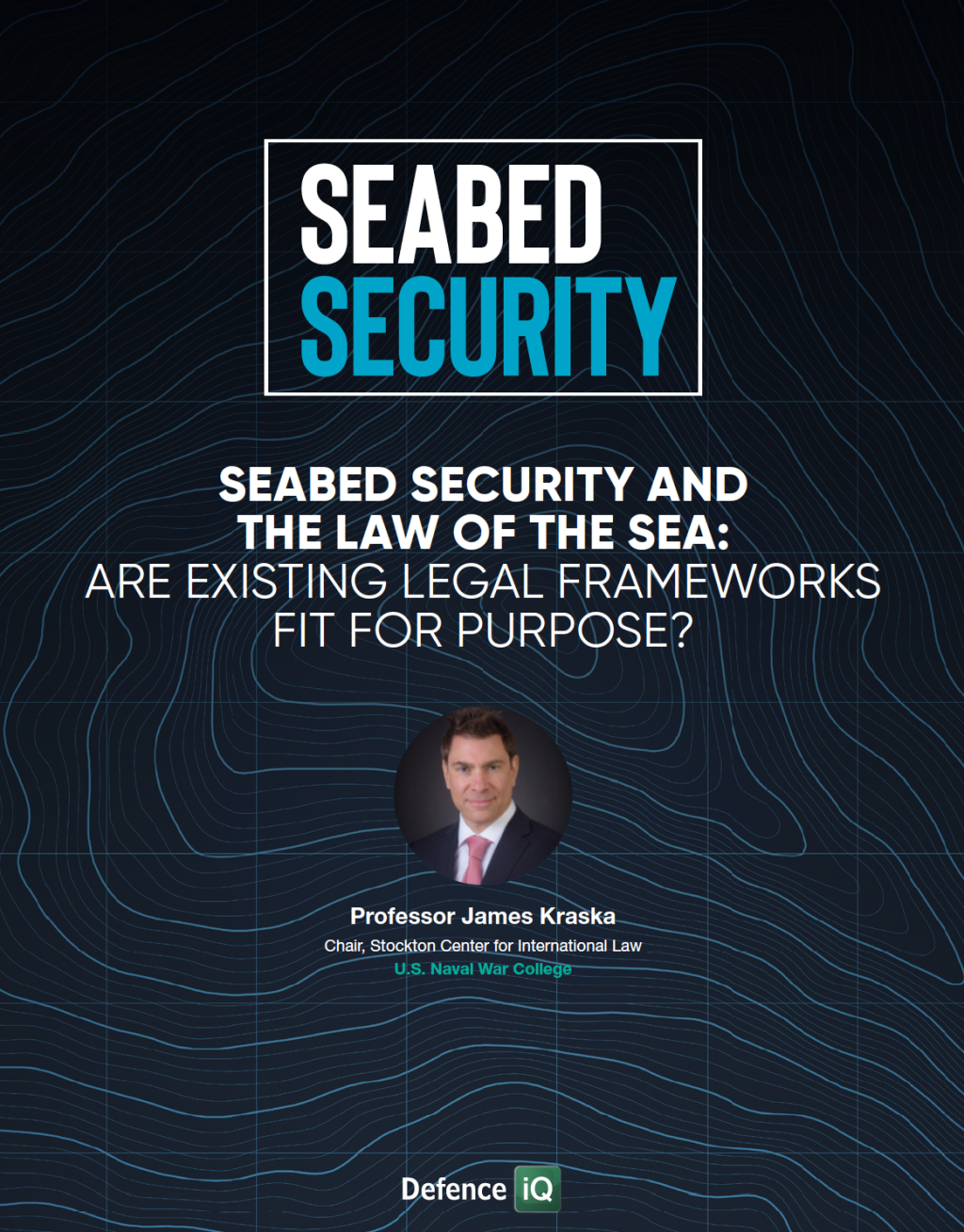
As seabed activity intensifies and critical underwater infrastructure becomes increasingly central to global communications and energy systems, protecting these assets has emerged as a growing priority for governments, militaries, and industry stakeholders alike. Subsea data cables carry the vast majority of the world’s digital communications, while offshore energy infrastructure forms a critical backbone of national economies. Yet the legal frameworks governing the seabed were largely developed in a different strategic era. As threats evolve - from sabotage and grey zone activity to the growing use of autonomous underwater technologies - questions are emerging around whether existing maritime law can effectively address these challenges. Ahead of Defence iQ’s Seabed Security Conference, Professor James Kraska, Charles H. Stockton Chair of International Maritime Law at the U.S. Naval War College, shares his perspective on the adequacy of current international legal frameworks, the challenges of attribution and deterrence, and the role of national legislation in strengthening the protection of critical undersea infrastructure.
In Partnership With:
QUESTIONS?
Address: IQPC Ltd, 129 Wilton Road,
London SW1V 1JZ
Telephone: +44 (0) 113 210 042
Fax: 44 (0) 207 368 9301
Email: enquire@iqpc.co.uk

©2026 IQPC. All rights reserved.