Modern Warfare Conference | Resource Centre
Event Information
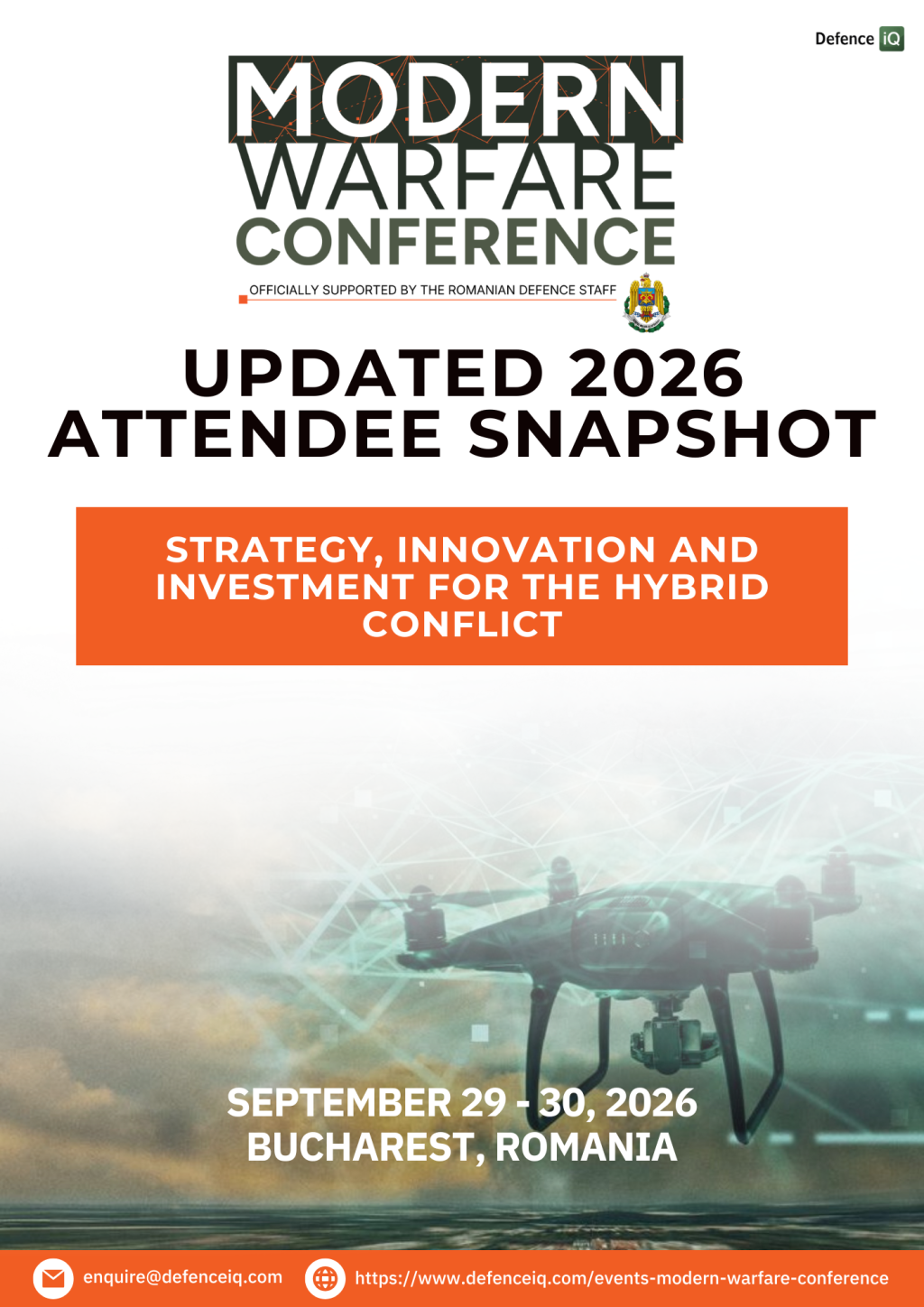
Modern Warfare Conference | Updated 2026 Attendee Snapshot
Curious who you'll meet at the Modern Warfare Conference?
Our updated attendee snapshot includes senior leaders from NATO, allied armed forces, ministries of defence, and operational commands, alongside innovative defence and technology companies such as Helsing, Safran Defense & Space, Optics11, and many others.
With representation spanning military strategy, capability development, defence innovation, operational readiness, digital transformation, and multi-domain operations, this is a highly targeted audience shaping the future of modern warfare and hybrid conflict.
Industry Insights
Acquisition Reform, Speed, and Scaling Innovation for Modern Warfare
As modern conflict continues to evolve at pace, the ability to rapidly develop, scale, and deploy capability has become a defining factor in operational success. Lessons emerging from the Russo-Ukrainian war - particularly around drones, electronic warfare, contested logistics, and decentralised decision-making - are forcing militaries to rethink not only how they fight, but how they acquire and integrate new technologies. At the centre of this transformation is a fundamental shift in acquisition philosophy: away from slow, bespoke, and risk-averse processes, and towards agile, iterative, and commercially aligned innovation models.
In this interview, Dr Matthew P. Willis, Director of Army FUZE at the Office of the Assistant Secretary of the Army for Acquisition, Logistics and Technology (ASA(ALT)), outlines how the U.S. Army is operationalising this shift. From adopting a venture capital mindset to accelerating timelines from years to weeks, he explains how Army FUZE is reshaping the pathway from prototype to fielded capability. He also addresses the critical role of small businesses, the importance of scaling industrial capacity, and why collaboration with allies and commercial partners is essential to maintaining operational advantage in a multi-domain battlespace.
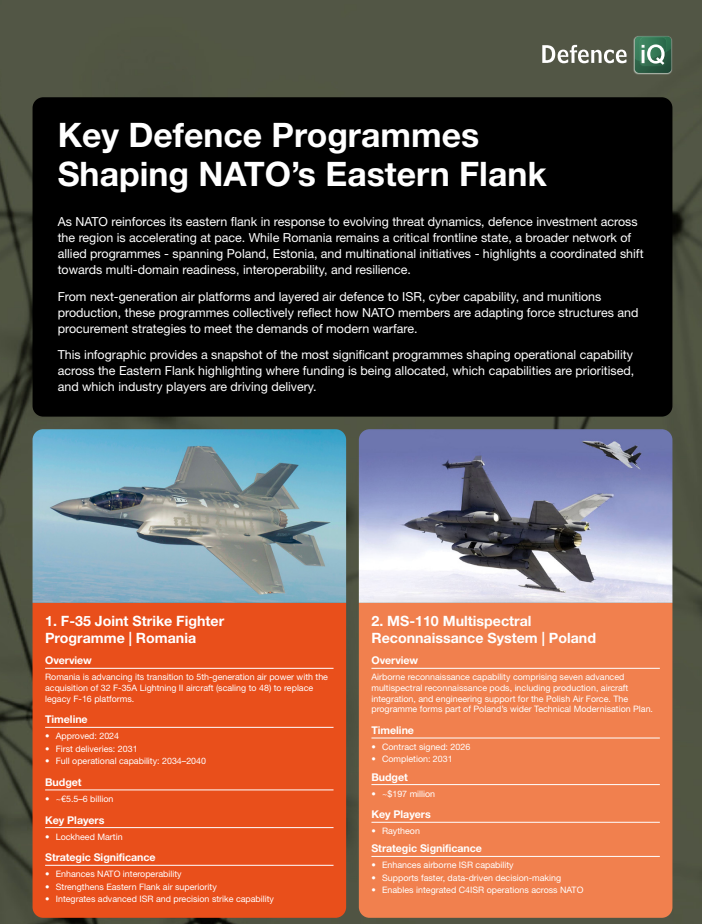
Key Defence Programmes Shaping NATO’s Eastern Flank
As NATO reinforces its eastern flank in response to evolving threat dynamics, defence investment across the region is accelerating at pace. While Romania remains a critical frontline state, a broader network of allied programmes - spanning Poland, Estonia, and multinational initiatives - highlights a coordinated shift towards multi-domain readiness, interoperability, and resilience. From next-generation air platforms and layered air defence to ISR, cyber capability, and munitions production, these programmes collectively reflect how NATO members are adapting force structures and procurement strategies to meet the demands of modern warfare. This infographic provides a snapshot of the most significant programmes shaping operational capability across the Eastern Flank highlighting where funding is being allocated, which capabilities are prioritised, and which industry players are driving delivery.
V Corps Contributions to the Eastern Flank Deterrence Line (EFDL) | Brigadier General John Mountford
In this exclusive presentation from a Defence iQ event, Brigadier General John Mountford, Deputy Commanding General – Readiness, U.S. Army V Corps, shares perspectives on the operational challenges, technological advancements, and strategic concepts shaping the future battlefield.
Download the presentation to learn more about:
- Countering mass and momentum in large-scale conflict
- Defeating anti-access/area denial (A2/AD) networks
- Multi-domain operations and joint force convergence
- The growing role of autonomous systems and unmanned capabilities
- Future concepts for deterrence and warfighting on NATO's eastern flank
As a speaker at Defence iQ's Modern Warfare Conference, Brigadier General Mountford will continue these critical discussions alongside senior military leaders and defence experts from across NATO and partner nations.
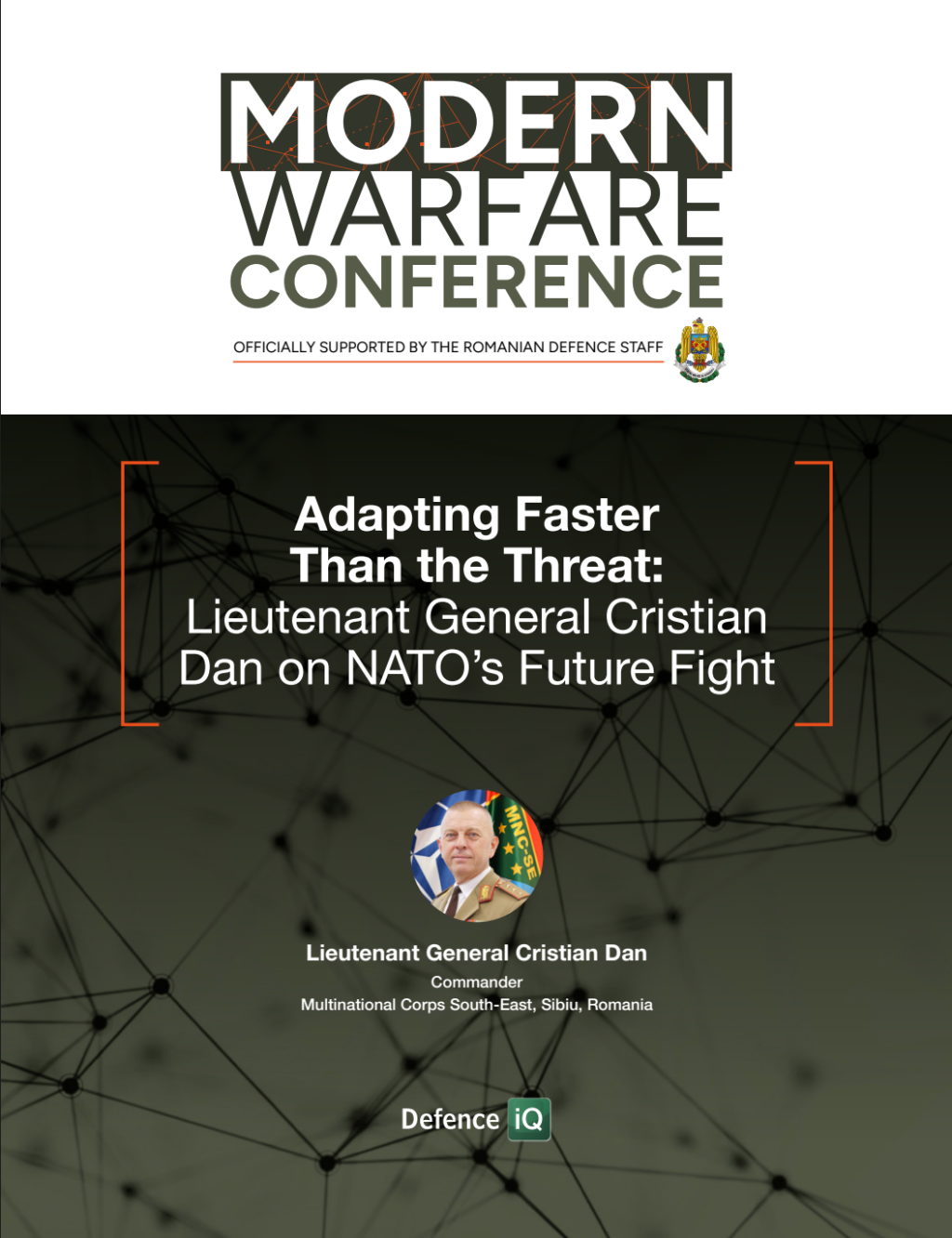
Adapting Faster Than the Threat: Lieutenant General Cristian Dan on NATO’s Future Fight
NATO nations are confronting a battlespace defined by persistent surveillance, contested logistics, hybrid aggression, and accelerating technological disruption. The lessons emerging from Ukraine and other recent theatres are reshaping assumptions about command and control, manoeuvre, resilience, and deterrence itself.
Ahead of Defence IQ's Modern Warfare Conference 2026, Lieutenant General Cristian Dan, Commander of Multinational Corps South-East, shares his perspective on the strategic and operational shifts redefining modern land warfare.
Drawing on experience spanning Cold War-era training environments, operational deployments in Iraq and Afghanistan, and NATO leadership on the Alliance's eastern flank, LT Gen Dan explores the realities of warfare in an era where "the collapse of certainty" has transformed the battlefield. Across this interview, he discusses the growing importance of mission command, societal resilience against hybrid threats, the integration of unmanned systems, procurement reform, and the critical balance between technological advancement and human adaptability
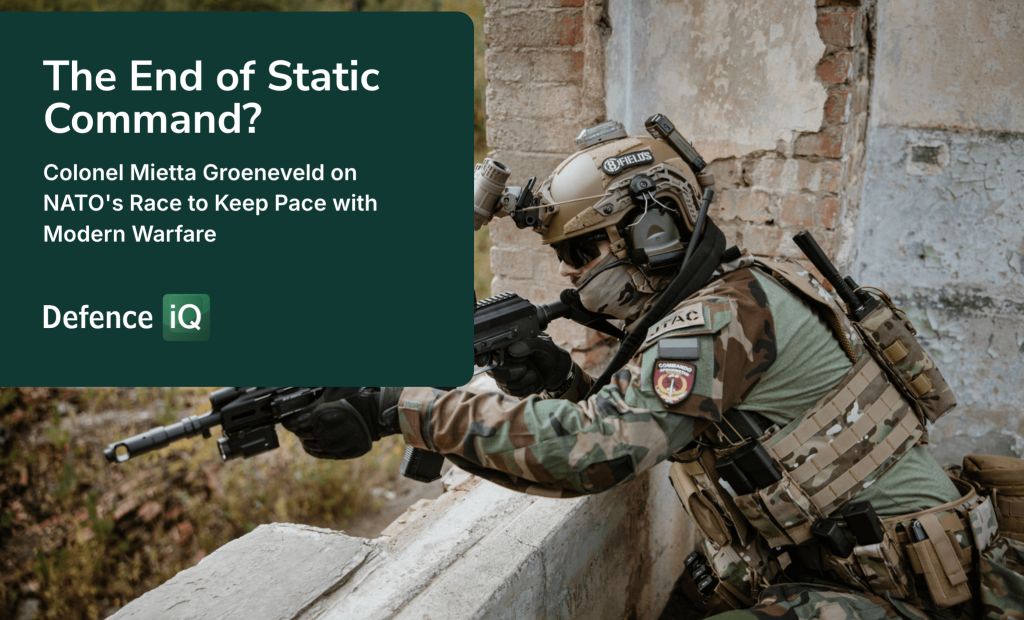
The End of Static Command? Colonel Mietta Groeneveld on NATO's Race to Keep Pace with Modern Warfare
The character of warfare is changing at a pace few could have imagined a decade ago. Autonomous systems, artificial intelligence, cyber operations and contested information environments are forcing militaries to rethink not only the technologies they use, but the way they command, coordinate and make decisions.
In this exclusive interview, Colonel Mietta Groeneveld, Director of the NATO Command & Control Centre of Excellence, explores how NATO is adapting to an increasingly complex battlespace. Drawing on lessons from Ukraine and the Alliance's work on Multi-Domain Operations, she discusses the move away from rigid headquarters structures towards agile, digitally enabled command networks, the growing importance of interoperability, and why future conflicts will demand closer integration between military and civilian actors.
Her insights offer a compelling look at how command and control must evolve if NATO is to maintain decision advantage in an era defined by speed, uncertainty and constant technological disruption.
Sponsorship Information
Sponsorship & Exhibition Prospectus | Modern Warfare 2026
Explore the sponsorship and exhibition opportunities available at the Modern Warfare Conference this September.
Taking place at Romexpo in Bucharest, Romania, the summit brings together senior military leaders, defence policymakers, and industry innovators to address how NATO and allied nations are translating political intent into real‑world military capability.
Delivered in official collaboration with the Romanian Defense Staff, the conference is uniquely positioned to connect solution providers with those responsible for procurement, capability development, and operational integration.
Sponsoring places your organisation at the centre of conversations around:
- Procurement reform and accelerated acquisition cycles
- Digitalisation and data‑driven decision‑making
- Multi‑domain and joint force integration
- Industrial scaling and readiness
- Emerging threats and contested environments
Download the Prospectus to learn more. Have a question for our team? Get in touch directly here.
Summit Floorplan | Modern Warfare 2026
Having a dedicated branded space at the heart of the exhibition gives you more than just visibility, it gives you a home base. Delegates will know exactly where to find you, and it's the perfect spot to host meetings or have more in-depth conversations.
With booths already confirmed by the likes of WB Group, Vantor, Intelic, Origin Robotics and GD Mission Systems, spaces to join us are now extremely limited.
Find the right booth for you and build on your event experience by hosting one of our exclusive dinners, taking over an event space, or leading a discussion on the main stage.
In Partnership With:

QUESTIONS?
Address: IQPC Ltd, 129 Wilton Road,
London SW1V 1JZ
Telephone: +44 (0) 113 210 042
Fax: 44 (0) 207 368 9301
Email: enquire@iqpc.co.uk

©2026 IQPC. All rights reserved.