Industry Insights
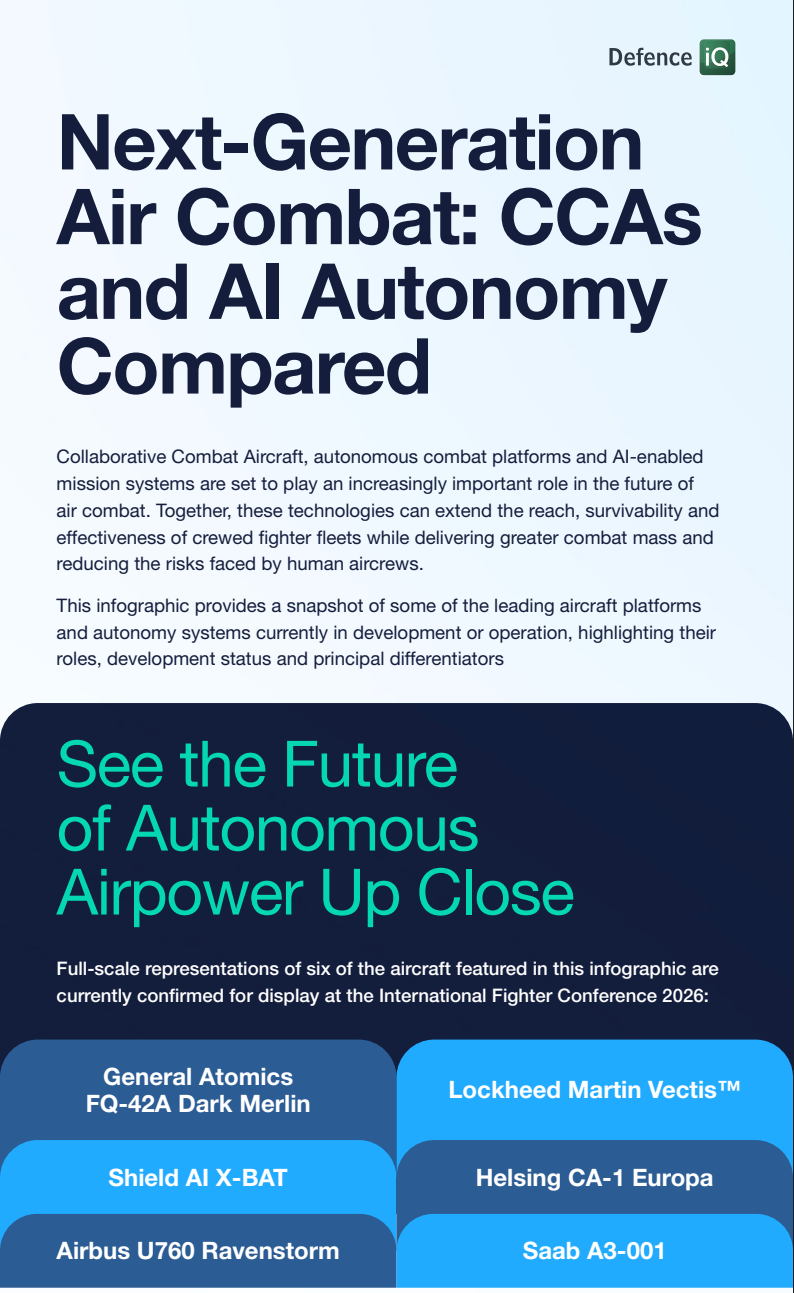
Next-Generation Air Combat: CCAs and AI Autonomy Compared
Collaborative Combat Aircraft, autonomous combat platforms and AI-enabled mission systems are set to play an increasingly important role in the future of air combat. Together, these technologies can extend the reach, survivability and effectiveness of crewed fighter fleets while delivering greater combat mass and reducing the risks faced by human aircrews. This infographic provides a snapshot of some of the leading aircraft platforms and autonomy systems currently in development or operation, highlighting their roles, development status and principal differentiators.
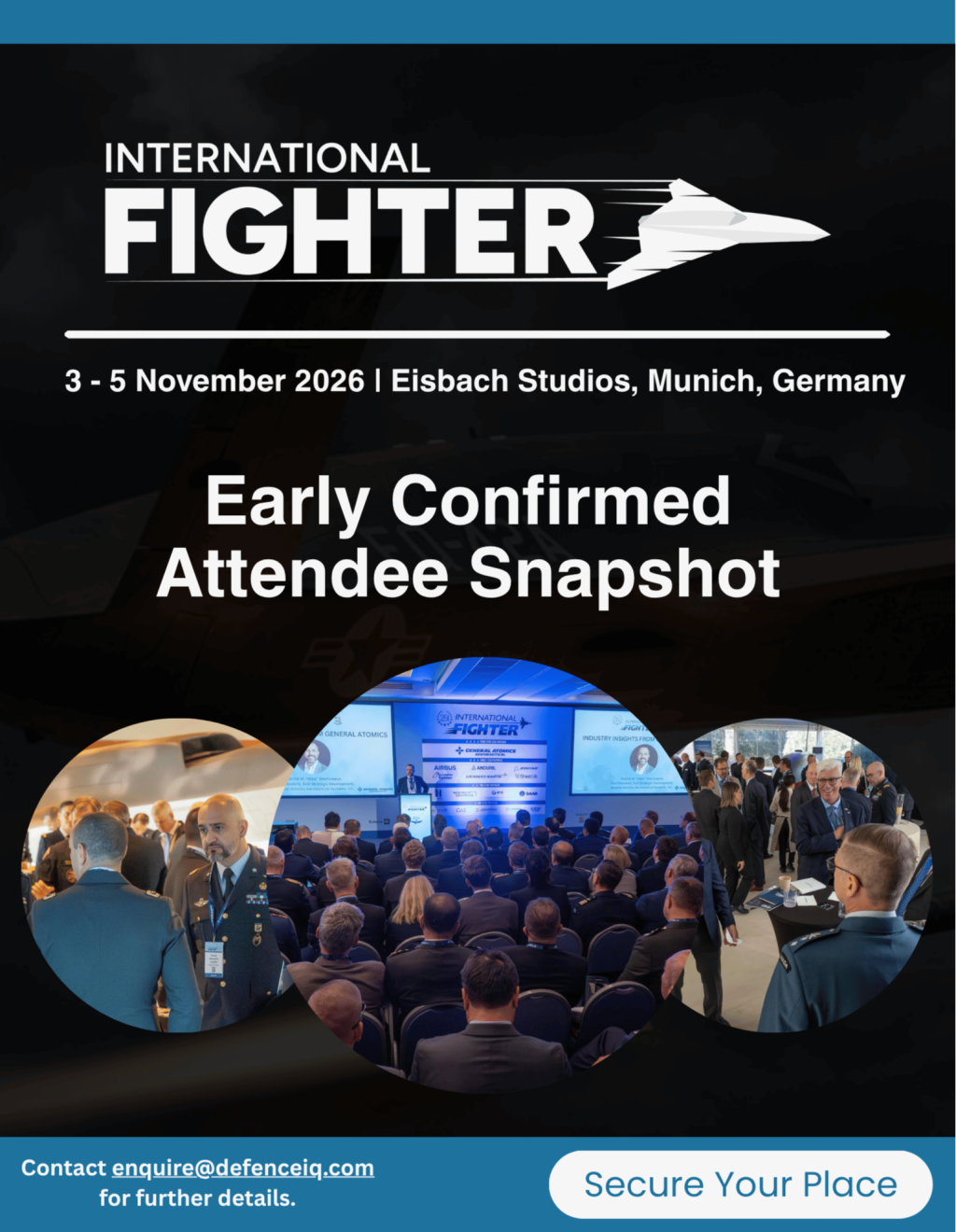
2026 Early Attendee Snapshot
The International Fighter Conference returns this November, this time in Germany, where 600 senior military leaders, air force commanders, government representatives, and industry innovators from around the world will come together to explore the evolving challenges and opportunities shaping the future of air superiority in an increasingly contested battlespace.
To help you prepare for high-impact networking, we've just released the Early 2026 Attendee List.
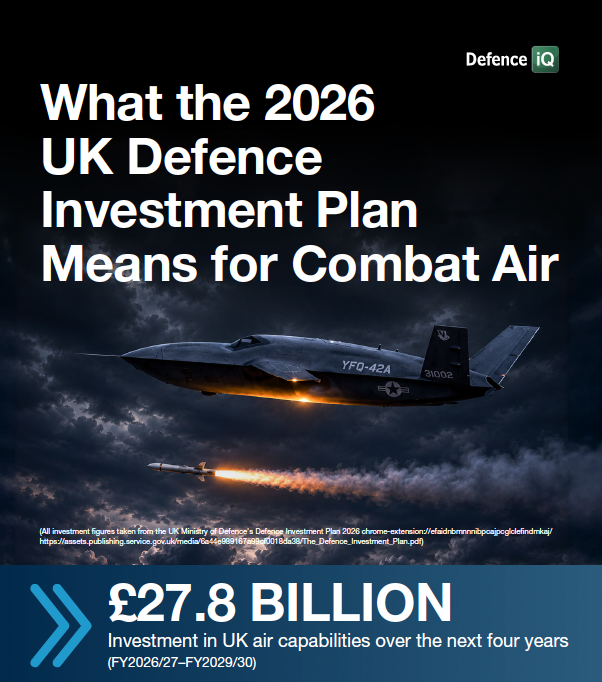
What the 2026 UK Defence Investment Plan Means for Combat Air
The 2026 UK Defence Investment Plan sets out how the Ministry of Defence intends to transform the Armed Forces following the Strategic Defence Review in 2025. For combat air, the document makes one message clear: Future airpower will be built around integration rather than individual aircraft.
Investment is being directed towards sixth-generation combat aircraft, autonomous systems, AI-enabled targeting, integrated air and missile defence, and digital integration – creating a more connected, multi-domain Royal Air Force.
Find out all you need to know by downloading our comprehensive infographic today.
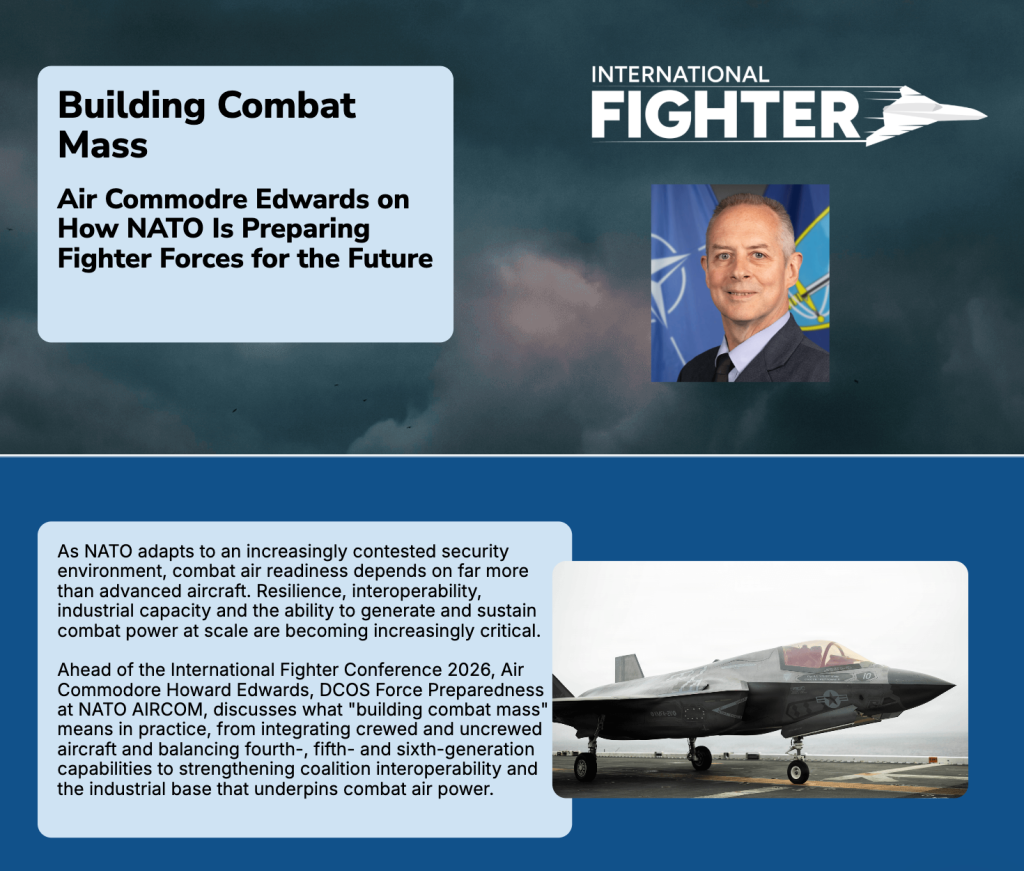
Building Combat Mass: Air Commodore Edwards on How NATO Is Preparing Fighter Forces for the Future
As NATO adapts to an increasingly contested security environment, combat air readiness depends on far more than advanced aircraft. Resilience, interoperability, industrial capacity and the ability to generate and sustain combat power at scale are becoming increasingly critical. Ahead of the International Fighter Conference 2026, Air Commodore Howard Edwards, DCOS Force Preparedness at NATO AIRCOM, discusses what "building combat mass" means in practice, from integrating crewed and uncrewed aircraft and balancing fourth-, fifth- and sixth-generation capabilities to strengthening coalition interoperability and the industrial base that underpins combat air power.
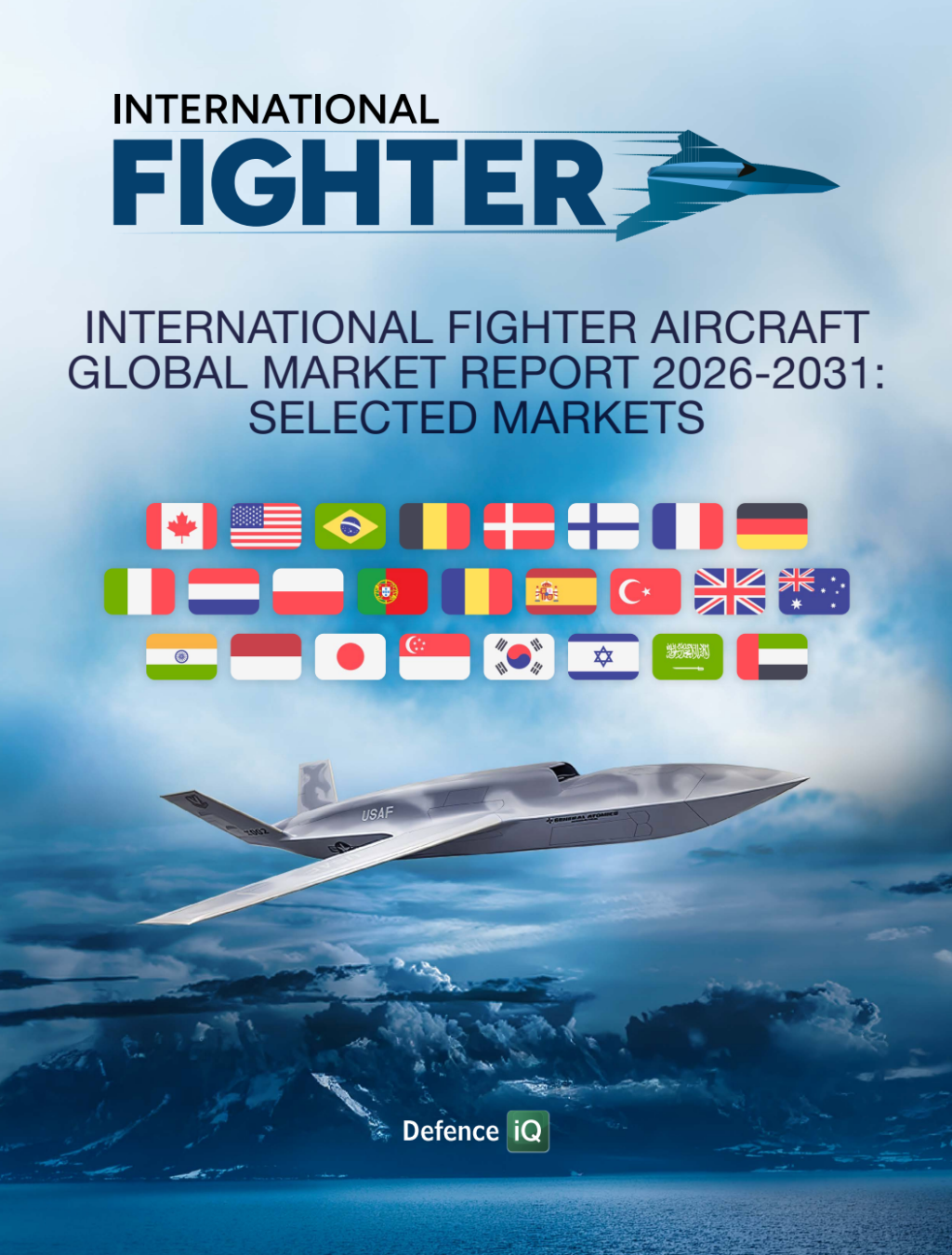
International Fighter Aircraft Global Market Report 2026-2031: Selected Markets
Combat aviation is entering a more intense strategic stage, fueled by renewed great-power rivalry, the reemergence of contested airspaces, and the expectation that air forces must achieve results across a broader battlespace than previously. US defence planning still regards China as the primary challenge, stressing the importance of forces capable of surviving, sensing, making decisions, and striking within heavily defended regions. Meanwhile, NATO has prioritised multi-domain operations and interoperability as essential for deterrence and wartime efforts.
Discover all the latest insights in the fighter aircraft domain by downloading the International Fighter Aircraft Global Market Report today, including:
-Key Capability & Technology Trends
-National & Regional Profiles
-Procurement & Operational Challenges
-Market Opportunities
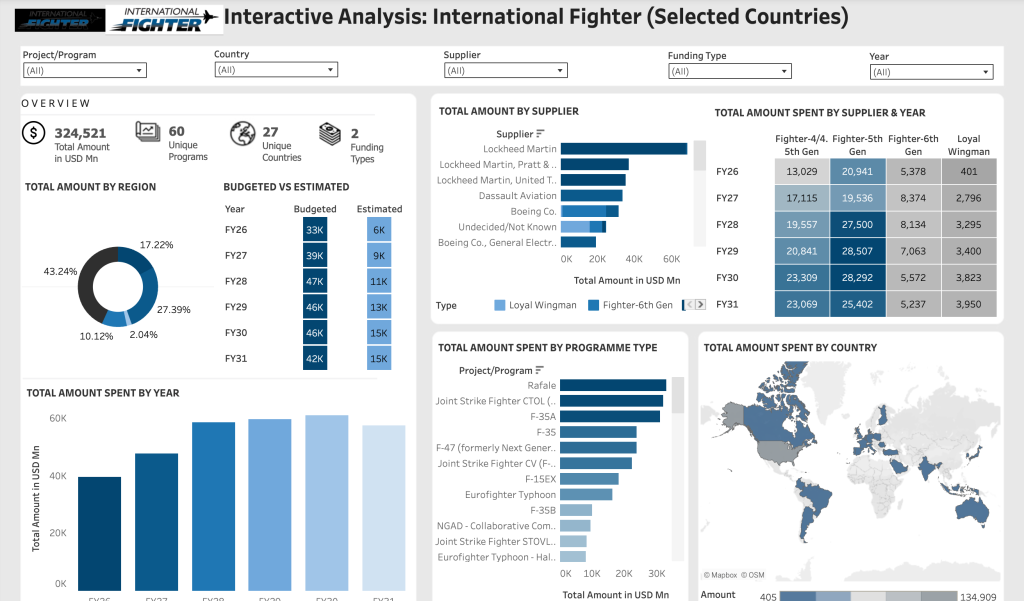
International Fighter Interactive Market Report 2026
As air forces continue to modernise in response to evolving threats, understanding the programmes, technologies and strategic priorities shaping future air combat has never been more important.
This interactive market report brings together the latest developments from across the global fighter aircraft landscape, helping readers to:
- Compare leading fighter aircraft, Collaborative Combat Aircraft (CCAs) and future combat air programmes.
- Explore the technologies driving next-generation air combat, from AI and autonomy to advanced weapons and sensors.
- Gain insight into procurement trends, national priorities and capability developments across key air forces.
- Access expert analysis and practical resources to support informed decision-making.
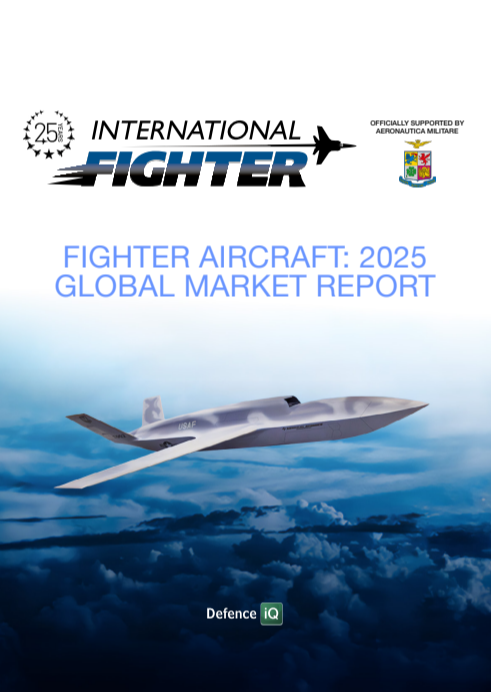
Fighter Aircraft: 2025 Global Market Report
The International Fighter 2025 Market Report provides a detailed analysis of global fighter aircraft market trends, forecasts, and procurement activities from 2025 to 2030.
Insights include:
- Emerging technologies
- Regional spending patterns
- The transition to sixth-generation platforms
- Key drivers shaping the future of combat airpower
The report also highlights major national programmes, leading defence contractors, and evolving strategic priorities across Asia-Pacific, Europe, the Middle East, and North America. As the market moves toward increasingly networked, AI-driven, and interoperable systems, the International Fighter 2025 Market Report serves as an essential resource for decision-makers navigating a fast-changing global fighter landscape.
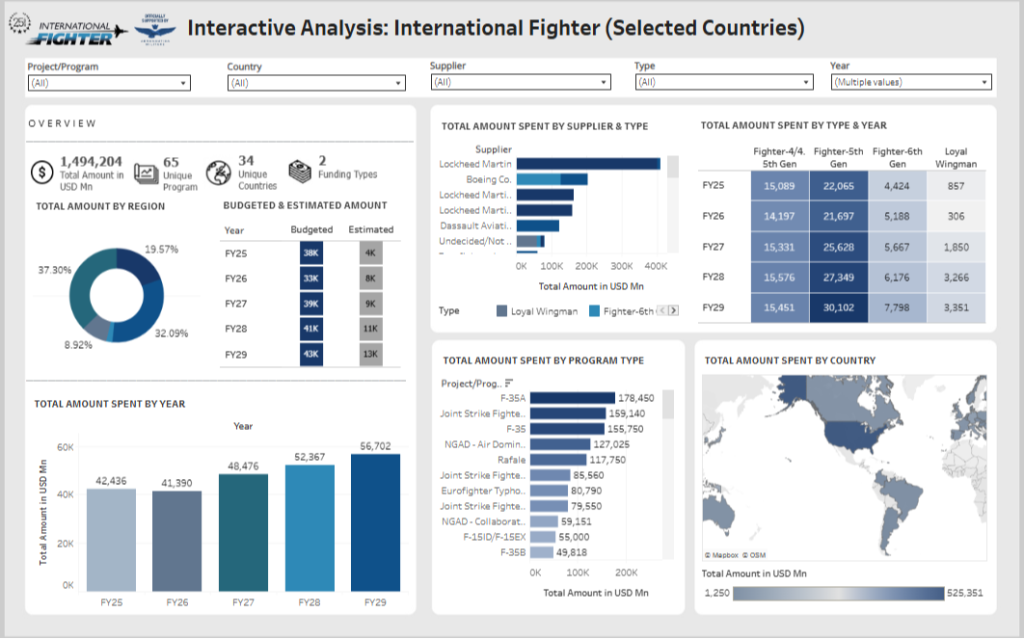
Fighter Aircraft: Interactive Market Report 2025
Explore the latest trends and investment priorities shaping the future of air combat in this interactive market report.
Built for customisability, the tool allows you to dive into real-time data across global regions and better understand the landscape driving fighter innovation. Key insights include:
- Annual and regional defence spending forecasts
- Programme volume and distribution by type
- Total spend by country and programme classification
- Supplier analysis, including total contract value by type
Whether you're a solution provider, programme leader, or strategic decision-maker, this tool offers a powerful overview of global developments and procurement priorities in the air combat domain.
Use the filters to tailor the data to your needs and gain strategic insight into where opportunities lie.

International Fighter Market Report 2024-2029, Selected Markets
As the 2024 International Fighter Conference approaches, stay ahead of the curve with Defence iQ's latest must-read: the International Fighter Market Report for 2024-2029.
In a rapidly evolving landscape where cutting-edge technologies are transforming both fighter platforms and supply chains, the stakes for national airspace security have never been higher. Nations worldwide are prioritizing air dominance to deter near-peer adversaries, making it crucial to stay informed.
This comprehensive report offers exclusive insights into the most significant programs across the globe, paired with an in-depth spending forecast. Whether you're a defense professional, industry insider, or strategic planner, this report is your key to understanding the current and future fighter market landscape.
Don't miss out—download your copy today and arm yourself with the knowledge to prepare for the upcoming International Fighter Conference.
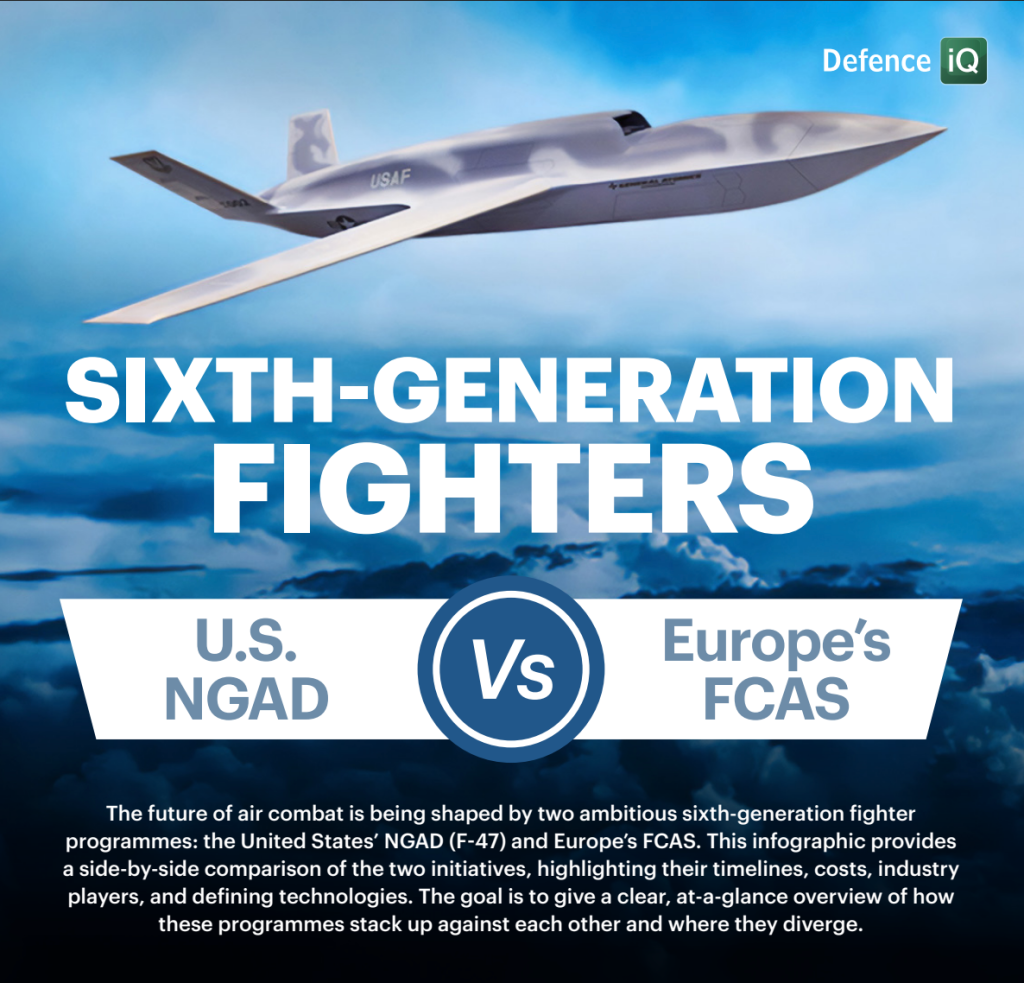
Sixth-Generation Fighters: U.S NGAD VS Europe's FCAS
In our latest infographic, we break down the future of air combat, comparing the U.S.’s Next Generation Air Dominance (NGAD/F-47) fighter with Europe’s Future Combat Air System (FCAS). Both are cutting-edge projects aiming to introduce stealthier, smarter, and more connected aircraft, but their paths look very different!
While NGAD is expected to take flight sooner, with operational use planned around 2030, FCAS is a massive European collaboration that won’t be ready until the 2040s–2050s, focusing on drones, networked data-sharing, and flexible design. At a glance, the infographic shows how these two programmes stack up against each other as they race to define the next era of air combat.

Exclusive Presentation from the Royal Air Force - Air Commodore Howard Edwards
Air Commodore Howard Edwards attended the 2023 International Fighter Conference where experts from across the globe highlighted the challenges associated with delivering air power from dispersed locations, effective training, and logistics.
Here is a preview of what you can expect by attending IFC with an exclusive presentation from the Royal Air Force, which was delivered at the 2023 conference by Air Commodore Howard Edwards, Combat Air Force Commander, on Combat Air Force.

Contextualising Defence, Interview with PWC
The economic impact of defence spending is a complicated subject. Detractors of defence spending cite a variety of reasons why defence spending is wasteful, ineffective or harmful and that it diverts resources from more urgent or beneficial areas such as education, healthcare and development. Could NATO’s failure to deter Russia from invading Ukraine be seen as insufficient commitment to defence spending? The answer is not simplistic, and neither is the case for and against spending on defence. Does defence spending benefit the economy or is it a waste of resources? We recently came across a detailed study conducted by Price Waterhouse Coopers (PwC) on the economic impact of defence spending which we thought was interesting.

Fighter Procurement News Round-Up
In this content piece, Defence IQ has collected the various news pieces related to fighter procurement into one easy to read cited document. This document supplements the up-coming market report by providing the latest happenings in fighter procurement for all the world’s major air forces.
Military / Government Registration
To register for your complimentary pass to the event, please fill out the form below and one of the team will process it for you.

Summary of the UK’s Strategic Defence Review 2025 Chapter 7.4: Air Domain
Chapter 7.4 of the UK’s Strategic Defence Review 2025 outlines a bold, forward-looking strategy to secure air superiority in an increasingly contested world. The focus? Next-gen technology, global partnerships, and integrated force readiness.
✈️ Next-Generation Air Combat The UK is advancing sixth-generation air systems through the Global Combat Air Programme (GCAP) — a trilateral initiative with Italy and Japan. These systems will feature AI-driven capabilities and Autonomous Collaborative Platforms (ACPs) that work seamlessly with both current and future aircraft.
🤖 AI & Autonomy at the Core AI and autonomous systems are central to future air operations. ACPs will enhance mission effectiveness by operating alongside manned aircraft in real time. 🔧 Modernising the RAF Continued investment in the Typhoon fleet and F-35B squadrons ensures cutting-edge readiness. The RAF is evolving into a digitally enabled, integrated force built for speed, agility, and resilience.
🚢 Carrier-Enabled Air Power The UK is developing hybrid air wings that combine crewed and uncrewed systems. This approach boosts flexibility, reach, and rapid response capabilities from sea-based platforms.
🌍 Global Partnerships & Influence Strong international collaboration is key to shaping NATO policy and maintaining the UK’s global influence. Industrial partnerships will drive innovation and ensure long-term strategic advantage.
Read Defence iQ's full summary now!
In Partnership With:

QUESTIONS?
Address: IQPC Ltd, 129 Wilton Road,
London SW1V 1JZ
Telephone: +44 (0) 113 210 042
Fax: 44 (0) 207 368 9301
Email: enquire@iqpc.co.uk

©2026 IQPC. All rights reserved.