Conference Day One: Tuesday, 19 May 2026

The first day of the 25th Future Artillery conference


7:00 - 8:35 REGISTRATION & REFRESHMENTS

8:35 - 8:40 DEFENCE IQ WELCOME

img

Lieutenant General (Ret.) Tony Aguto

Former Commanding General
Security Assistance Group Ukraine

8:50 - 9:00 4* PARTNER OPENING REMARKS BY LOCKHEED MARTIN

Paul Livingstone - Chief Executive, UK & NATO, Lockheed Martin


img

Paul Livingstone

Chief Executive
UK & NATO, Lockheed Martin

9:00 - 9:30 MIDDLE BATTLE & DEEP BATTLE: AN OPERATIONAL FRAMEWORK FOR CONTEMPORARY FIRES

• Shaping the battlespace through middle and deep strike effects that disrupt manoeuvre, logistics, and command structures in high intensity conflict and deep strike effects that disrupt
manoeuvre, logistics, and command structures in high intensity conflict
• Adapting to a transparent, sensor rich environment where survivability depends on dispersion, mobility, and rapid decision cycles
• Drawing lessons from Ukraine and recent conflicts to understand how long-range fires, drones, and counterbattery capabilities redefine operational reach and tempo
Senior Representative, NATO Allied Land Command

9:30 - 10:00 LONG-RANGE PRECISION FIRES: THE CHANGING LANDSCAPE

• Layered Offense requirements to address the emerging threats
• Reliable precision fires solutions for dynamic targeting
• Robust kill chains to support critical operational requirements in a multi-domain environment
• Interoperability: The ability to seamlessly “plug and play” into NATO / European architectures
Senior Representative, Lockheed Martin 
• Lessons emerging from high-intensity warfare
• Sufficient firepower and transportation capacity to field and sustain a credible divisional fire
• Closing structural gaps in kill‑chain integration, sensor fusion, ammunition supply and industrial depth
img

Lieutenant General Simon Hamilton CBE

Deputy Chief Executive Officer
DE&S *Subject to final confirmation

10:30 - 11:00 PLATFORM SURVIVABILITY AND ENGINEERING REQUIREMENTS FOR HIGH INTENSITY CONFLICT

• Mobility driven design features such as rapid displacement, reduced crew exposure, and autoloading, supported by UAS enabled awareness that helps artillery units move safely under threat
• Measures to reduce visual, thermal, and RF signatures, informed by airborne ISR that highlights where platforms are most vulnerable across the spectrum
• Integrated sensing that provides early warning of enemy reconnaissance and counter battery activity, helping shape engineering solutions and displacement
Senior Representative, Tekever


11:00 - 11:45 MORNING COFFEE & NETWORKING BREAK

STRENGTHENING OUR NATIONAL DEFENCES AND SUPPORTING OUR ARMED FORCES

This session highlights the strategic investments in artillery systems aimed to enhance firepower, mobility, and adaptability. It will explore the driving factors behind these investments, including the need for operational superiority in complex environments with a focus on ensuring interoperability among allied forces.

11:45 - 12:15 DISPERSED FORCES, CONCENTRATED EFFECTS: FIRES INTEGRATION FOR DISTRIBUTED OPERATIONS

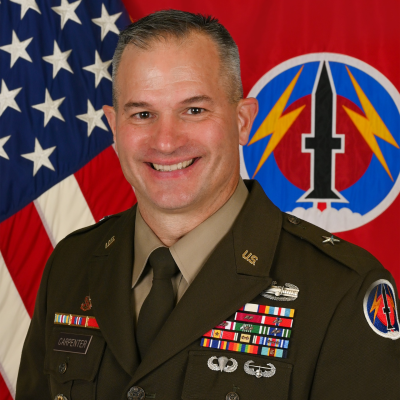
Brigadier General Steven Carpenter - Commander, 56th Artillery Command, US Army
• How dispersed formations achieve coordinated effects across large areas through real-time data sharing and sensor fusion
• Scaling artillery capability and collaboration
• Modernisation programmes addressing high-intensity readiness
img

Brigadier General Steven Carpenter

Commander, 56th Artillery Command
US Army

12:15 - 12:45 RESERVED FOR INDUSTRY INSIGHTS

12:45 - 13:15 DETECTION TO ENGAGEMENT CYCLES AND THEIR IMPLICATIONS FOR ARTILLERY SURVIVABILITY

• Faster enemy detection from drones, radar and EW
• Highly mobile 155mm systems built for rapid shoot‑and‑scoot
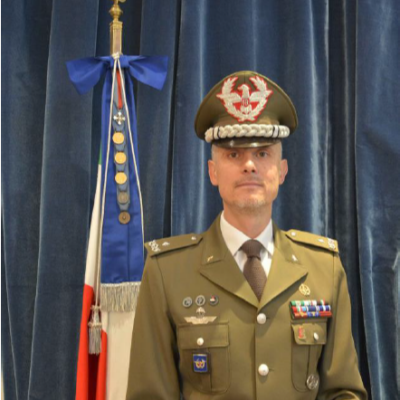
• EM‑resilient networks, supported by Italy’s “Combat Dome” concept linking sensors, CEMA nodes and fires

DELVING INTO TARGETING WITH A CROSS-DOMAIN APPROACH

Synchronisation across multiple domains to create synergistic effects, enables simultaneous and complementary actions to counter advanced threats. Effective MDO requires a shift from service-centric and purely lethal targeting to a holistic approach that includes nonlethal means, continuous targeting, and a more in-depth analysis of threat systems.

13:15 - 14:15 LUNCH & NETWORKING BREAK

14:30 - 15:00 UKRAINIAN PERPECTIVES: ARTILLERY AS CENTRAL, DECISIVE COMPONENT OF MODERN HIGH INTENSITY WARFARE

Brigadier General Serhii Baranov - SME for Artillery, Ukrainian Armed Forces
• Overcoming ammunition scarcity
• UAS survivability and deployment
• Rapid targeting cycles supported by ISR and decentralised fire control for frontline units
img

Brigadier General Serhii Baranov

SME for Artillery
Ukrainian Armed Forces

15:00 - 15:30 INDUSTRY LEADERS PANEL DISCUSSION: ARTILLERY IN REAL WORLD OPERATIONS

Modern fires are operating under intense pressure from counter-battery threats, persistent ISR, ammunition constraints, and coalition warfare. This panel asks industry leaders to step into the
artillery commander’s role and examine where upstream procurement and design decisions create friction in combat. The discussion will focus on how fires can be better integrated, sustained, and
made survivable in real-world operations.
• What are the biggest constraints commanders face in employing fires today, and what practical innovations can industry deliver in the next two to three years to
reduce them?
• What is realistically needed to enable true 155mm interchangeability across coalition forces, and what technical, policy, or certification barriers must be cleared
to get there?
• With persistent ISR and rapid counter-battery now the norm, how are artillery systems evolving to shorten time on the X, reduce signature, and sustain tempo?
• How do we move from “mixed fires” as a bolt-on to rockets, tubes, and emerging fires being integrated by design, and what does an integrated fires architecture look like in practice?
• In a prolonged fight, what needs to change in ammunition production, supply chains, and support models to sustain high rates of fire, and where are the biggest
gaps today?


16:00 - 16:30 AFTERNOON COFFEE & NETWORKING BREAK

LAND FORCES DEVELOPMENTS IN SITUATIONAL AWARENESS AND DECISION MAKING

As the pace of combat operations accelerates, the ability to accurately assess the battlefield in real time and make informed, rapid decisions is crucial. This session will feature insights from military leaders and technology experts who will discuss the integration of AI, sensor networks, and real-time data analytics into C2 systems, which are enabling artillery commanders and crews to use artillery systems more efficiently and with better accuracy.

16:45 - 17:15 COUNTER‑RECONNAISSANCE AS THE FIRST REQUIREMENT FOR FIRES EMPLOYMENT

• The defeat of enemy drones, sensors, SIGINT collectors, and forward reconnaissance teams is essential before artillery can fire safely
• Operator‑level techniques that reduce detectability, disrupt enemy surveillance, and protect firing positions from early identification
• Effective counter‑reconnaissance to increase survivability, allowing artillery units to manoeuvre, fire, and displace in a highly transparent battlespace

10:45 - 11:10 THE ROLE OF JOINT FIRES IN CORPS WARFIGHTING

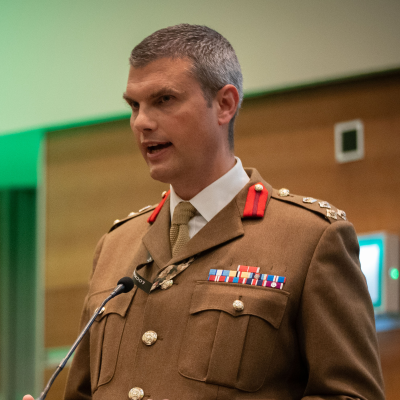
Brigadier Robert Alston - Chief Joint Fires and Influence Branch, ARRC NATO
  • The necessity to integrate multi domain fires to penetrate enemy defensive systems
  • The greatest challenge: Finding the enemy by winning the ISR battle
  • Air-land integration is critical to both the land and air battle
img

Brigadier Robert Alston

Chief Joint Fires and Influence Branch
ARRC NATO

OPERATIONAL TRANSFORMATION FOR FIRES

Operational transformation for fires involves enhancing manoeuvrability, survivability, and lightweight capabilities to ensure effectiveness for multi-domain operations. By advancing our platforms, forces can enhance battlefield agility and resilience, allowing for agility and survivability in contested environments. Transformation and modernisation is crucial for maintaining strategic advantage and interoperability with NATO allies.