Eastern promise - in harsh economic times, European submarine manufacturers look to South-East Asia
Posted: 11/07/2011 12:00:00 AM EST | 0
|
Evening news broadcasts across the world are currently dominated by pictures of a smoke clouded Parthenon, and images of Athens engulfed in rioting and protest – these are off-course the most visible signs of the economic crisis that is currently wracking not only Greece, but Europe as a whole.
Within the austerity measures being implemented in Greece, there is also a microcosm of the European market for submarine platforms. A long-standing procurement program in Athens for purchasing six German Type 215 submarines has run out of money for investment, with the two most recently ordered subs cancelled, and concerns that it may need to sell off a further two.

Source: Wikimedia Commons
Indeed, across Europe there are likely to be few new submarine procurement programs over the coming decade, with the major buyers of Italy, Germany, France and Britain fulfilling their needs for the foreseeable future. European submarine manufacturers are now hunting for new markets, and the largest of these is in South-East Asia, where a climate of increasing tension is leading to a heightening naval arms race.
The great submarine race
During the past years three of the main naval power of South-Asia have purchased or are in the process of purchasing diesel electric submarines. The most recent of these has been the Thai Navy’s move to purchase 6 ex-German Navy Type 206 subs. Whilst pending Parliamentary approval, Thailand’s attempts to procure are being mirrored in the Philippines, where they are looking to purchase a submarine by 2020 as part of a major naval modernisation program. One step ahead of Thailand and the Philippines are the Vietnamese Navy, who are awaiting delivery of six Kilo class submarines from Russia. These highly capable platforms will greatly expand the potential of the Vietnamese Navy, placing it at the front rank of Indo-Chinese naval powers.
Other nations with submarine fleets in the region include Malaysia, who purchased two Scorpene class boats from France in 2002. This move follows previous sale to Singapore in 1995 and Indonesia in the 1980’s, which had begun the trend in the region towards procuring submarines. Australia has also recently committed itself to a highly ambitious program to replace its current fleet of six Collins class boats with twelve highly advanced, cruise missile equipped attack submarines. Moving further afield, Japan, South Korea and India are also all engaged in significantly expanding their fleets of submarines.
What has spurred this recent rush towards the procurement of submarines? The answer clearly lies in the expansion of another powers naval capability – The Peoples Republic of China.
The Threat of the Dragon
Ever since the acute embarrassment of the 1996 Taiwan Crisis - in which United States Navy carrier battlegroups were able to operate with impunity off the Chinese coast - China has been committed to a program of naval modernisation and expansion. This wish to keep the US Navy away from China’s coastline is directed by a desire to ensure that Chinese policy makers cannot be so easily bullied by the US. There is also the increasingly Mahanian view of naval power which has permeated through the Chinese military high command, which has led to belief that as China expands to become one of the world’s top two economic powers she should have a navy to match. This economic expansion has also led to an increasing reliance upon the foreign import of many raw materials and Chinese Navy has increasingly ambitious plans to protect the movement of this flow of resources.
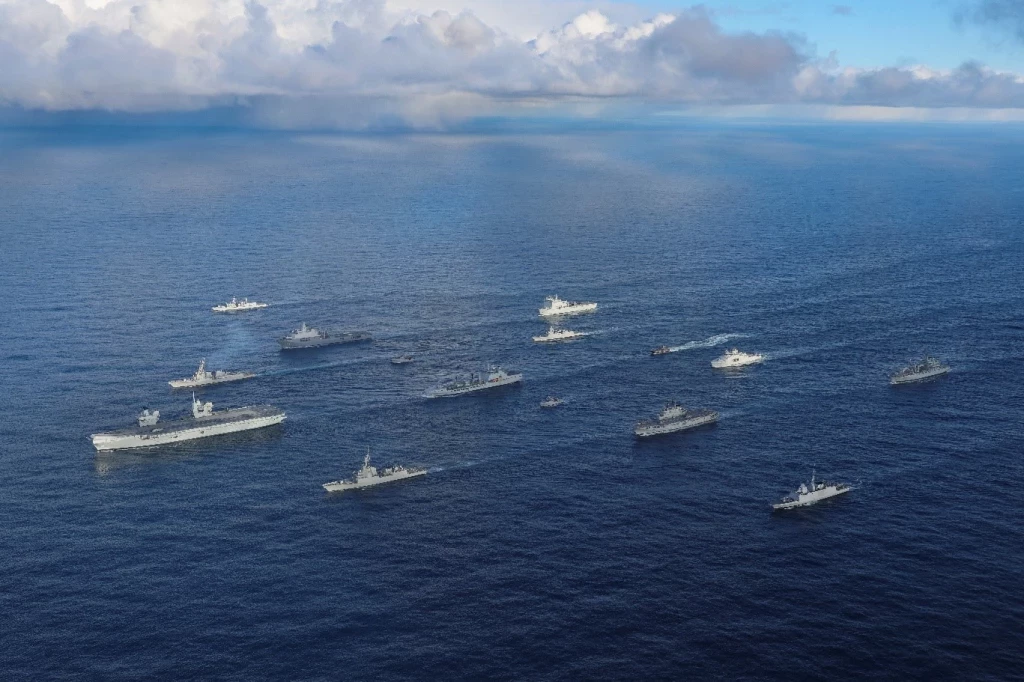
The physical manifestation of these varying ambitions has been an incredibly ambitious program of ship building – the most talked about of these being the hope to deploy several carrier battlegroups by 2020. Other areas of expansion include building large numbers of new destroyers and frigates, as well as one of the most ambitious submarine construction program in the world.
China has also adopted an increasingly muscular foreign policy that has seen it restating claims to the Spratly Islands and other off shore islands chains. This has led to increasingly heightened tensions in the region. In May 2011 Chinese Naval vessels opened fire on Vietnamese fishing trawlers, in just the latest in a series of increasingly heated clashes between vessels from the various powers competing for the sovereignty of the islands. There is the increasing concern that China intends to use its developing naval capacity to push its claims for the islands.
Regional powers with limited defence budgets, such as Vietnam, Thailand and Singapore, know that they cannot hope to challenge the Chinese navy in terms of quantity of vessels. So, they’re best hope to protect their interests or deter aggression is through purchasing capabilities which China will find hard to deal with – the most effective of these being the submarine.
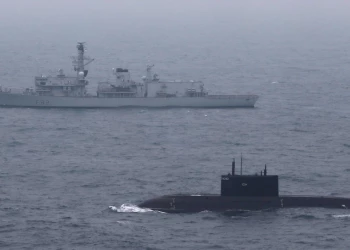
In the shallow, crowded waters of the South-China Sea it is very easy for skilled captains of small, diesel electric submarines (the main type being procured) to keep themselves concealed and operate with little threat of detection. As North Korea showed with its attack on the South Korean corvette Cheonan in 2011, even small submarines can be incredibly dangerous to surface vessels, particularly those operating in the crowded and sheltered waters just described.
Moreover, as David Axe has argued on many occasions, the Chinese Navies great weakness is its lack of operational skill and know-how. This is a force that is far from skilled in the ways of anti-submarine warfare, as illustrated by US Navy attack submarines that are regularly believed to operate a matter of miles off the Chinese coast, with little or no threat of detection from the Chinese surface fleet.
Regional tension, growing market
These times of heightening tension in the region provide an opportunity for European ship makers to secure valuable orders, particularly at a time when indigenous spending is declining . The major submarine building nations – Germany, France and Sweden - are pursuing vigorous attempts to win the contracts that are available. Germany is pushing for Thailand to complete its order for the six Type 206s, India is currently building French DCNS Scorpene boats and Singapore is in the process of acquiring two new vessels from Sweden.
Even in Australia, who has committed itself to a well funded indigenous naval program, there are increasingly vocal debates about buying off the shelf European submarines that would be a cheaper and more proven means of regenerating their submarine capability. The appeal of European submarines are that they are of a high level of technological quality, and unlike Russian built subs – Vietnam and Indonesia’s Kilos – they are not models operated and know by the Chinese navy. The potential market runs into the hundreds of millions with the Australian program alone being worth up to $35 billion; while Indonesia (who has a possible requirement for up to 12 boats) is expected to have a budget of roughly $1.2 billion.
With tensions only likely to rise over the coming decade, European ship builders are thus likely to be seeing an increasing number of orders from this region.
Robert Knapp writes for Defence Dateline Group.
-
Modular armour to ‘future proof’ the next generation of Warrior IFV in £1 billion upgrade -
A Remembrance Day message from Defence IQ -
International Fighter: Problems and priorities -
Gaddafi’s missing MANPADS taint NATO’s success in Libya -
Reshuffle in Rome: New outlook needed following Berlusconi's bungled defence agenda -
Are We Heading Towards a ‘Digital 9/11’? -
The Future of Amphibious Operations and Systems -
Better training could allow us to do 20% more says Royal Danish Air Force -
Lost at sea? - The Baltic states and European defence -
Replacing AWACs With UAVs?
* = required.
-
Offshore Patrol Vessels Latin America
Centro de Convenções Bolsa do Rio, Rio de Janeiro, Brazil
May 21- 23, 2012 -
Air and Missile Defence India
Le Meridien, New Delhi, India
June 5- 6, 2012 -
Jordan Air Defence Summit
Amman, Jordan
September 17- 18, 2012 -
Future Artillery India
The Oberoi, New Delhi, India
June 26- 28, 2012
-
Israel Seeks Another Dolphin-Class Submarine
The Israeli Navy has commenced negotiations with the German government on the building of a sixth... Read more
Defence IQ Press
-
HMS Astute Submarine to Start Sea Trials
HMS Astute, the first of class of a new generation of nuclear-powered attack submarine (SSN) for the Royal... Read more
Defence IQ Press
-
New Generation Attack Submarine for Blue Water Operations
HMS Astute, the first submarine to be built in the UK since HMS Vengeance, which was launched in... Read more
Helen Winsor
-
HMS Astute: Relic or Revolution for the Royal Navy
It was the16th of February, 2010 when HMS Astute left Faslane, Scotland to initiate sea... Read more
Kristoffer Pettersen


Not a member? Sign Up
Reasons for Joining
Address your challenges through knowledge sharing with peers from our global network of specialists.
Benchmark your business initiatives with the who's who in the field.
Hear from industry pioneers how to maximize ROI in today's challenging economy.
And best of all It's FREE!