2011 in review: Global naval power shifts with rising tides in the East
Posted: 12/07/2011 12:00:00 AM EST | 0
|
For the second instalment of Defence Dateline Group's three-part review of 2011, Robert Knapp explores the events that took place this year and how they altered the naval power status quo.
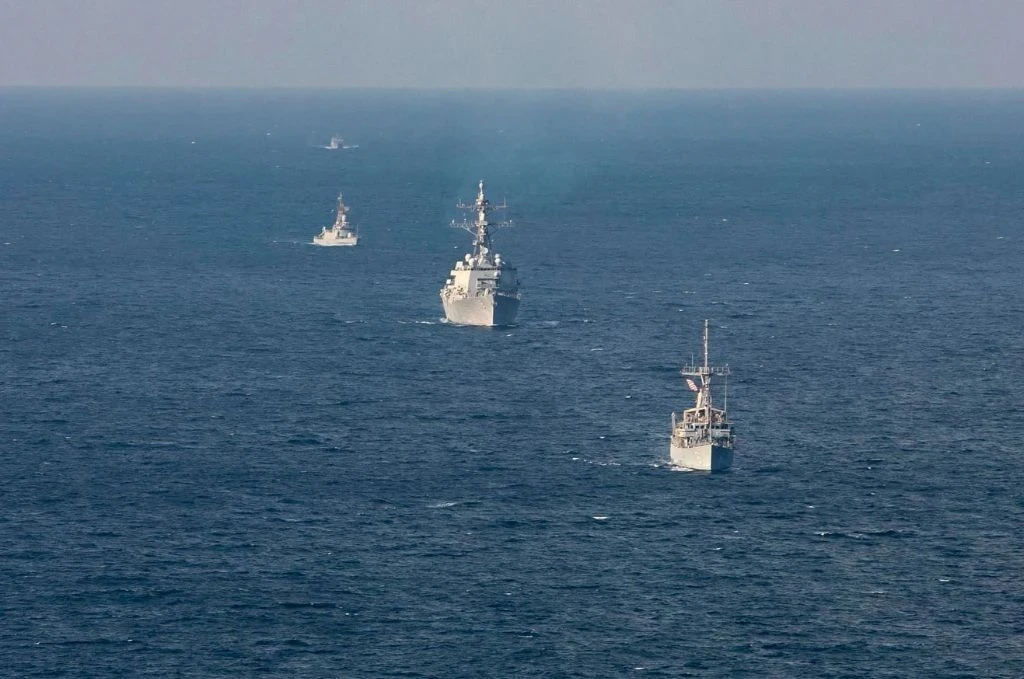
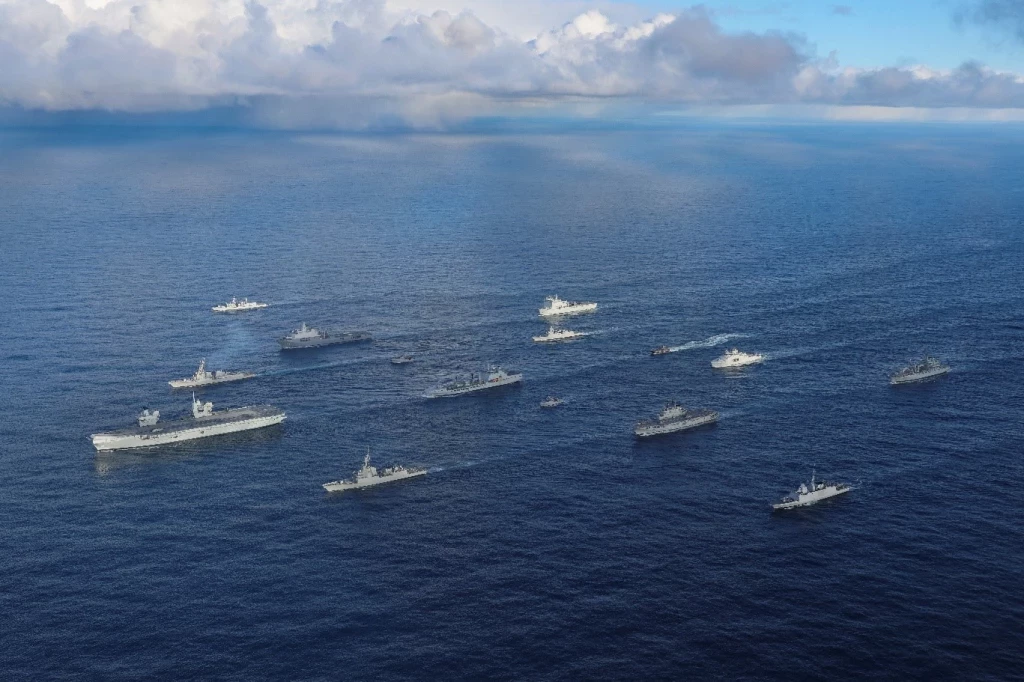
2011 has been a year of contrasting fortunes for the world’s navies. There has been the increasingly damaging nature of shrinking defence budgets for European navies - the key examples being the UK, Italy and Greece. Meanwhile in South-East Asia, as has been previously discussed by Defence Dateline, there is a rapidly developing naval arms race which is leading to rising naval expenditure in the region. In the middle of these two extremes there is the United States Navy, which expects to be on the receiving end of hefty cuts to its budgets, while trying to maintain its position as the paramount military power in the Pacific.
That sinking feeling in Europe
The vast majority of navies have been forced to either freeze or cut budgets and this led to a shrinking of the combined naval power available in Europe. Although European NATO countries were able to pull off the (not inconsiderable) feat of toppling Colonel Gadaffi’s regime, the strain on naval forces required to accomplish this was immense. Italy was forced to withdraw its aircraft carrier, the Giuseppe Garibaldi, from operations due to the rising costs and the UK had to deploy destroyers and frigates that had just been declared as ‘surplus to requirements’ by the SDSR. One should not undermine the achievements of the naval blockade that was erected and particularly the achievements of the French fleet which deployed significant forces centred on the carrier Charles De Gaulle and the helicopter assault ship Tonnerre. However, the overall picture is one of European navies under enormous pressure, even before all of 2011’s cuts had taken effect.
The severity of said European cuts reflects the priority attached to naval power in the respective countries. The United Kingdom, a country that traditionally has placed naval power at the centre of its defence planning, has inflicted heavy cuts on the Royal Navy, immediately retiring the carrier Ark Royal, cutting the destroyer and frigate fleet to 19 ships and significantly reducing the amphibious assault and mine warfare forces. However, the Dutch government, despite instituting some of the heaviest defence cuts in Europe, largely left the Koninklijke Marine’s capabilities alone – retaining its six large frigates and a major helicopter procurement program. The contrast is an informative one.
The British have made an attempt to retain full spectrum capabilities for all three armed forces while instituting defence cuts that amount to over 8% of the budget, which has led to all three services – but particularly the Navy and Air Force – suffering badly. However, the Dutch have decided to forgo some capabilities in order to preserve others; this has manifested itself in the scrapping of their MBT force and half the air force’s F-16 fighter jets. European countries have been struggling to cope with shrinking defence budgets; some, like the Dutch, have made brave defence decisions, while others have largely skirted around the issues of what they can and cannot still afford to achieve.
Eyes on the Far East
Moving away from Europe there is a very different dynamic at play. China, India, Japan, Australia and virtually all of the middle ranking regional powers are all currently engaged in dramatically expanding or modernising their navies. China has spearheaded this naval arms race, feeling that it should have naval capabilities to match its economic might. During the past year the most significant development has been the commissioning of China’s first aircraft carrier – the ex-Russian Varyag. While the limitations of this vessel have been much discussed it serves much more as a symbol of China’s ambitions; by the end of the decade there is the intention to have three carrier battle groups in service. The arrival of the Varyag has overshadowed the continuing expansion of both the large (and increasingly capable) surface fleet and what is expected to soon be the largest submarine fleet in the world.
In response to this Chinese expansion other regional navies are engaged in significant procurement programs. Australia has perhaps the most ambitious of these plans. Its 2009 Defence White Paper outlined a naval expansion program that could well exceed costs of $30 billion over the coming decade. Japan, even though it is reeling from the devastating tsunami, is still committed to modernising and expanding both its submarine and surface fleets. In March, it commissioned the helicopter carrier Ise – the first vessel to resemble an aircraft carrier that Japan has had since the Second World War.
The other first-rank Asian naval power is India, which is committed to another large building program, although it has been dogged by the typical delays and overruns that plague the Indian defence industry. India’s plans to have three carrier battle groups by the end of the decade are hindered by on-going contractual and maintenance problems with the procurement of the ex-Russian Admiral Gorshkov (seven years late and counting), and the failure of indigenous Indian shipyards to make real progress with building two planned carriers. All of the major Asian navies are currently in a state of flux with significant expansions of size and capability.
Weighing its options - the US response
However, there has so far been one major power that has been overlooked: the United States of America. The US is by far the world’s leading naval power, but that does not mean it is not beset by severe challenges and tough choices. The most immediately pressing of these are the substantial defence cuts that are about to hit the US armed services. Though there is a major behind-the-scenes battle about where the axe is going to fall, the navy is undoubtedly going to receive a fair degree of the pain. Rumoured cuts include retiring several Ticonderoga cruisers, reducing the deployment schedule of the fleet’s 11 carrier battle groups (in order to avoid having to withdraw one completely), speeding up the withdrawal of the Oliver Hazard Perry-class frigates and slowing the procurement of the Virginia-class attack submarines.
At the same time several programs which are going to be vital to the future of the navy have encountered problems – the most debated of these being the on-going challenges faced by the Littoral Combat Ship (LCS). Massively over-budget, the hull of one of the barely commissioned vessels is already suffering severe structural problems. With the LCS is likely to make up a large proportion of the future combat fleet, these problems are very worrying for planners and manufacturers alike.
While the US Navy struggles to decide where the cuts are going to fall, there is no let up in its worldwide commitments – operations off the Horn of Africa, in terms of both counter-terrorist and counter-piracy operations are absorbing ever more deployed ships. The biggest commitment, however, is to Asian security where, as President Obama recently reaffirmed, “reductions in US defence spending will not - I repeat, will not - come at the expense of the Asia-Pacific." This was just the latest is a long run of speeches by senior administration and Pentagon officials to reinforce the commitment of the US to Asian security.
The much discussed expansion of Chinese naval power is causing great concern to US planners, particularly the twin threats of China’s new anti-ship ballistic missile (the first in the world) and the expanding capability of the submarine fleet. Whilst many analysts believe that the threats are not quite so severe as budget conscious admirals would like us to believe, it is still the most significant challenge to US naval dominance in sixty years.
A mixed picture for 2012?
The shrinking capabilities of European navies and the increasing diversion of US military weight towards the Asia-Pacific region in 2011 reflects what is going to be the trend of this century – the much discussed rise of Asia and the weakening of traditional Western power. This will be seen in the maritime domain as much as any other.
-
Up periscope! Green future in sight for U.S. Navy -
Airborne Early Warning: Global industry round-up -
Tanks a lot! UK cuts £10.8 billion from armoured vehicles programmes -
TDL: The key challenges and outlook -
2011 in review: European defence makes slow, yet very definite, progress -
2011 in review: Muddy outlook stains mixed year for British military -
Defence firms primed for cyber security acquisitions -
Unmanned Aerial Vehicles: The week in review -
Bletchley Park 2.0: GCHQ recruits next generation of spy -
Weimar Triangle: How the defence cooperation would play out
* = required.
-
Submarine Operations and Requirements 2012
Hilton London Olympia hotel, London
March 20- 22, 2012 -
Offshore Patrol Vessels Latin America
Centro de Convenções Bolsa do Rio, Rio de Janeiro, Brazil
May 21- 23, 2012 -
Joint Search and Rescue Summit
Hilton Alexandria Mark Center, Alexandria, VA
February 27- 29, 2012 -
Interoperable Open Architecture 2012
Venue to be confirmed, London, United Kingdom
September 24- 25, 2012
-
Russian Subs Were Tracked for Days, U.S. Military Says
Aug. 6--NORFOLK -- It's been years since Russian subs came calling so close to U.S. shores, but the lack... Read more
Defence IQ Press
-
British Naval Chief Demands Investment for Future Defence
The most senior serving officer in the British Royal Navy has insisted that Maritime defence forces should... Read more
Richard de Silva
-
The Alternative Canadian Navy of 2030
(This article represents a speculative interpretation on an alternative shape of the Canadian Navy in 2030,... Read more
David Mugridge
-
Carrier construction begins on the Mersey
27 Jul 10 The nationwide programme to build the Royal Navy's new Queen Elizabeth Class aircraft carriers... Read more
UK Ministry of Defence [MoD]


Not a member? Sign Up
Reasons for Joining
Address your challenges through knowledge sharing with peers from our global network of specialists.
Benchmark your business initiatives with the who's who in the field.
Hear from industry pioneers how to maximize ROI in today's challenging economy.
And best of all It's FREE!