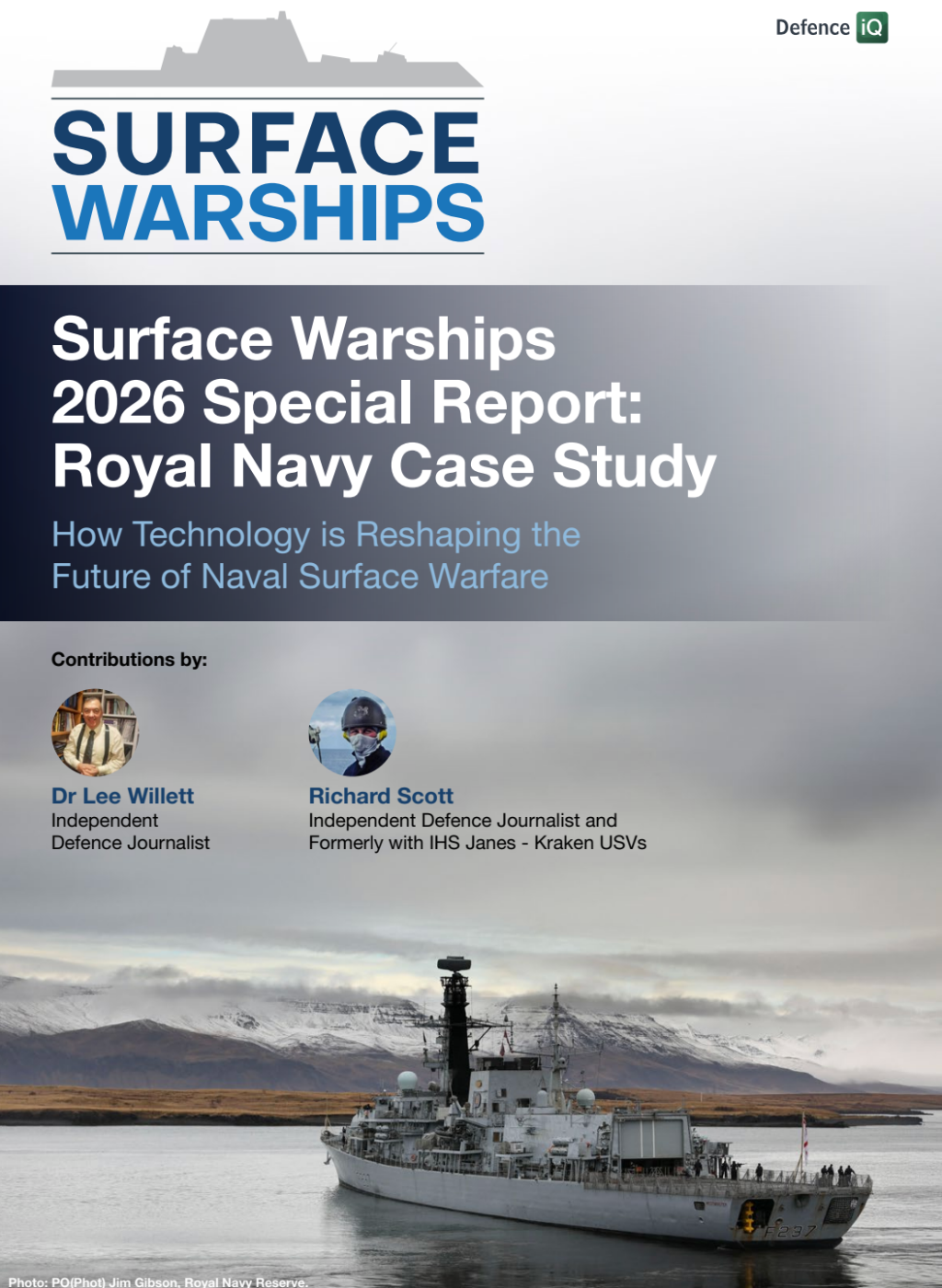
Surface Warships 2026 Special Report: Royal Navy Case Study
Maritime warfare is undergoing profound transformation. Across the world's leading navies, the challenge is to ensure platforms can survive, adapt and remain operational in a significantly more demanding operational theatre. Rapid advances in sensor technology, long-range precision weapons and space-based surveillance are reshaping the balance between detection and survivability at sea. At the same time, the growing maturity of autonomous and uncrewed systems is driving a shift towards distributed, hybrid force structures that combine crewed and uncrewed platforms to deliver greater flexibility, resilience and operational mass.
Against this backdrop, the future surface fleet will be defined by three interconnected priorities: recapitalising ageing warship inventories, ensuring those vessels can operate effectively in a transparent battlespace, and embracing the technologies that will underpin the next generation of naval operations.
In this special feature, two leading defence commentators examine these themes from complementary perspectives. Dr Lee Willett explores the Royal Navy's efforts to regenerate its surface fleet through the Type 26 and Type 31 frigate programmes. Richard Scott examines how the Royal Navy's Project BEEHIVE is helping accelerate the transition towards a hybrid fleet, where crewed and autonomous platforms operate together as an integrated force.
In Partnership With:

QUESTIONS?
Address: IQPC Ltd, 129 Wilton Road,
London SW1V 1JZ
Telephone: +44 (0) 113 210 042
Fax: 44 (0) 207 368 9301
Email: enquire@iqpc.co.uk

©2026 IQPC. All rights reserved.