Exclusive content: Interviews, Presentations and latest insights
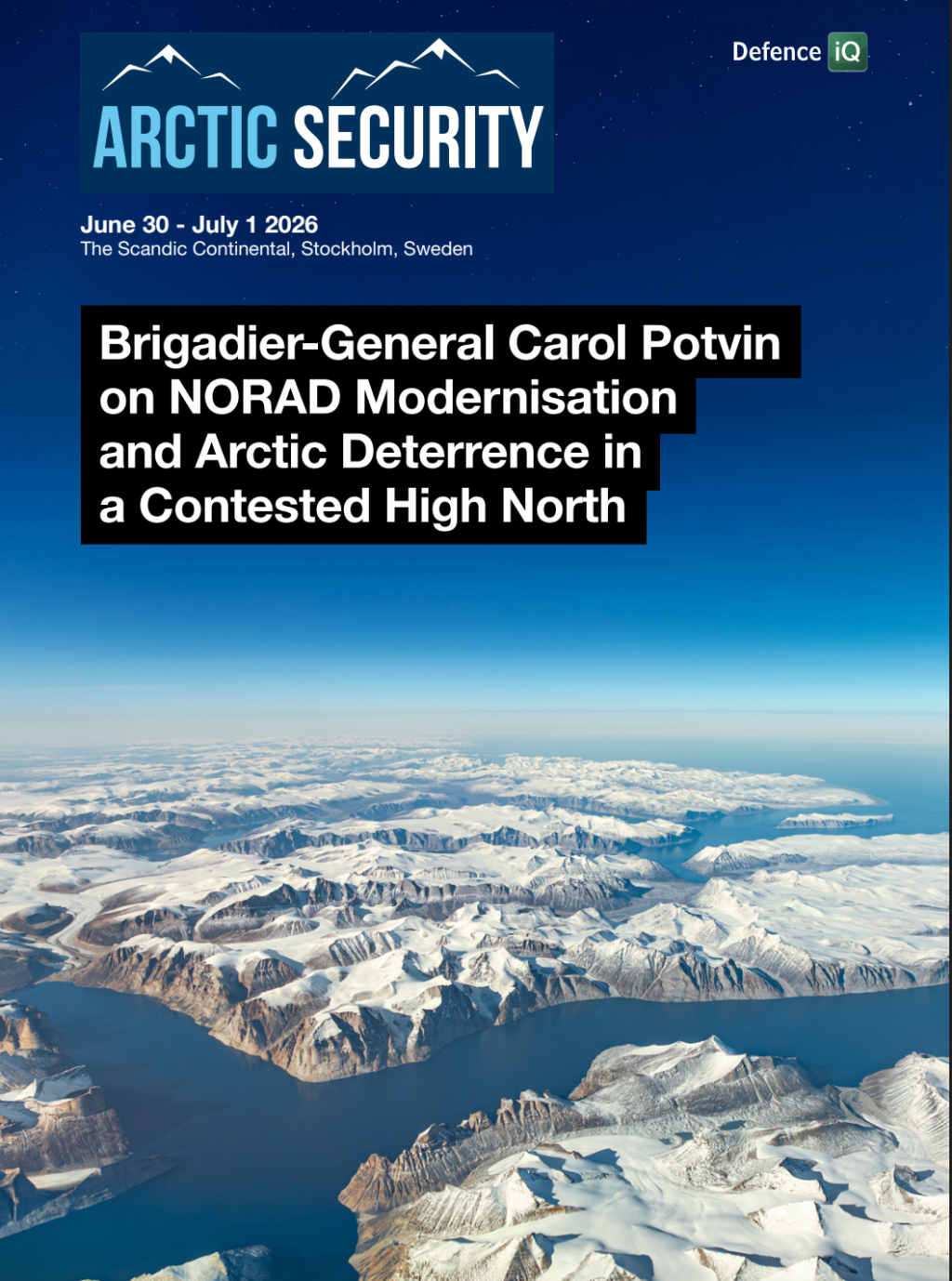
Brigadier-General Carol Potvin on NORAD Modernisation and Arctic Deterrence in a Contested High North
The Arctic has shifted from a region of relative stability to one of growing strategic competition. Climate change, expanding access, and evolving threat vectors are reshaping defence planning across the High North. In this interview ahead of Arctic Security 2026, Carol Potvin, Deputy Director General - Continental Defence Policy at the Canadian Department of National Defence, outlines how Canada is advancing NORAD modernisation, strengthening multi-domain awareness, and reinforcing sovereignty through enhanced continental and allied integration.
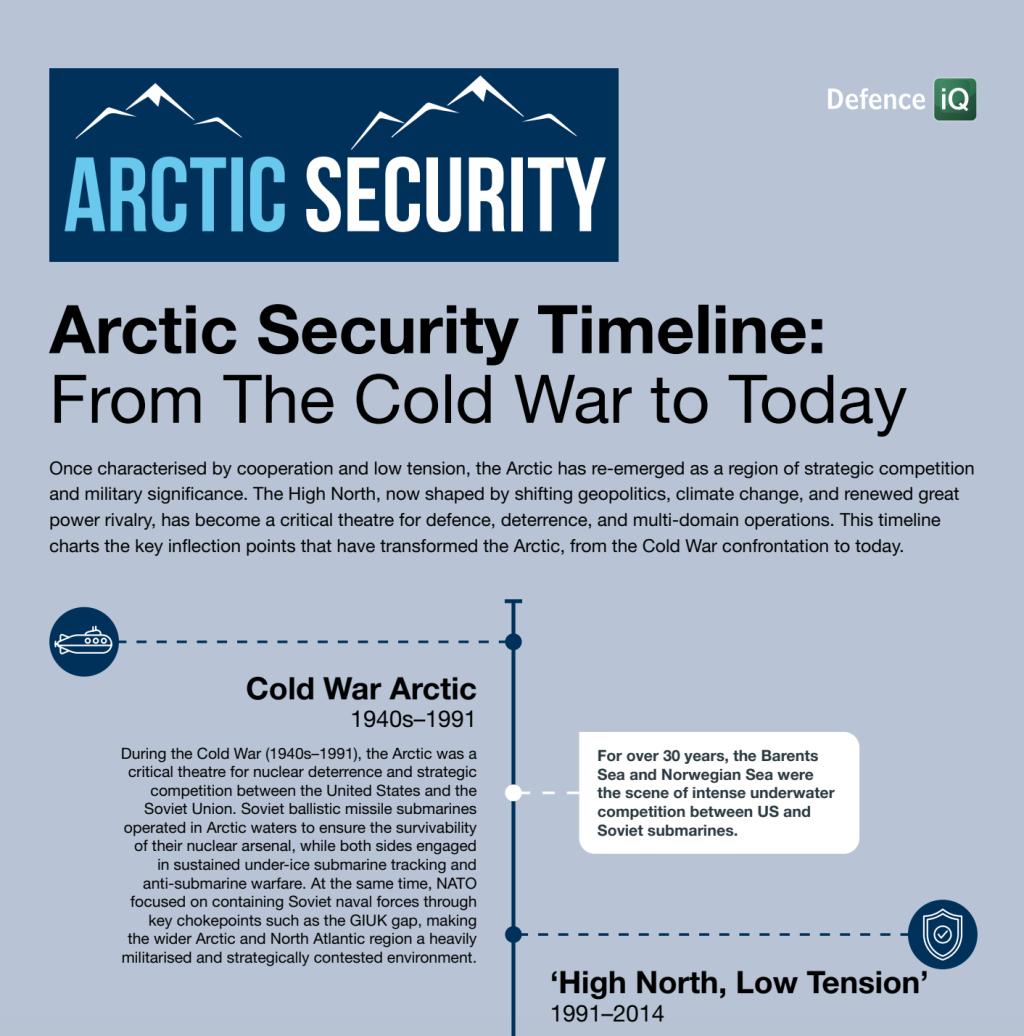
Arctic Security Timeline: From The Cold War to Today
Once characterised by cooperation and low tension, the Arctic has re-emerged as a region of strategic competition and military significance. The High North, now shaped by shifting geopolitics, climate change, and renewed great power rivalry, has become a critical theatre for defence, deterrence, and multi-domain operations. This timeline charts the key inflection points that have transformed the Arctic, from the Cold War confrontation to today.

Unity, Interoperability and Leadership: Aija Kalnaja on Securing the Arctic’s Future
In this interview, Aija Kalnaja, Deputy Executive Director for Capabilities at FRONTEX, reflects on what it truly means to prepare for complex, high-risk environments such as the Arctic. With a career spanning national policing, EU law enforcement training and operational capability management, she brings a cross-sector perspective to questions of interoperability, leadership and readiness.

Russia’s Hybrid War in the Maritime Arctic By Anita Parlow
Russia’s hybrid warfare campaign in the maritime Arctic reflects a calculated blend of military, economic, legal, technological, and informational tools aimed at securing long-term strategic advantage without triggering open conflict. This in-depth analysis is authored by Anita Parlow, Esq., MSt, a legal scholar and author specialising in Arctic governance, Indigenous rights, and climate-related security issues.

Sub-Zero Warfighting: Tech Trends and Challenges Up to 2040
2040 is expected to be an inflexion point for Arctic capabilities. A combination of different technologies maturing and being adopted has the potential to dramatically change warfighters' abilities to overcome the geographical and climate challenges of the high north.
Download the article to learn about:
- The priorities of NATO nations when developing Arctic-related capabilities
- The current technological landscape
- Trends and challenges up to 2040
2025 Attendee Snapshot | Arctic Security
Ahead of Arctic Security 2026 (30 June–1 July 2026), the 2025 Sample Attendee Snapshot offers a clear preview of the calibre of organisations and senior leaders you can expect to meet next year. It showcases the high-level representation confirmed for the 2025 edition, providing an early indication of the breadth of military, governmental, and industry stakeholders who consistently engage with this summit.
The 2025 attendee profile features senior strategic leaders from Arctic states, allied nations, and NATO, brought together for one of the most timely and important discussions on safeguarding the region. This level of participation reflects the depth of collaboration and cross-domain expertise that will continue to define Arctic Security 2026.

Speaker Presentation: Co-ordinating Coastguard Operations In Arctic Waters
The presentation "Coordinating Coast Guard Operations in Arctic Waters" by Georg Kr. Lárusson, Director General of the Icelandic Coast Guard, focuses on the challenges and strategies for maritime safety in the Arctic region. The presentation highlights Iceland's unique security and operational challenges in Arctic waters and the necessity for international collaboration to ensure maritime safety.
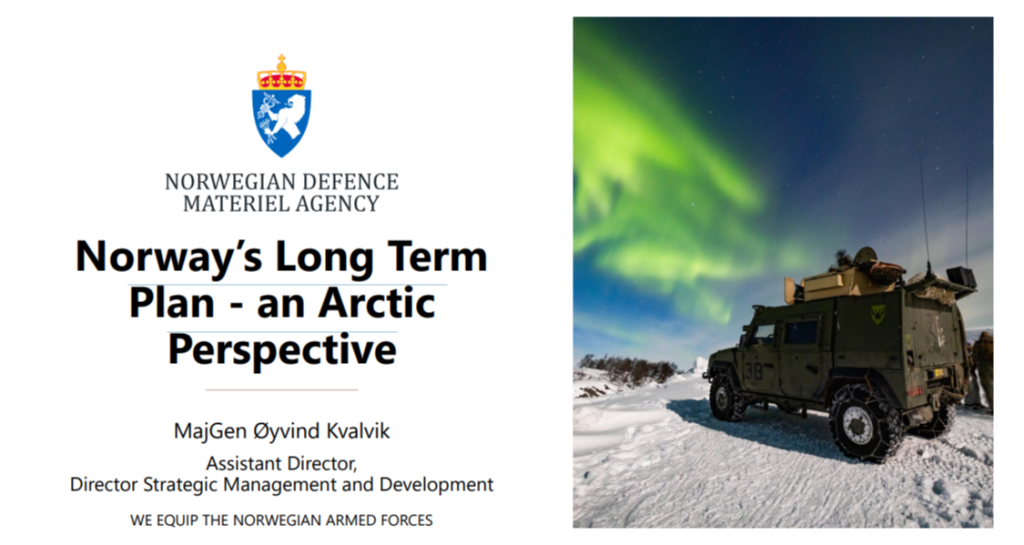
Past Presentation Norway’s Long Term Plan - an Arctic Perspective
The presentation from MajGen Øyvind Kvalvik, Assistant Director, Director Strategic Management and Development at the Norwegian Defence Materiel Agency. explores Norway’s Long Term Plan - from an Arctic Perspective.
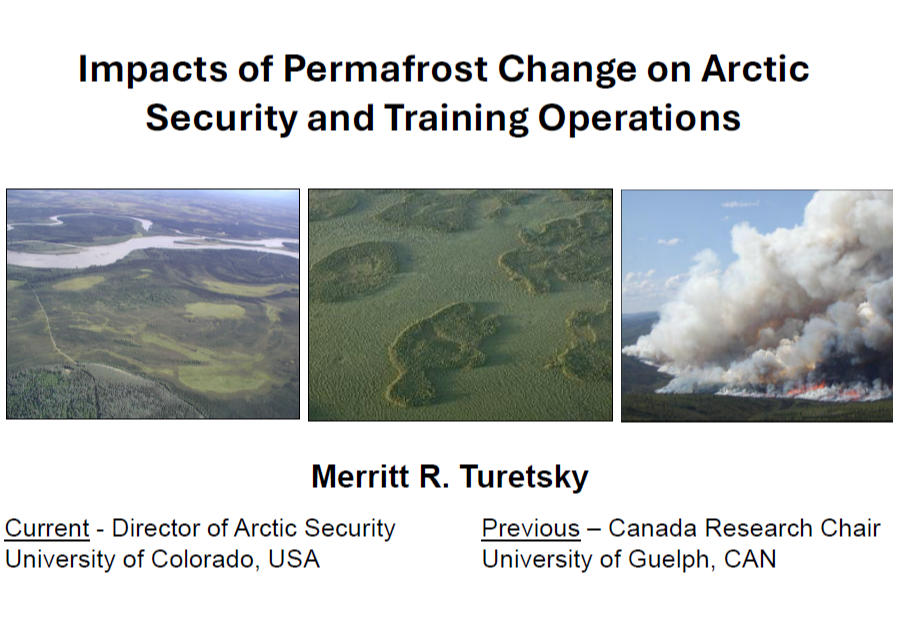
Past Presentation: Impacts of Permafrost Change on Arctic Security and Training Operations
Merritt R. Turetsky, Director of Arctic Security at the University of Colorado, delivered an engaging session in 2025 on how permafrost change is shaping Arctic security and military training operations. Her presentation provides a clear, accessible overview of several critical topics, including:
- The Arctic Security System at the University of Colorado Boulder
- Permafrost distribution across the region The U.S. Army CRREL
- Permafrost Tunnel Thaw, subsidence, and flooding impacts
- Landscape transformation modeling and its implications for all‑season training in Alaska

Fostering Innovation For the Arctic Fighter, Interview with Justin Putnam
Designed to tackle some of the U.S. warfighter’s most challenging problems, the U.S. Army Engineer Research and Development Center (ERDC) operates a number of research centres, including a Cold Regions Research and Engineering Laboratory (CRREL). CRREL’s vision is to develop innovative solutions for science and engineering challenges in extreme environments. To talk about how the laboratory fosters this innovation, we had the privilege of interviewing the Associate Technical Director, Justin Putnam.

NATO Bases in the High-North
NATO is currently going through a period of renewed interest in the Arctic. With the international order currently in flux due to the invasion of Ukraine combined with increased Arctic activity by Russia and increasing interest by strategic competitors such as China, NATO is seeking greater access to what is one of the most challenging environments on earth. The following infographic gives insight into NATO bases in the high north, their location and function.

Arctic Security | 2024 Attendee Snapshot
This 2024 Attendee list highlights the leading military and industry leaders from across the arctic community who attended the Arctic Security Conference in 2024, many of whom are expected to return this year. Join us in 2025 where the event will bring together all key security stakeholders including the most senior strategic leaders from the Arctic states, allied nations, and NATO under one roof, for the timeliest discussion on maintaining the safety and security of the region.
View the 2024 attendee list to see who you could meet this April at Arctic Security 2025 (Copenhagen, Denmark on 29-30 April 2025) >>

Hybrid Warfare in the High North, by Anita Parlow, Author, Advisor, University of Oxford District of Columbia
As the Arctic becomes more accessible due to climate change, creating vital sea lanes and resource opportunities, geopolitical competition is expected to increase. In this piece Arctic expert Anita Parlow discuses the use of hybrid warfare in the High North, and poses the questions the question on how it should be countered.

Embracing the Cold: Equipment Challenges to Operating in the Arctic
Arctic Operations pose huge challenges due to extreme cold, solar and magnetic phenomena, and lack of infrastructure. The Arctic remains essential to NATO's Deterrence and Defence Posture, more so with Finland and Sweden’s accession to the alliance. This article looks at how industry and end users are working to overcome Arctic conditions and their effect on UAS, C4ISR and Artillery operations.

SECURING THE ARCTIC: Interview with Commander Brian May
Commander Brian May, serving as the Associate Centre Director at the Atlantic Research Centre for Defense Research and Development Canada, shares the challenges inherent in Arctic security and the innovative solutions being taken to address and secure the region.

Past Presentation: Coast Guard Cooperation in the Arctic, Developments and Future Challenges
Rear Admiral Georg Lárusson, Director, General Icelandic Coastguard speaks on 'Coast Guard Cooperation in the Arctic, Developments and Future Challenges'
Learn more by downloading the presentation below!
In Partnership With:

QUESTIONS?
Address: IQPC Ltd, 129 Wilton Road,
London SW1V 1JZ
Telephone: +44 (0) 113 210 042
Fax: 44 (0) 207 368 9301
Email: enquire@iqpc.co.uk

©2026 IQPC. All rights reserved.