Anglo-Canadian Naval Cooperation Stalls Over 'Global Combat Ship' Debate
Contributor:
David Mugridge
Posted: 03/21/2011 12:00:00 AM EDT | 0
|
The coalition government’s recent public disclosure that they were in consultation with the Canadians over joint warship design has arrested a potential deal which could have created hundreds of high technology engineering jobs in both countries.
“The global combat ship frigate programme does indeed present a tremendous opportunity for the United Kingdom to put the policy into practice. I am delighted to say that we are in close discussion with the Canadians”, stated Gerald Howarth, Parliamentary Under Secretary of State for Defence, to the House of Commons in January.
Be it naivety or hubris, Gerald Howarth’s disclosure, on 31 Jan 2011, that Canada was in close partnership with the UK dropped a boulder into the Canadian political pond and stalled further progress in what was predicted to be a mutually beneficial venture. Yet this need not have been the case had his Canadian counterpart directly addressed two potential public flashpoints – saving Canadian dollars versus saving Canadian jobs.
Peter Mackay’s failure to articulate the arguments for collaboration to both the media and unions was yet another hiccup in what many have come to refer to as a less-than-consistent political tenure - and ran counter to much he had said in support of Canadian collaboration with the US over the JSF F-35 project.
To further complicate matters, Howarth’s handling of the situation seemed to lack an understanding of Canadian political pressures (the minority government faces a potential election in 2011); and likewise seemed to disregard Canada’s position as NATO ally (and ISAF benefactor) and trusted member of the G8/G20.
The Global Combat Ship (GSC) concept
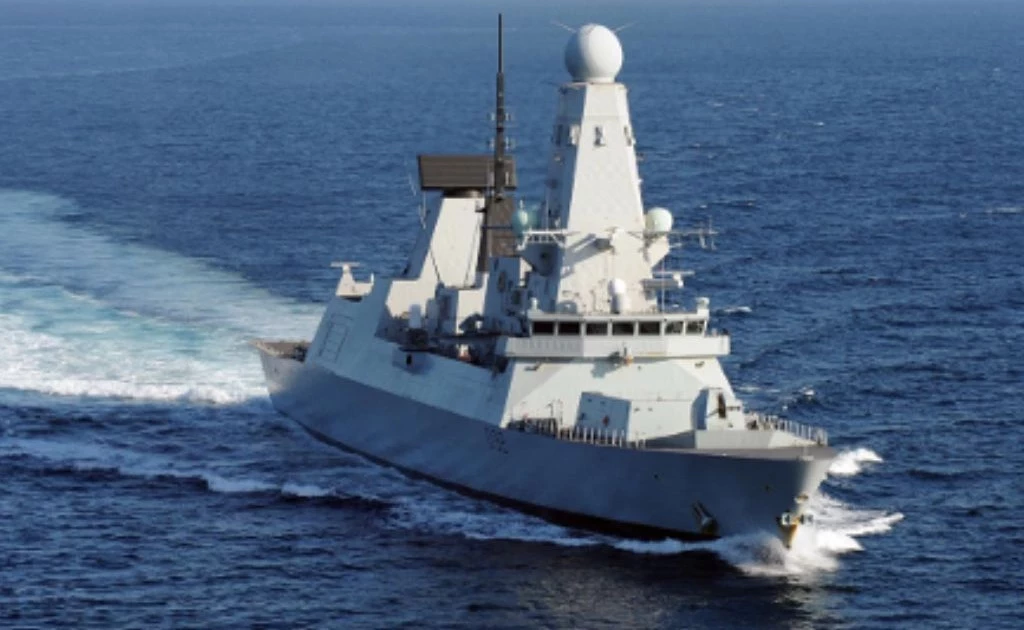
The GSC programme aims to deliver an adaptable and relatively affordable surface combatant for the post-SDSR Royal Navy from 2021. It is designed to meet the demands of the strategic maritime environment over the next 30 years and to replace legacy vessels christened during the cold war (Type 45). Unlike its predecessors, GSC has been designed as a modular multi-role warship, capable of being deployed globally to discharge those missions that paucity of platform numbers confound today’s RN.
This warship has a displacement of around 5500 tonnes, a length of 140m and a maximum speed of 28kts. It has accommodation berths for a crew of 130 and can carry a 36 strong Embarked Military Force (EMF). Its hybrid diesel-electric/gas propulsion gives it an extended range of 7000nm at 15kts and its extended endurance of 60 days means this ship can operate for long periods without a Joint Support Ship (JSS). The modular mission bay can either house 3 of the 4 sea-boats via the stern ramp to support boarding and SOF operations, or house a Low Frequency Active Sonar) (LFAS). Meanwhile, the missile silos and Medium Range Gun can deliver a range of tailored munitions to provide a precision strike, maritime fires or local area air defence.
According to BAE, the ship should be offered in three variants (Anti-Submarine Warfare (ASW), Air Defence (AD) and General Purpose (GP)). All of these variants would be based upon a common, acoustically quiet hull-form so as to realise economies of scale from the construction process and reduced through-life costs. Canada had expressed an interest in the AD variant as a successor to its 3 museum piece destroyers, which are now beyond “rust out” and at substantially reduced readiness. GCS had been designed around the principles of long range and high endurance, so as to project a mission tailored platform into a persistent and influential presence around the globe.
Shipbuilding and Canadian national security
In late July 2009, the Minister responsible for both Defence and the Atlantic Gateway announced to a large audience of interested parties the Federal government’s commitment to building and maintaining a fleet of ships that would deliver national maritime security and services. This proactive and multi-agency approach demonstrates a frame-work which would deliver the most valuable peace-time federal ship building programme in Canadian history.
In opening a consultation process which will see the Government invest in excess of $40 billion to build more than 50 vessels over the next 30 years, Peter Mackay was able to announce:
“Our combined efforts will help ensure the Canadian Navy gets the fleet of vessels it needs, while high-value jobs are created and sustained in shipyards across Canada.”
The Government of Canada had decided it was in the national interest to develop forward looking maritime and shipbuilding industries. Historically, Canada’s national security strategy has been founded, in part, on her ability to independently build warships, coast-guard vessels and other purpose built federal platforms. The minority Harper government had further recognised ship-building as a highly technological industry capable of attracting partners and stake-holders from many different industrial sectors.
In a sort of demonstration of unity, Canada proclaimed a determination to avoid the return to the boom-and-bust economic cycle that characterised the domestic ship-building industry following the completion of the Halifax Class in the 1990’s (and later MCDVs). Since then, fallow years have stripped ship yards of skilled personnel – the ship-building industry was reduced to a skeleton crew in order to stay financially viable. NSPS is really a last chance saloon for Canada’s warship builders and it remains a very sensitive political issue.
This sensitivity stems from the stark environment in which Canada now finds herself as NSPS seeks to prevent loss of her indigenous ship-building industry for good. Canada has entered a period which demands sustained fleet renewal and needs to corral its remaining industrial resources if it is to recoup its manufacturing capacity (a situation which she has been in on previous occasions and is now compounded by the escalating cost of building high technology warships). So while international collaboration makes financial sense, it is a prospect that demands careful political handling.
For many within the MoD and industry, the announcement of the NSPS was long overdue. From this quarter, it is viewed as ‘a once in a generation’ $240bn opportunity to redefine, re-equip and revitalise the Canadian Forces. It may even become a welcome and enduring legacy that will change the Canadian Navy’s attitude toward defence and maritime security in the 21st Century.
What does GCS offer?
Reliability Centred Maintenance (RCM) systems and through life capability management will maximise platform availability and ease force generation issues; two factors which have confounded both the RN & CN for the last decade. To achieve this, GCS will take advantage of a modern modular approach to design and the integration of weapons and sensors.
Mission dependent missile silos;
-
Mission-dependent stern boat bay capable of housing a variety of Sea-boats or Unmanned Vehicles;
-
Extra accommodation for additional embarked forces, be they military or other government department personnel;
-
Aviation facilities capable of supporting a full range of rotary wing assets from CH-47s to attack helicopters;
-
Designed from the outset to operate Unmanned Airborne Vehicles.
Incorporating green technologies
Cost-effective economic performance and low environmental emissions are all key features of how GCS is different from its predecessors. Offered with a hybrid diesel-electric / direct drive propulsion system, the ship is capable of providing class leading power with unrivalled fuel economy. It offers the Canadian Navy a green alternative and a solution for keeping pace with the USN’s sustainment revolution. In addition, the extra speed once thought necessary for executing ASW is no longer (a 70kt heavy-weight torpedo can still track and close on even the quietest of platforms and at nearly twice the speed).
Imagining the benefits
By realising significant economies of scale, Canada may well have acquired a more capable platform for less cost and brought the acquisition of her next surface combatant back into the realm of affordability. It was anticipated that Canada’s indigenous ship-building industry would have been fully involved in this programme from design to construction of not just her platforms, but other export versions. Widespread criticism of the handling of political negotiations (on both sides of the pond) centre on the confusing collapse of a deal thought to have been not only mutually beneficial to Canada and the UK – but relatively straightforward.
Ironically, a collaboration of this scale could very well have buried the issue of Canada’s Victoria class submarines and brought NSPS back into the fold of financial reality from its current pipedream status. Perhaps if, after an election, Canada enjoys a majority government then this situation will be given a period of sober reflection and she will once again desire to be part of an international project in which her full collaboration is welcomed as it has been in the equally important and expensive JSF F-35 project.
-
Operations Ellamy and Odyssey Dawn: Day 4 Libyan Battle Assessment -
Can NATO Agree on the Next Phase for Libya Operations? -
Libya Phase II - Operations Ellamy and Odyssey Dawn Make Way for NATO -
Space Tensions Escalate as China and Iran Infiltrate the Final Frontier -
IED Hit Rate Demands More Action Against the Human Network -
Opinion: 'Western Powers Must Divide Gadhafi from His Supporters' -
US Army Plans New Guidelines to Resolve Denials of Purple Hearts to Brain-Injured Soldiers -
Defence Agency Sharpens Combat Comms for Future Soldier Systems -
Defence Minister Luff Addresses Successes and Failures of Defence Review Process -
Middle East Air Defence Procurement At a Glance
* = required.
Not a member yet? Sign up
You Should Check Out:
Events of Interest
-
Special Operations Summit Middle East
Armed Forces Officers Club & Hotel, Abu Dhabi, United Arab Emirates
June 3- 5, 2013 -
10th Annual Global MDA: Coastal Surveillance 2013
Singapore Expo, Singapore
November 11- 14, 2013 -
7th Annual Counter-IEDs
76 Portland Place, London, United Kingdom
June 24- 26, 2013 -
Maritime Search & Rescue Asia 2013
Singapore Expo, Singapore
November 11- 11, 2013


Not a member? Sign Up
Reasons for Joining
Address your challenges through knowledge sharing with peers from our global network of specialists.
Benchmark your business initiatives with the who's who in the field.
Hear from industry pioneers how to maximize ROI in today's challenging economy.
And best of all It's FREE!