Weimar Triangle: How the defence cooperation would play out
Posted: 12/02/2011 12:00:00 AM EST | 0
|
The so-called “Weimar Triangle“ defence cooperation group of France, Germany and Poland has been making waves in 2011 for two main reasons. Firstly, under the leadership of the Polish Presidency of the Council of the EU, the group has resurrected the controversial topic of a permanent EU military headquarters, much to the chagrin of officials in Westminster. Secondly, a flurry of trilateral treaties have promised greatly enhanced military cooperation between the three nations, which account for almost 40% of all European defence spending.
In this second category, however, few concrete projects have materialized. Beyond confirming they will operate a so-called “Weimar Battlegroup” when their turn on the EU’s rapid reaction force roster comes around in 2013, there has been little evidence of the in-depth cooperation or sharing of resources that France and the UK so remarkably committed themselves in 2010.
Now, a consortium of German think-tanks have produced some relevant policy suggestions. The report, entitled “Weimar Defence Cooperation – Projects to Respond to the European Imperative”, outlines an example of a short, medium and long-term project that the Weimar Three should consider adopting immediately. Covering capabilities related to EU battlegroups, UAVs and armoured vehicles, these suggestions are the strongest illustration yet as to what Weimar defence cooperation might actually look like.
Short term - a permanent Weimar Battlegroup
The first recommendation centres on the Weimar Battlegroup, a formation of 1,500 troops which must be ready for rapid deployment two years from now. Within this timeframe, the report suggests the Weimar Triangle could undertake measures to make this structure permanent beyond 2013, a step it shorthands as “BG Plus”.
BG Plus would focus on three core capability areas necessary to operate a multinational battlegroup - logistics, medical support and C3 systems. The report notes that amongst the three nations, Germany would stand most able to provide the logistical back-bone of BG Plus, and could even provide all aspects of logistics as a specialist capability. France meanwhile would be well placed to provide all in-field medical support. As for the C3 architecture, here a degree of procurement would be required, with either Commercial and Military Off-The-Shelf (COTS/MOTS) systems or a commonly developed solution being used to underpin the entire formation.
This structure would lend itself to both civilian and military tasks, and could eventually form the core structure around which other multi-national battle-groups could coordinate in future EU CSDP missions. As the Weimar Battlegproup must be operational in 2013 anyway, it is thus a short-term and immediate way to begin defence cooperation.
Medium term - a common MALE UAV platform
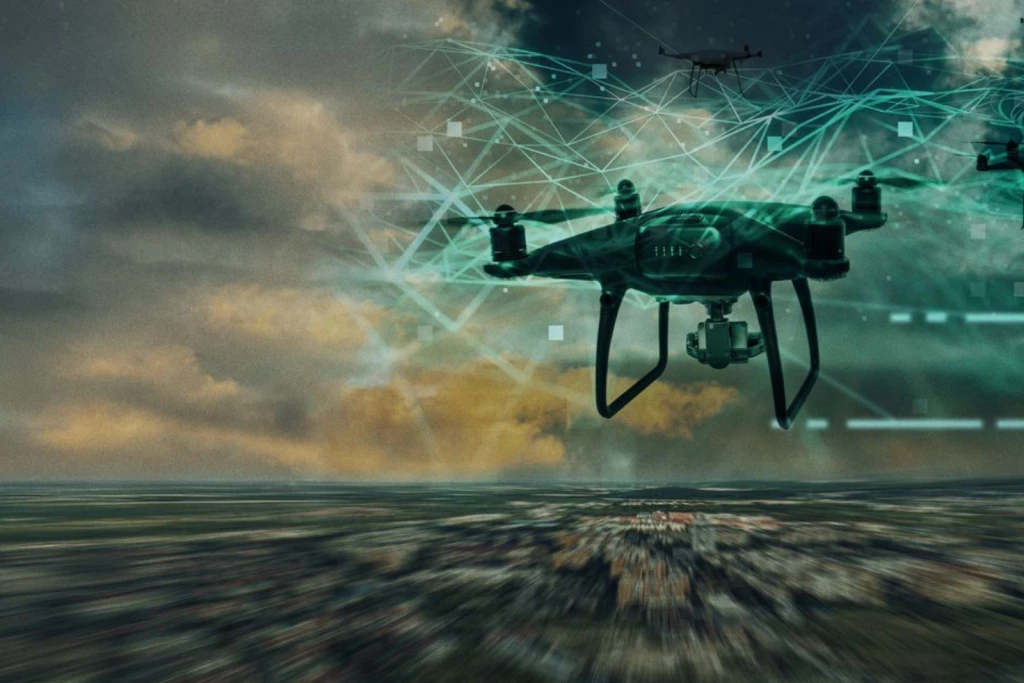
The next recommendation focuses on the increased operational demand and defence budget R&D expenditure on UAV platforms in Europe. Noting that medium altitude long endurance (MALE) UAV projects such as the Dassault/BAETelemosand EADS Talarion program are likely to meetimmediate demand, the report suggests that the Weimar Group look into the mid-term need for a lighter, long-loiter reconnaissance UAV.
Such a project would seek to meet the various demands of both civilian and military actors from the increased range, endurance and sophistication of UAV technology. As UAV reconnaissance is increasingly used in border security and crisis management roles, as well as traditional military applications, a collaborative investment in a UAV platform offers a wider pay-off for the all actors in the sector.
The report goes on to suggest that the European Defence Agency (EDA) could even help manage the project as a “Category B” opt-in procedure, thus allowing other European members to co-invest if desired. Such a project could thus see a co-developed Weimar MALE UAV in service in a ten year timeframe.
Long term - a common armoured vehicle market
Finally, the report offers a radical shake-up of the armoured vehicle sector, by suggesting the need to co-invest and consolidate the production of next-generation armoured vehicles under the Weimar banner. This sector is pinpointed on the back on an EDA analysis in 2005, which discovered that at that time, there were 23 different armoured or protected vehicle projects amongst the 27 EU member states. This makes armour one of the most fragmented and inefficient sectors in Europe, and ideal place for concerted Weimar leadership.
The report suggests the formation of a long-term industrial alliance between the Weimar Three’s respective sectors, aimed at reducing duplications of efforts and streamlining co-procurement. An industrial panel composed of the “core of four” (Nexter, KMW, Rheinmetall and Bumar), but also of smaller companies like Panhard, Renault Trucks and WZM Siemanowice, could be assembled to delegate market responsibility and areas of investment between respective vehicle types. The report particularly highlights the viability of the Infantry Fighting Vehicle sector for such coordination, though is skeptical about the investment potential in Main Battle Tanks - an area of drastic decline in 2011.
The report is candid, however, about the difficulties of such cross-border cooperation in a sector famously sensitive to national protectionism. It acknowledges that “traditional sovereignty would partially be sacrificed for a rise in interdependence, a trade-off that is viewed by many as a dangerous restriction of national freedom of decision”. Equally, it notes the risk of a “decline of intra-European competition, i.e. the loss of a cost-reducing mechanism by which governments hope to achieve best value for money.”
Nonetheless, by pragmatically coordinating, the report envisions the Weimar Triangle spearheading a so-called “Armoured Vehicles Industrial Headline Goal”, which by 2030 could see co-developed and purchased next generation armour platforms being produced at an economical cost for all three members.
WeimarTriangle 2030?
By providing concrete capability areas and some potential timeframes for implementation, this report sheds some valuable light on what true, pan-European pooling and sharing might look like. The Weimar Three, by virtue of their central geographical and political location in the heart of the EU, are ideal candidates to realistically deploy, develop and invest in their armed forces together.
Of course, all of this would require some fairly radical cooperative steps. European nations can hardly be accused of not discussing pooling and sharing enough, it’s getting their money into the pot that is proving difficult. Moreover, the only pan-European co-investment case studies of note include over-cost debacles like the Eurofighter and A400M - an ominous precedent for the “Armoured Vehicles Industrial Headline Goal”.
Paris, Berlin and Warsaw are nonetheless adamant that the Weimar Triangle will lead to meaningful defence investment. Whether in the short, medium or long term, these three ideas certainly provide some food for thought.
Jonathan Dowdall writes for the Defence Dateline Group
-
Unmanned Aerial Vehicles: The week in review -
2011 in review: Muddy outlook stains mixed year for British military -
Defence firms primed for cyber security acquisitions -
2011 in review: Global naval power shifts with rising tides in the East -
Up periscope! Green future in sight for U.S. Navy -
Bletchley Park 2.0: GCHQ recruits next generation of spy -
European budget watch: Gradual decline in EU budgets continues, says EDA -
Renewable energy tech sought for forward operating bases -
Carry On Shipping (money): The UK in aircraft carrier farce -
I, Robot: Man's best friend gets military makeover for the dismounted soldier
* = required.
-
Air and Missile Defence India
Le Meridien, New Delhi, India
June 5- 6, 2012 -
Jordan Air Defence Summit
Amman, Jordan
September 17- 18, 2012 -
Offshore Patrol Vessels Latin America
Centro de Convenções Bolsa do Rio, Rio de Janeiro, Brazil
May 21- 23, 2012 -
5th Annual GDI APAC: Geospatial Defence & Intelligence Asia-Pacific
Bangkok, Thailand
September 12- 13, 2012
-
Defence IQ Announces New Strategic Partnership with Hawk ISM
London - 03 August 2010 Defence IQ and Hawk ISM today announced a new Strategic Partnership. The... Read more
Defence IQ Press
-
MOD announces new 2nd Permanent Under Secretary
The Prime Minister, following a recommendation from the Secretary of State for Defence, has approved the... Read more
UK Ministry of Defence [MoD]
-
France to Cut 2010 Defence Budget
French Defence Minister Herve Morin announced on the 28th September that the 2010 French Defence Budget... Read more
Defence IQ Press


Not a member? Sign Up
Reasons for Joining
Address your challenges through knowledge sharing with peers from our global network of specialists.
Benchmark your business initiatives with the who's who in the field.
Hear from industry pioneers how to maximize ROI in today's challenging economy.
And best of all It's FREE!